
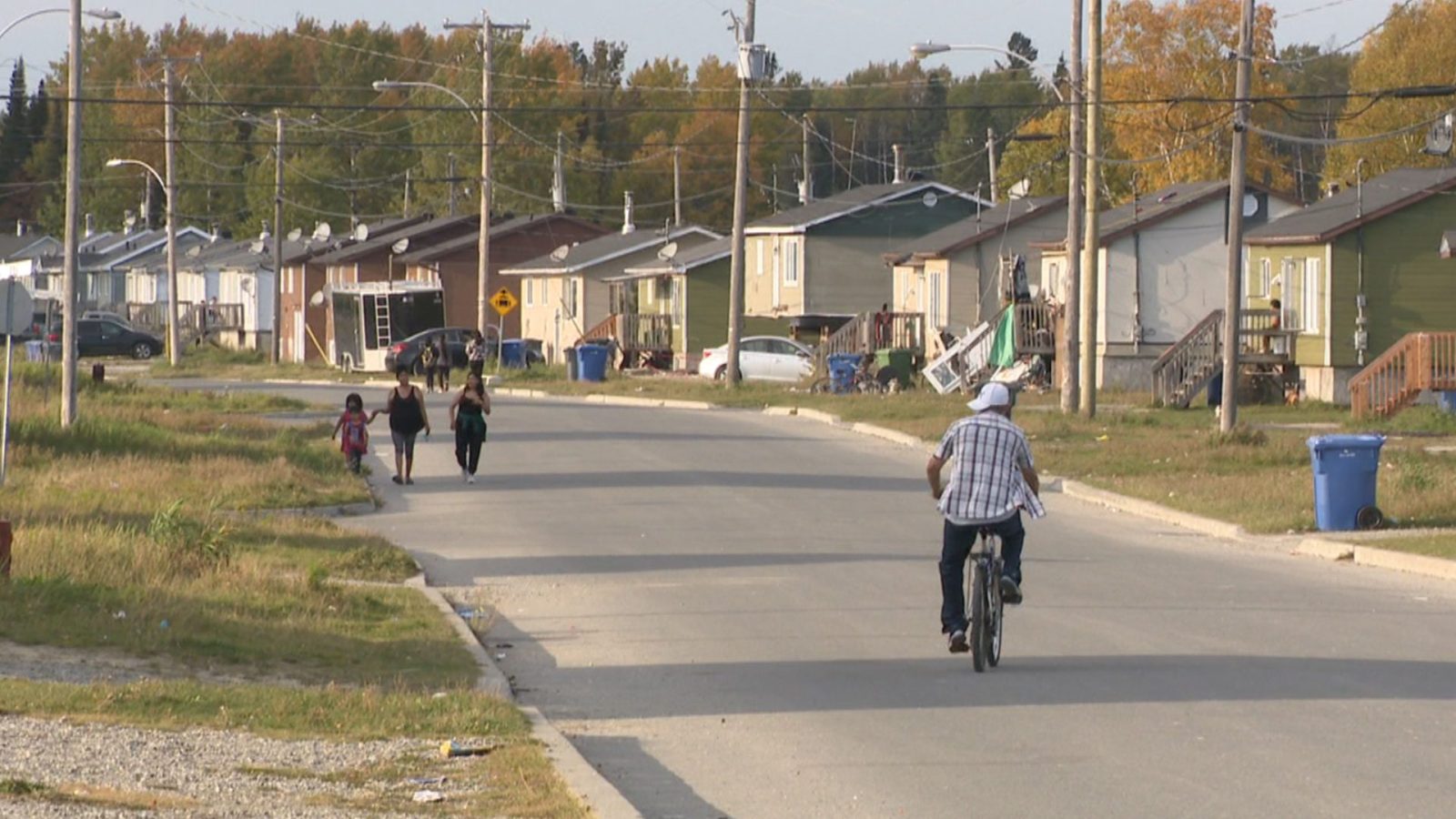
Quebec’s campaign for its upcoming provincial election officially began yesterday, but already the sitting Coalition Avenir du Québec (CAQ) government has found itself at odds with the Anishnabe Council of Lac Simon over a plan to increase natural resource development revenue sharing.
On Aug. 24, three days before the formal launch of the election campaign, CAQ Natural Resources Minister Kateri Champagne Jourdain announced her party would double the revenue sharing budget for natural resources from $38 million to $76 million beginning in the spring of 2027. Jourdain said the goal of the funding change was to better compensate regions of Quebec that are centres of natural resource development.
In a press release published yesterday, the Council of Lac Simon responded that they “strongly condemn[ed] the complete absence of First Nations in the election pledge made on August 24 by the Coalition Avenir Québec to increase funding for resource regions.”
First Nations, the council argued in the release, were “invisibilized” by the announcement, an omission Lac Simon’s council called “neither trivial nor acceptable.”
“First Nations are not mere observers of natural resource development in Quebec,” Lac Simon argued in the release. “They are the first to be affected by projects that transform their territories, impact their living environments, alter their landscapes and shape the future of their communities. Yet whenever the time comes to discuss the sharing of the economic benefits generated by these resources, they seem to disappear from the government’s priorities.”
As a result, the council said it was issuing a call to all of Quebec’s political parties to acknowledge that First Nations voters and Indigenous communities have a right to know “the concrete commitments the parties intend to make regarding reconciliation, economic development, the sharing of benefits, the protection of territory and respect for the rights of Indigenous peoples.”
Rather than being called to the table only when a dispute arises, the council said, First Nations should be full partners in Quebec’s economic future.
Speaking to APTN News, Lac Simon’s Chief Lucien Wabanonik said in French that the relationship between the province and First Nations is crucial to the future of Quebec.
“The issue of territorial rights cannot be ignored by any party, nor will the future government of Quebec be able to avoid or ignore it,” Wabanonik said.
“It’s going to be something that affects all resource extraction. And without First Nations and their consent, it’s going to be very difficult for any development or access to the territory. It’s going to be, more and more, an assertion of our peoples, of our nations — and that’s going to be an issue for Quebec when it comes to discussing development.”
Wabanonik said his community has struggled in dealings with the CAQ over the eight years since the party was first elected to two consecutive majority governments.
“We’ve tried to negotiate in good faith,” he said. “We’ve tried to find solutions that respect our rights and our families. Families are important because they’re the ones who hold the rights. It’s not Quebec or Canada: our territorial rights predate even the existence of the Canadian Confederation. So, what this means is that from now on, we’re going to assert ourselves more and more. Going to court will be the only option left to us, and that could have a direct impact on access to the territory.”
Read more:
Lac Simon requests judicial review of $40 million Ottawa-Quebec caribou deal
Opposition grows to proposed forestry bill in Quebec
According to Wabononik, provincial governments are in the habit of claiming they cannot reach an agreement with First Nations without a treaty. But Wabononik maintains treaties are not necessary to a healthy working relationship between Quebec and First Nations, provided governments are willing to meet the conditions First Nations set for themselves, and willing to treat families and the land with respect.
“Our rights are always recognized by the Supreme Court,” he said. “We need to reach an agreement, and we’ll negotiate in good faith and collectively. I think there are some interesting possibilities to explore. It’s not us, the First Nations, who are closing that door.”
At the same time, Wabanonik was quick to stress — as Lac Simon’s council did in its press release — that his community was not criticizing municipalities and regions. Rather, he said First Nations should work in partnership with regions and municipal governments.
“Governments are used to dividing and conquering,” he argued. “In that regard, I think it’s important not to target municipalities, because don’t forget: we share the same territory. And when a territory is affected, I think municipalities still have a say, but that shouldn’t come at the expense of our communities — ignoring us or sidelining us. It’s really about saying that if we want good neighborly relations, [we need] true economic, political, and legislative reconciliation.”
Wabanonik said that recognition of First Nations’ territorial rights is the foundation of a strong relationship with a government.
“If we don’t have any agreement with the government — or rather, the next government — we’ll continue to face very difficult situations in the regions. When it comes to the land and access to the land, it’s the consent of First Nations and our members that’s necessary to build a better relationship. That’s why I say that the future of Quebec depends on it.”














Leave a comment