

 |
 |
PREVIOUS NEXT
Part2 The Current Status of Science and Technologyin Japan and Other Nations
2.1 R&D Expenditures
2.1.7 R&D Expenditures in Japan by Type of Expense
R&D expenditures break down into labor costs,materials,expenditures
on tangible fixed assets(land and buildings,machinery,instruments,equipment and
others)and lease fees(newly established in the FY2001 survey)and other expenses.
An examination of Japan’s R&D expenditures by type
of expense reveals that total labor cost increased for the first time in three
years,registering a year-on-year increase of1.3%,to7.4078trillion yen.Materials
expenditure has been increasing,with the total expenditures for materials increasing
by3.7%in FY2001 over the previous fiscal year to2.8616trillion yen.The total
expenditures for tangible fixed asset purchases decreased by4.2%to1.8067trillion
yen over the previous fiscal year.The share of other expenses required for research,such
as books and journals,utilities,travel,and telecommunications,etc.,decreased
by1.1%over the previous fiscal year to4.2850trillion yen.Lease fee,introduced
as a new survey category in FY2001,came to166.9billion yen (Figure2-1-25).
Moreover,the trends in the composition of expenditure reveal
that while labor cost has long held the largest share of overall expenditure,that
share has been declining in recent years.Tangible fixed asset purchase expenditure
is declining.The shares of materials cost and other expenditures have remained
almost the same (Figure2-1-26).
Company R&D expenditure by category rose with the exception
of tangible fixed asset purchase expenditures and lease fees (Figure2-1-27).
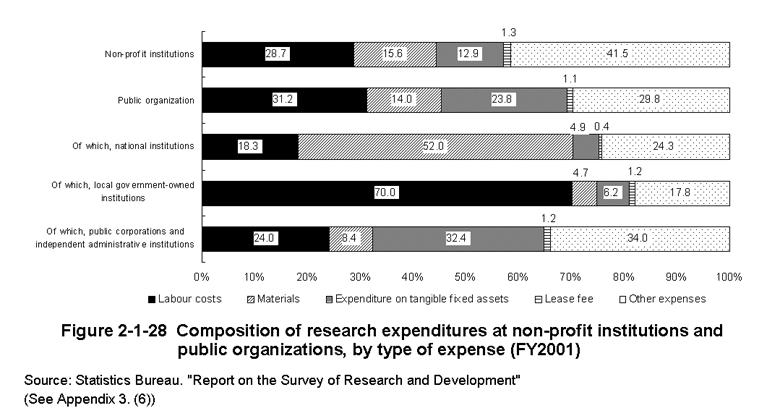
Non-profit institutions and public organizations had lower ratios
than any other institutions on expenditures for labor cost,while their tangible
fixed asset purchase expenditures showed higher ratios.When looking at expenditure
by type of institution,local government-owned institutions were characterized
by exceptionally high labor cost.On the other hand,public corporations and independent
administrative institutions have higher ratios of expenditures for the purchase
of tangible fixed as-sets because they include those requiring large-scale facilities
and equipment for nuclear and space R&D (Figure2-1-28).
Figure2-1-25Trends in R&D expenditures by type of expense
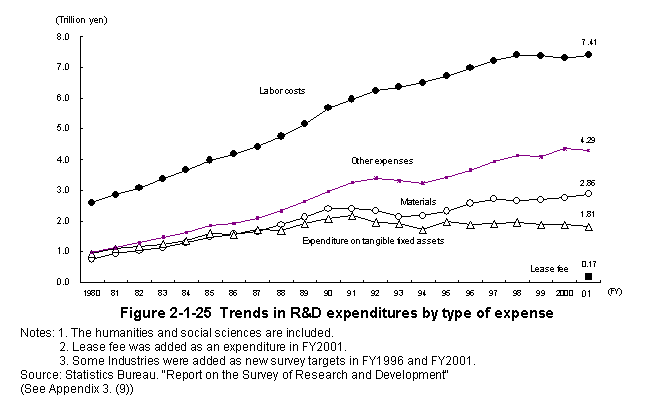
Figure2-1-26Trends in R&D expenditures by consisting
elements
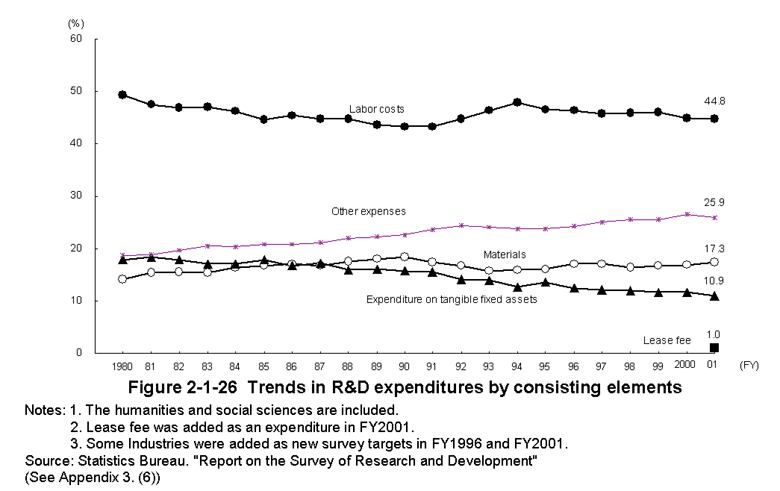
Figure2-1-27Trends in R&D expenditures at Business
enterprises,by type of expense
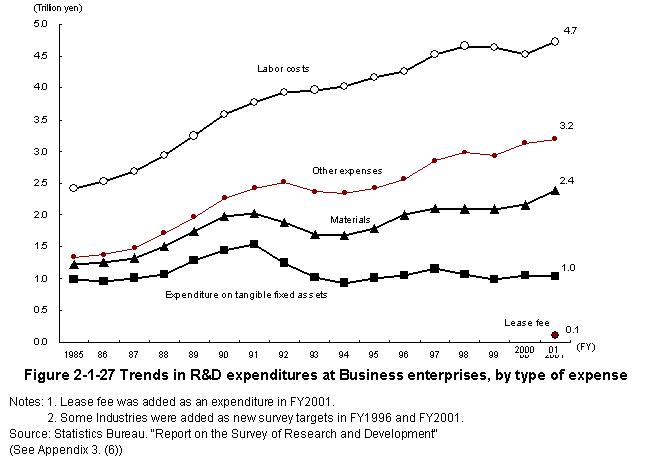
Figure2-1-28Composition of research expenditures at non-profit
institutions and public organizations,by type of expense(FY2001)
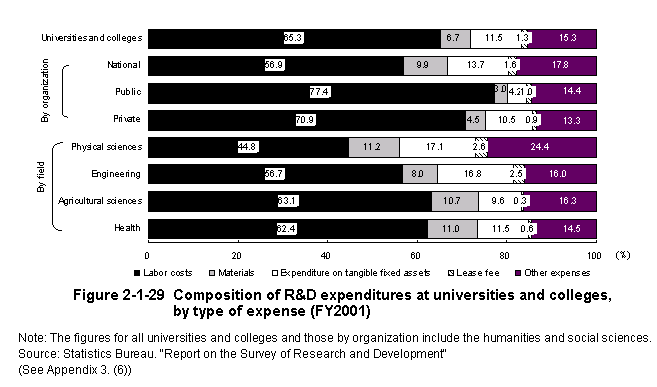
Universities and colleges had a higher share of labor cost than
other institutions,accounting for about65%of expenditure,while raw material costs
were the lowest in share.When looking at expenditure by the field of study within
the natural sciences,all areas had lower than average shares of labor cost,while
the physical sciences and engineering in particular tended to require larger
than average shares of total costs for tangible fixed assets (Figure2-1-29).
Figure2-1-29Composition of R&D expenditures at universities
and colleges,by type of expense(FY2001)
(C)COPYRIGHT Ministry of Education, Culture, Sports, Science and Technology











Leave a comment