

TradingKey – The U.S. Bureau of Labor Statistics will release the July non-farm payrolls report at 8:30 AM Eastern Time on August 7. The current market focus is not only on the number of new jobs, but also on the unemployment rate, average hourly earnings, and whether the data for the previous two months will be revised downward again. These indicators will directly affect the Federal Reserve’s September rate hike expectations, as well as the movements of U.S. stocks, the U.S. dollar, and gold ( XAUUSD ).
From the perspective of market expectations, U.S. nonfarm payrolls are projected to increase by 80,000 in July, up from 57,000 in June, while the unemployment rate is expected to hold steady at 4.2%. A survey by The Wall Street Journal showed a slightly higher forecast of an 83,000 gain. Meanwhile, the market expects average hourly earnings to rise 0.3% month-on-month and 3.5% year-on-year, indicating that wage pressures remain generally moderate.
In June, nonfarm payrolls added only 57,000, significantly below expectations, and the data for April and May were revised down by a combined 74,000, suggesting that U.S. employment growth is losing momentum. Although the unemployment rate fell to 4.2%, this was partly due to a decrease in labor force participation and does not fully reflect strengthening labor demand.
Leading indicators released this week were also weak. ADP data showed that the U.S. private sector added only 44,000 jobs in July, below the market expectation of 75,000. Meanwhile, the ISM Services Employment Index fell from 51.2 to 47.4, slipping back into contraction territory. However, services new orders and business activity remain strong, suggesting the U.S. economy is closer to ‘slowing hiring but limited layoffs’ rather than a rapid recession.
Institutions remain cautious about data risks. Goldman Sachs pointed out that in recent years, July nonfarm payrolls have often come in below expectations, accompanied by sharp downward revisions to prior readings. Wells Fargo believes that simultaneous slowdowns in labor demand and supply are keeping the unemployment rate temporarily stable, while Deutsche Bank stated that as long as the labor market does not deteriorate significantly, the Fed can still focus its policy on inflation. BMO believes that solid demand and rising cost pressures in the services sector may support the Fed keeping interest rates at a high level for longer.
For US stocks, if July non-farm payrolls are significantly higher than expected, with the unemployment rate remaining stable and wage growth accelerating, the market may raise the probability of a Fed rate hike in September, driving US Treasury yields higher and potentially putting pressure on tech stocks, AI-concept stocks, and other high-valuation growth stocks. If job growth falls near market expectations, showing a moderate cooling of the labor market rather than a rapid deterioration, US stocks may continue to trade on soft landing expectations, with the S&P 500 Index and Dow Jones Industrial Average remaining relatively stable. If non-farm payroll growth is near zero or even turns negative, the market may initially buy equities as rate-hike expectations decline, but if the unemployment rate rises significantly, concerns over an economic recession and falling corporate earnings could subsequently weigh on stock market performance.
For the US dollar, stronger-than-expected non-farm payrolls, a low unemployment rate, and elevated wage growth will reinforce expectations of US economic resilience and the Fed maintaining high interest rates or even hiking further, driving US Treasury yields and the US Dollar Index higher. If the data is broadly in line with expectations, the greenback may remain range-bound as the market continues to wait for subsequent inflation data to confirm the policy direction. If payroll growth is significantly lower than expected, previous figures are substantially revised downward, or the unemployment rate rises to 4.3% or above, traders may lower the probability of a Fed rate hike in September, putting the US dollar under pressure to correct lower.
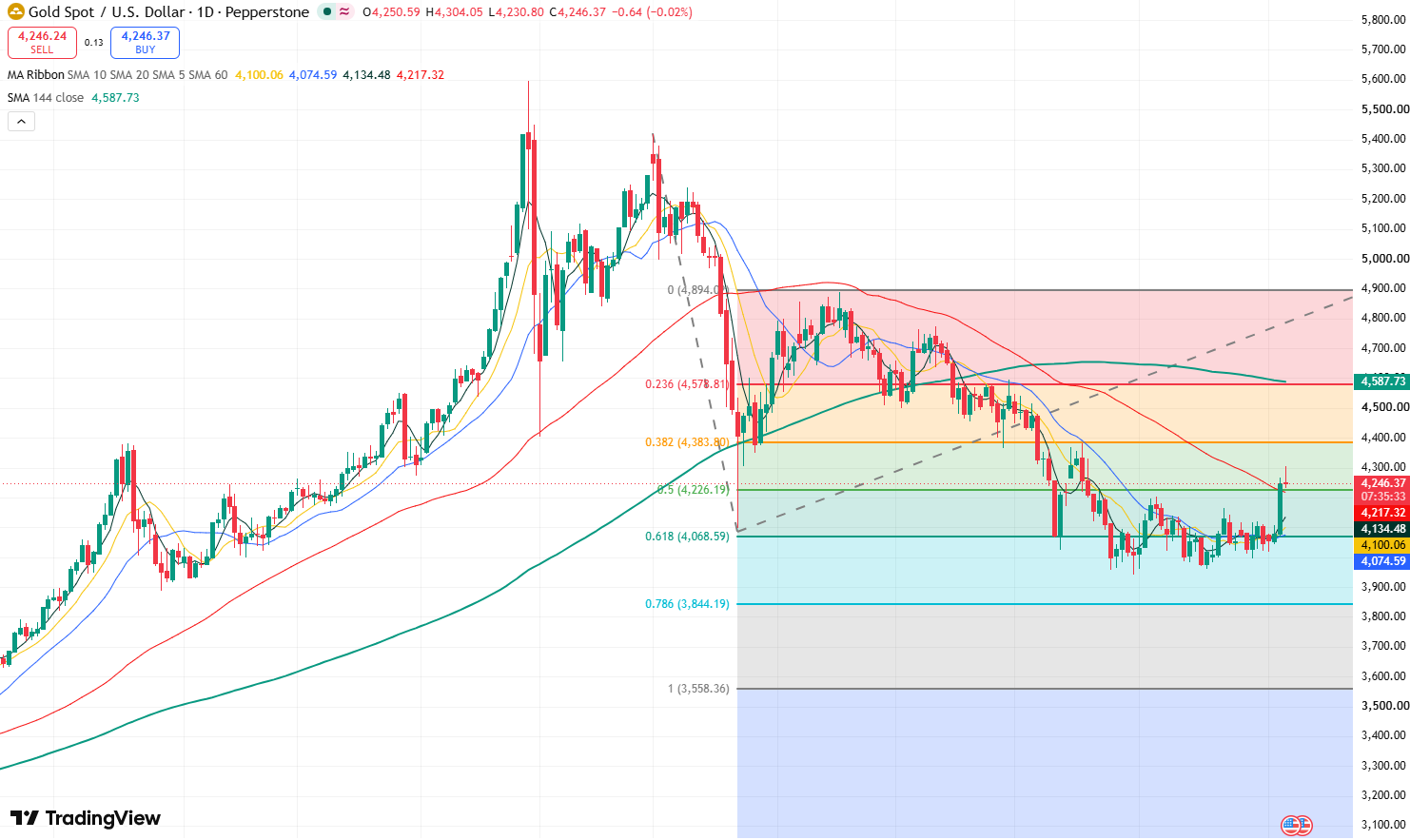
Gold Price Daily Chart, Source: TradingView
For gold, the non-farm payroll data primarily influences prices through the US dollar and real US Treasury yields. If employment and wage data are significantly stronger than expected, bets on a Fed rate hike may heat up, driving the US dollar and Treasury yields higher in tandem, which would pressure gold as a non-yielding asset, potentially leading to a downward test of the $4,180-$4,130 support level. If the data meets expectations and shows a slowly cooling job market, gold prices may maintain a volatile but upward bias. If non-farm payrolls fall significantly short of expectations, the unemployment rate rises, and previous figures are heavily revised downward, market concerns over Fed rate hikes will cool, and the US dollar and Treasury yields may fall, thereby driving gold higher to test the key resistance level at $4,380.
This content was translated using AI and reviewed for clarity. It is for informational purposes only.











Leave a comment