

 Every year, we hear the same statistic: Africa’s small and growing businesses face a financing gap of over US$331bn. What we hear far less often is that the money to close much of that gap already exists on the continent – sitting in pension funds.
Across Africa, pension schemes hold more than US$600bn in assets. In Ghana alone, that figure is around US$7bn. Yet less than 10% of this money, regionally, ever reaches productive sectors like housing, infrastructure or private credit. Instead, it sits in government bonds and listed equities, doing little to support the small and medium-sized enterprises (SMEs) that employ 80% of Africa’s workforce and generate 70% of its GDP.
This is not because pension trustees don’t care about development. It is because, for years, nobody built them a vehicle they could trust. That is the gap we set out to close with Ci-Gaba, a US$75m blended finance fund of funds designed to channel Ghanaian pension capital into SMEs – and, in March 2026, we reached first close, with Ghanaian pension funds investing in private equity and debt vehicles for the first time.
Why this matters beyond Ghana
We think the Ci-Gaba story matters far beyond one country because it offers a repeatable answer to a question every impact investor in Africa eventually asks: how do you get local, patient capital into the system, rather than relying indefinitely on donor money that ebbs and flows with geopolitics?
Our answer, built over roughly five years of design and negotiation, rests on treating the problem as one of trust and structure, not just money. Pension trustees are cautious by nature and by law; their first duty is to protect retirees’ savings. Convincing them to move even a small share of assets into unfamiliar, unlisted vehicles required us to remove risk, not just describe opportunity.
The design choices that made the difference
We built in a catalytic first-loss layer – capital from donors and impact investors that absorbs losses first – set at 30% of the fund. This is high enough to genuinely de-risk participation for pension trustees, but not so high that it distorts incentives or lets the fund manager get sloppy. Getting that number right took real negotiation with our anchor catalytic investors, Small Foundation and FSD Africa Investments, whose flexibility in deploying capital and close coordination with us were critical to reaching first close.
We denominated the fund in Ghanaian cedis rather than US dollars…it was one of the most decisive choices we made
We also denominated the fund in Ghanaian cedis rather than US dollars. This might sound like a technical detail, but it was one of the most decisive choices we made. Pension liabilities in Ghana are in cedis; a dollar-denominated fund would have forced trustees to take on foreign exchange risk on top of everything else. Structuring locally removed that objection entirely and signalled that this was a Ghanaian vehicle, not another dollar-denominated fund parachuted in from outside.
Then there was the fund structure itself: an open-ended vehicle, which gives SMEs the kind of patient, long-term capital that growth typically requires, rather than the shorter cycles of a traditional closed-end private equity fund.
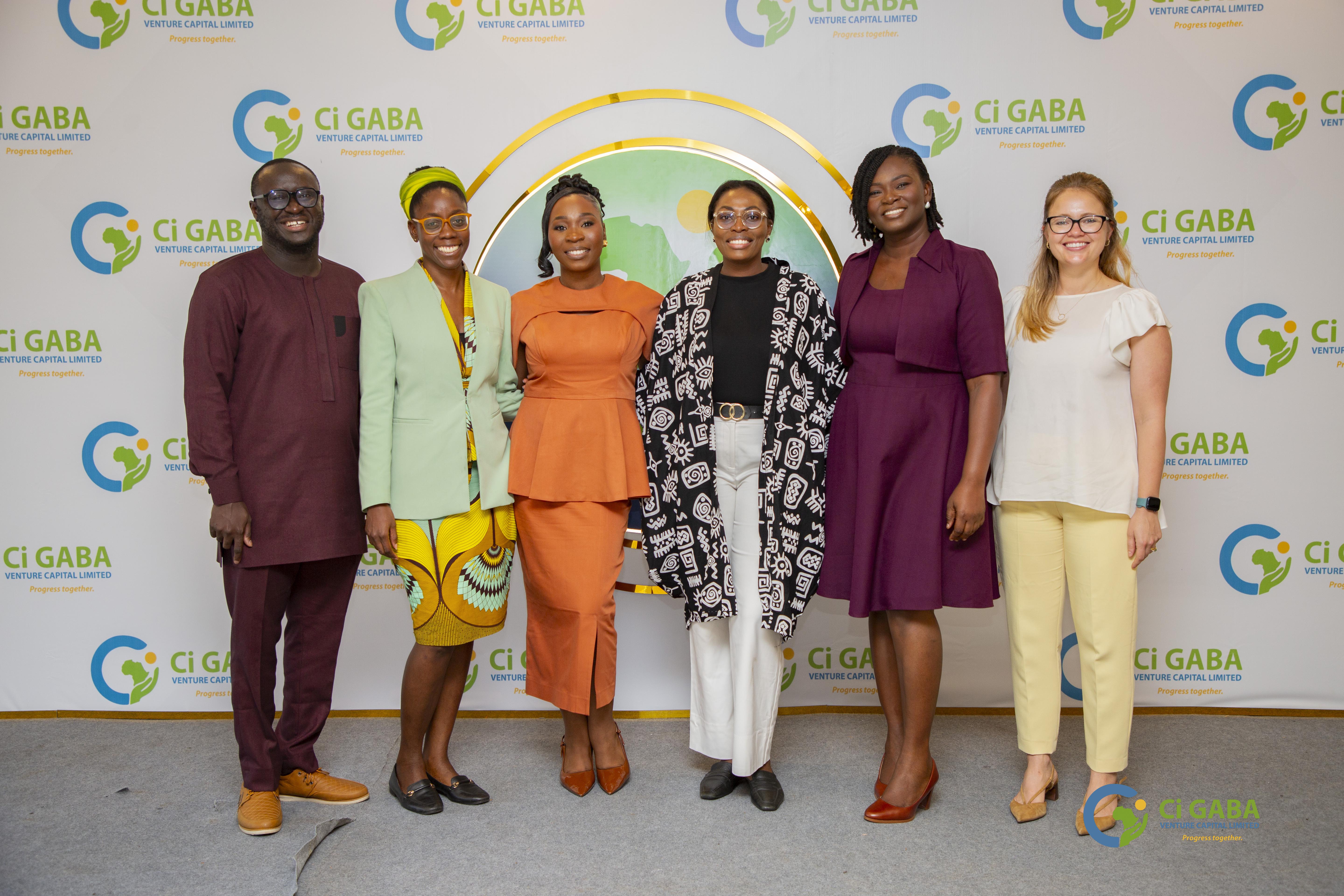
Above: the official Ci-Gaba fund launch in March
Capacity building is not a side dish
Perhaps the least glamorous, but most important, part of Ci-Gaba’s design was pension trustee training. We built experiential training grounded in real Ghanaian case studies, not generic global curricula, and embedded it in national institutions. This is what shifted mindsets from resistance to active participation. Trustees who had never evaluated an alternative asset class before needed to understand not just the fund’s structure but also how to think about illiquidity, valuation and governance in this new context. Without that investment, no amount of clever fund design would have moved a single cedi.
Technical assistance is not an add-on to blended finance vehicles; it is the infrastructure that holds them together
We would go further: technical assistance is not an add-on to blended finance vehicles; it is the infrastructure that holds them together. It is what connected pension trustees, fund managers, regulators and development partners into a coherent ecosystem, rather than a set of parties negotiating past each other.
What philanthropy and DFIs got right
We are often asked what role grants and concessional capital should play in mobilising domestic savings. Our experience suggests the answer is: as risk absorbers, not as market dominators. Catalytic funders – including the RISA Fund of the UK’s Foreign, Commonwealth and Development Office, GSG Impact, the Ford Foundation, FMO Ventures and Argidius Foundation – first provided grants for design, structuring and pension trustee training, and only later moved into risk-absorbing capital and anchor investments. That sequencing, and their willingness to coordinate closely with us on due diligence and regulatory engagement mattered as much as the money itself.
Early signs of traction
Ghanaian pension funds are on track to exceed our initial commitment target of US$30m, which we take as a strong signal of confidence in a locally structured vehicle. The fund is already deploying capital across Ghana, Nigeria and Côte d’Ivoire into agribusiness, fintech, healthcare, clean energy, education and manufacturing, with more than 1,200 jobs expected to be supported, nearly half of them held by women and over a third by people under 35.
A framework, not a one-off
We don’t see Ci-Gaba as a finished product but as a proof of concept – one that other markets can adapt rather than copy wholesale. From this work, we’ve distilled a simple framework: unlocking domestic capital requires pension funds able and willing to act as long-term anchors, a policy environment that permits allocation to alternative assets, and a pipeline of investment-ready vehicles and SMEs. Underpinning all three, in our experience, are local leadership, catalytic capital used sparingly and strategically, and sustained capacity building.
Any organisation hoping to replicate Ci-Gaba elsewhere in Africa should expect to build that local trust first and expect it to take years, not months
None of this can be designed from outside. Our deep embeddedness in Ghana’s pension and investment ecosystem – years of relationships, trust and regulatory navigation – was not a nice-to-have. It was the decisive factor. Any organisation hoping to replicate Ci-Gaba elsewhere in Africa should expect to build that local trust first and expect it to take years, not months.
The bigger opportunity here is not really about one fund in one country. It is about recognising that Africa’s SME financing gap and its pool of unproductive pension savings are, in effect, the same problem viewed from two sides. Closing it doesn’t require inventing new money. It requires building the governance, the structures and the trust to let the money that already exists do its job.
Amma Lartey is CEO of Impact Investing Ghana, and Benedict Yiyugsah is knowledge lead at the organisation. Hamdiya Ismaila is the CEO of Savannah Impact Advisory.
A full learning report on Ci-Gaba, with detailed case material and stakeholder analysis, is forthcoming. For enquiries, contact Impact Investing Ghana at partnerships@impactinvestinggh.org.
Top image: Soronko Academy is a digital skills development social enterprise in Accra, Ghana, where fee-paying students help cover operational costs and subsidise scholarships for underprivileged students. Find out more about Soronko Academy in our feature on the organisation (credit: Soronko Academy).

| Ready to invest in independent, solutions-based journalism?
Our paying members get unrestricted access to all our content, while helping to sustain our journalism. Plus, we’re an independently owned social enterprise, so joining our mission means you’re investing in the social economy. |












Leave a comment