

Quick Read
-
JNJ’s 64-year dividend streak and KMB’s 4.6% trailing yield make both Dividend Kings strong retirement income picks that outpace fixed-rate bonds.
-
GPC’s 70-year dividend streak is the longest of the three, but a $609M Q4 net loss and planned business separation add near-term execution risk.
-
Act now: the analyst who called NVIDIA in 2010 just named his top 10 AI stocks — and Johnson & Johnson didn’t make the cut. Grab the names FREE today.
Baby boomers heading into retirement face a specific math problem: They need income that grows faster than inflation, drawn from businesses stable enough to survive whatever the next decade throws at them. With the 10-Year Treasury yielding 4.56% as of July 10, 2026 and Core PCE inflation still climbing (index at 130.08 in May 2026, up 0.3% month over month), fixed-rate bonds alone will not preserve purchasing power over a 25-year retirement. Dividend Kings, companies with 50-plus years of consecutive dividend hikes, remain the workhorse solution.
Here are three durable-income names built for the long haul, each with a specific bull case and a risk worth respecting.
Johnson & Johnson (JNJ)
Johnson & Johnson (NYSE:JNJ) is the healthcare anchor almost every retirement portfolio needs. The company just posted Q1 2026 revenue of $24.06 billion (up 9.9% year over year) and adjusted EPS of $2.70, both ahead of Street expectations, and management raised FY2026 guidance to revenue of $100.3 billion to $101.3 billion and adjusted EPS of $11.45 to $11.65.
The dividend track record is the headline. The board approved a 3.1% dividend increase to $1.34 per share quarterly, marking 64 consecutive years of dividend growth, verified by the payment record showing the Q2 2026 ex-dividend date of May 26, 2026 at $1.34 versus $1.30 the prior quarter. The annualized forward payout of $5.36 gives retirees a concrete income figure to plan around.
Act now: the analyst who called NVIDIA in 2010 just named his top 10 AI stocks — and Johnson & Johnson didn’t make the cut. Grab the names FREE today.
Growth is accelerating too. DARZALEX delivered $3.96 billion in the quarter (up 22.5%), TREMFYA grew 68.3%, and CARVYKTI expanded 62.1%. CEO Joaquin Duato called this “a strong start to 2026” delivering on the promise of “a year of accelerated growth and impact.” Shares reflect that momentum: JNJ is up around 52% over the past year and 23.23% year to date through July 22, with a beta of 0.235 that still qualifies as defensive.
Risk/caveat: STELARA biosimilar erosion hit hard, with sales down 59.7% to $656M, and the planned Orthopaedics separation carries execution risk. At a forward P/E near 22, this is no longer a bargain-bin buy.
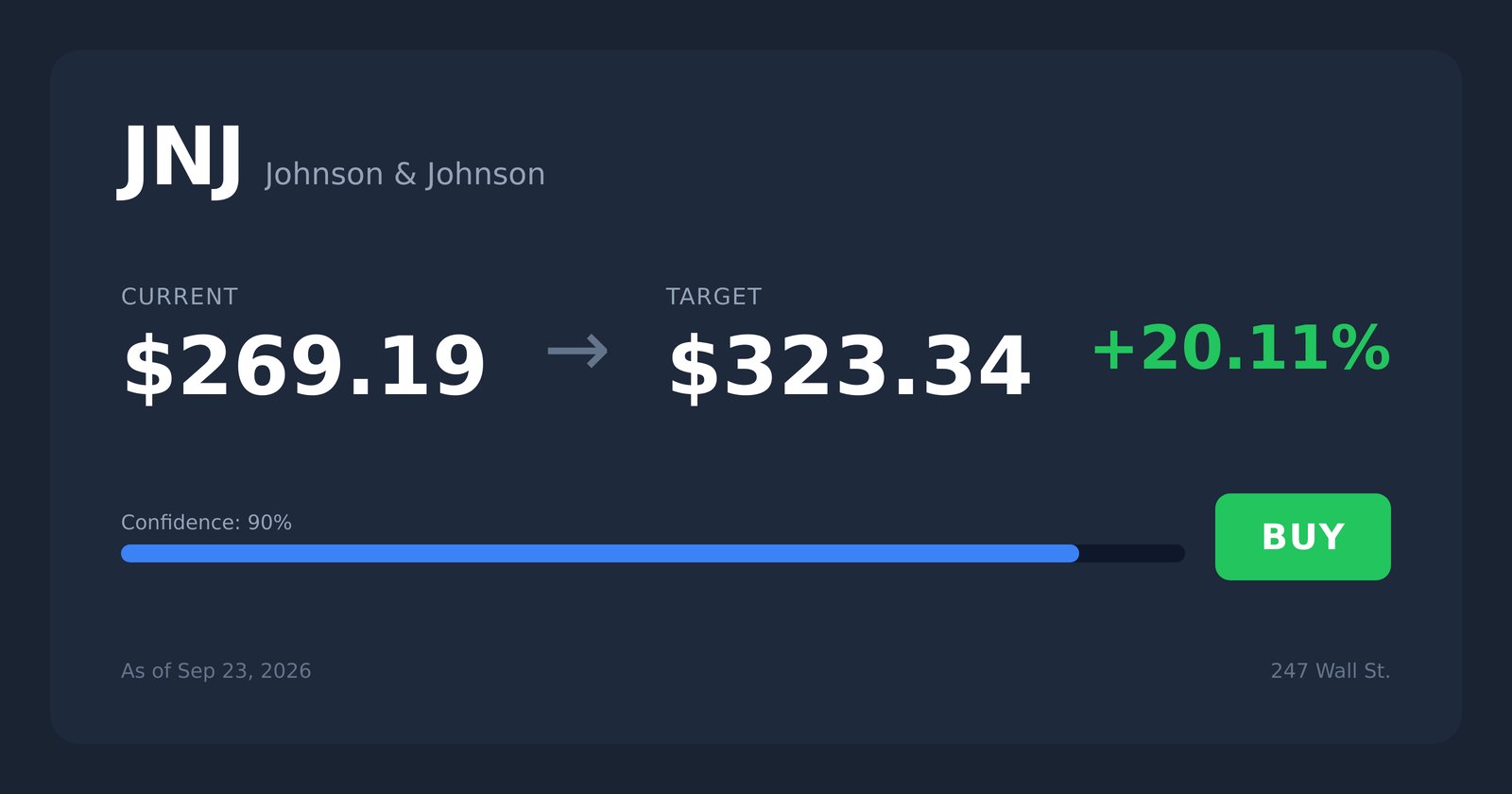
JNJ Price Target — 24/7 Wall St.
Kimberly-Clark (KMB)
Kimberly-Clark (NASDAQ:KMB) is the consumer-staples version of this trade: Huggies, Kleenex, Scott, Kotex, Cottonelle, Poise and Depend all sit in cabinets that get restocked whether the economy is booming or contracting.
The Q1 2026 print was solid: adjusted EPS of $1.97, which beat the $1.93 estimate, on revenue of $4.16 billion. The company reaffirmed 2026 guidance for organic sales growth of ~2.5% and double-digit adjusted EPS growth on a constant-currency basis, with International Personal Care up 9.1% to $1.51 billion.
The dividend? The Q1 2026 quarterly rose to $1.28 from $1.26 in Q4 2025, extending a streak the data confirms has run every single year from 1999 through 2026. The 4.7% trailing yield is one of the highest available in blue-chip staples.
Valuation looks reasonable too: forward P/E of 15 versus a trailing 22, with a beta of 0.279. CEO Mike Hsu framed the pending Kenvue acquisition as a “generational value creation opportunity.” For retirees hunting income, this is a Dividend King built to weather cycles.
If maximizing income across a full portfolio is the objective, 24/7 Wall St.’s 10 Dividend Kings research report drills into how these multi-decade compounders fit alongside other steady-payer names.
Risk/caveat: Reported net sales fell 14% year over year due to IFP discontinued operations and the US private label diaper exit, and the consumer tissue restructuring plus Kenvue integration risk are real. As of July 22, shares are down 15.52% over the past year — a reminder that even Kings have off years.
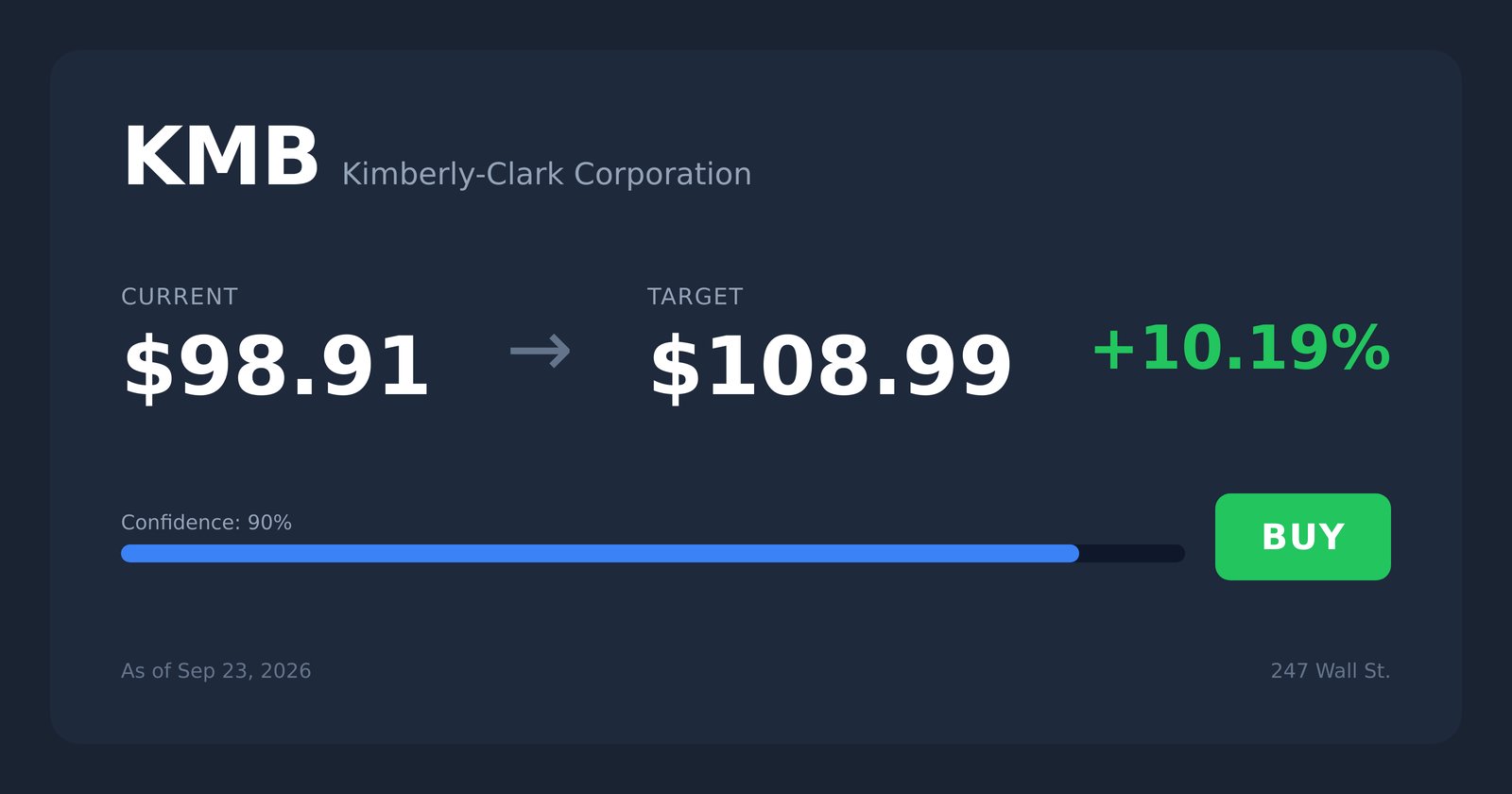
KMB Price Target — 24/7 Wall St.
Genuine Parts Company (GPC)
Genuine Parts Company (NYSE:GPC) owns NAPA Auto Parts and one of the strongest industrial distribution networks in North America. Q1 2026 delivered adjusted EPS of $1.77, revenue of $6.26B (up 6.8% YoY), and comparable sales up 2.4%. Management reaffirmed FY2026 guidance for sales growth of 3% to 5.5%, adjusted diluted EPS of $7.50 to $8 and free cash flow of $550 million to $700 million.
The dividend streak here is the longest of the three. Data confirms 70 consecutive years of dividend increases announced with Q4 2025, with the annual rate up 3.2% to $4.25 per share. Payment records verify the Q1 2026 quarterly at $1.0625 (up from $1.03 through 2025), annualized forward of $4.25, with the latest payment on July 2, 2026. The 3.53% yield gives income a running start, and the planned tax-free separation into Global Automotive and Global Industrial businesses is targeted for Q1 2027, which could unlock trapped value.
CEO Will Stengel noted the team “delivered first quarter results ahead of expectations” while progressing on the separation.
Risk/caveat: Q4 2025 posted a GAAP net loss of $609.5 million driven by a $742 million pension settlement charge and a $150.5 million First Brands supplier bankruptcy credit loss. Add tariff exposure, separation execution risk, and a Q1 2026 free cash flow deficit of $33.6 million and the near-term picture is choppier than the streak suggests.
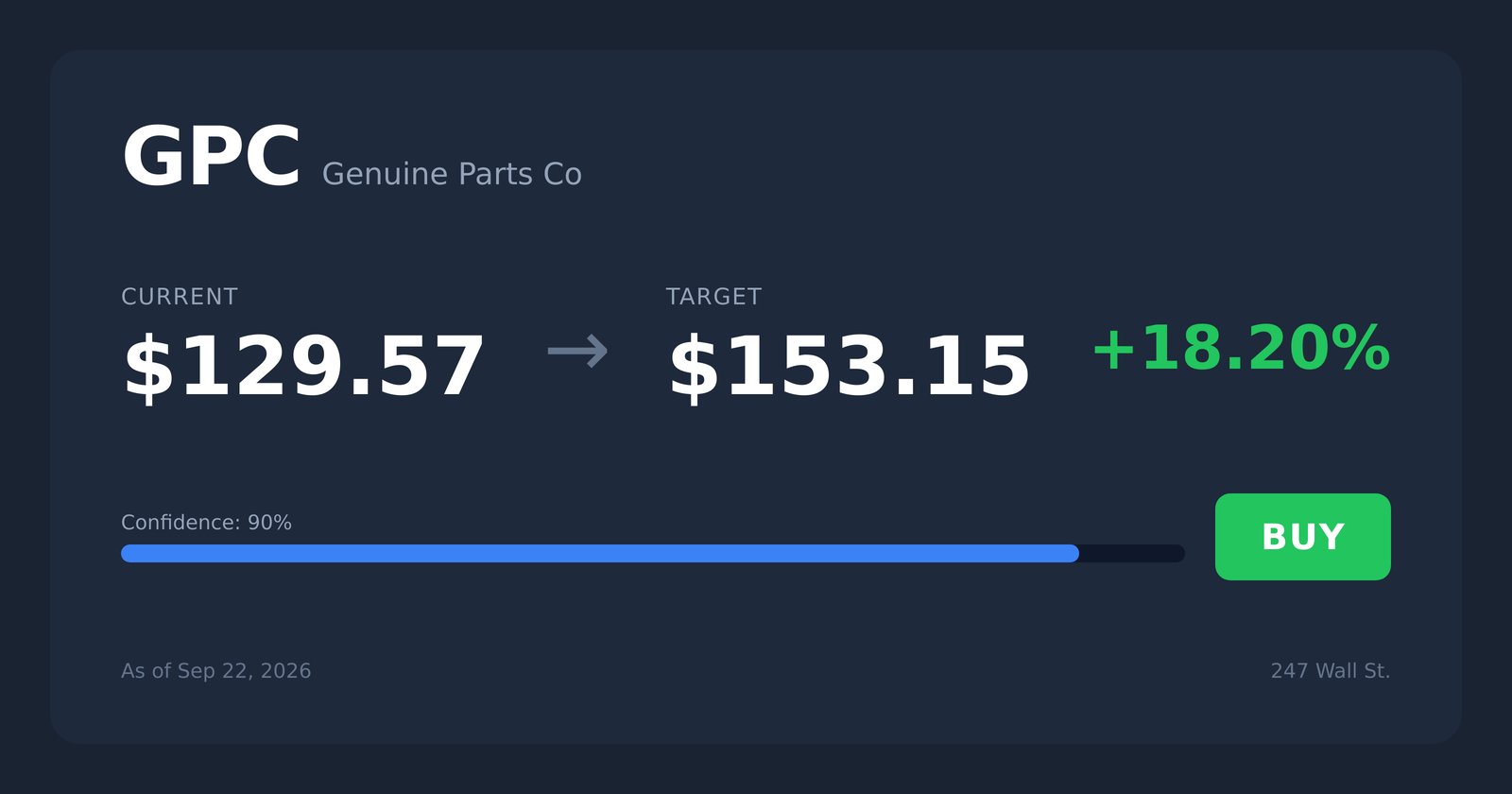
GPC Price Target — 24/7 Wall St.
The Bottom Line
All three names are Dividend Kings in defensive sectors, and all three have raised payouts through recessions, wars, and rate cycles. For baby boomers building an income base to draw from for decades, that consistency is the point. The forward-looking question is whether each company can navigate its current transition (JNJ’s Orthopaedics spin, KMB’s Kenvue integration, and GPC’s separation) without disrupting cash flow to shareholders. History says the odds favor the Kings.
Act now: the analyst who called NVIDIA in 2010 just named his top 10 AI stocks — and Johnson & Johnson didn’t make the cut. Grab the names FREE today.
Contact editorial@247wallst.com for any questions or corrections.









Leave a comment