
Digital assets have the potential to fundamentally reshape institutional markets via 24/7 trading, near-instant settlement, lower capital costs, and programmable infrastructure. As this evolution takes shape, traditional stock and bond markets are gradually seeing specific advances such as tokenized real-world assets, automated smart contracts replacing legacy clearinghouses, and direct institutional portfolio integration.

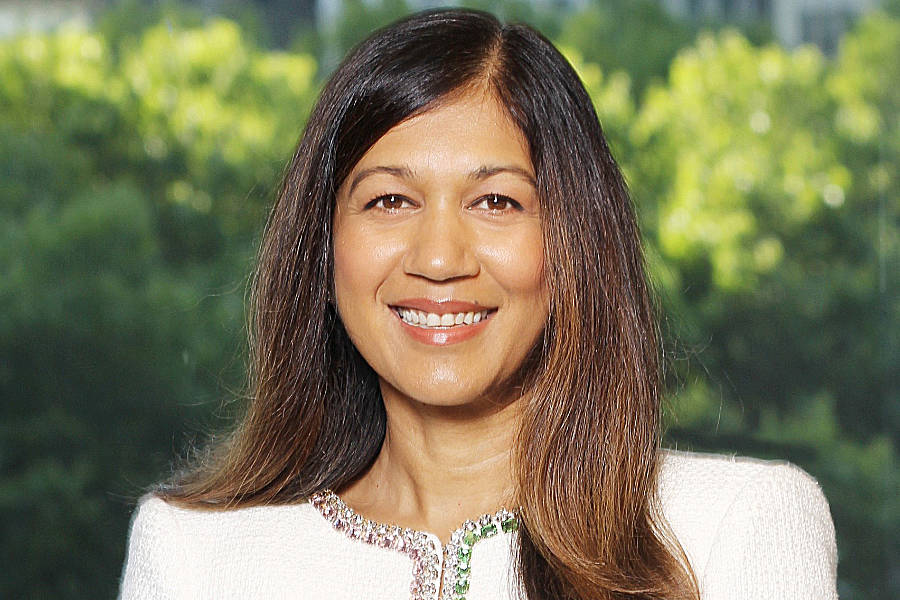
In the latest sign of the convergence of ‘tradfi’ and digital, last week Bank of America named Sonali Theisen to head its global digital assets platform. She will retain her position as Global Head of FICC E-Trading & Markets Strategic Investments, which she has held since 2018.
Theisen has 25 years’ sell-side fixed income experience, including roles in credit default swaps sales and trading, credit e-trading, and market structure and data strategy.
The DESK Co-editor Terry Flanagan spoke with Theisen to learn more about her new role and the potential and vision for the digital assets business.
Describe your new role?
It’s a new mandate which reflects the growing number of digital assets initiatives we’re involved in across the industry. As use cases continue to emerge across markets, payments, settlement, and treasury, it’s important to take a coordinated approach across the firm. Many of these ideas are in the early stages of development, and we’re continuing to bring together through an enterprise forum.
A big part of this role is partnership, both internally and externally. We remain focused on solutions that address real client and business needs. It’s not about just applying technology for its own sake, it’s about how we can better serve clients and operate our businesses more efficiently.
What are the synergies between your longstanding FICC role and your new digital assets role?
Our learnings in electronification help inform our work in this space. Through the evolution of e-trading, we’ve seen how innovations like APIs [Application Program Interfaces] and machine learning have transformed markets over time. Blockchain technology presents new potential avenue for evolution. Ultimately, any solution needs to operate at institutional scale, with security, operational efficiency, and seamless integration into existing workflows. Those considerations are just as important in digital assets as they were in previous waves of market innovation.
Is there a risk that the digital assets business takes share from FICC E-trading?
Similar to when electronic trading was introduced to the voice businesses, we don’t see this as a question of replacing or cannibalizing existing markets. Our focus is always on modernizing financial infrastructure in a way that supports scale. Existing market structures have developed deep liquidity, operational resilience, and strong risk controls over many years. If new technology can enhance these features, it can become additive to growing the existing market.
Which areas are ripest for on-chain issuance, and which may be less so?
The areas that appear most suited to early adoption are those where operational processes that can be improved to deliver clear business benefits. That’s one reason the industry has been increasingly focused on collateral efficiency and liquidity management.
More broadly, digital assets opportunities will be measured by their ability to create durable efficiencies. This goes beyond a proof of concept or handful of transactions. We’ll also need to understand the net benefit across traditional and digital rails. We’re still very much in the early days of this journey, and it’s a fascinating space.
What is the longer-term vision for Bank of America’s digital assets platform?
Rather than building siloed capabilities, we’re focused on building a flexible platform to enable future use cases as they evolve across all of our business lines. We’ll continue to be driven by responding to client needs.
There is real potential in the technology. It’s also important to recognize that our existing rails have decades of liquidity, resilience, and client trust behind them. Anything we do in digital assets will uphold those standards, so we’re taking a rigorous and disciplined approach.
©Markets Media Europe 2025













Leave a comment