
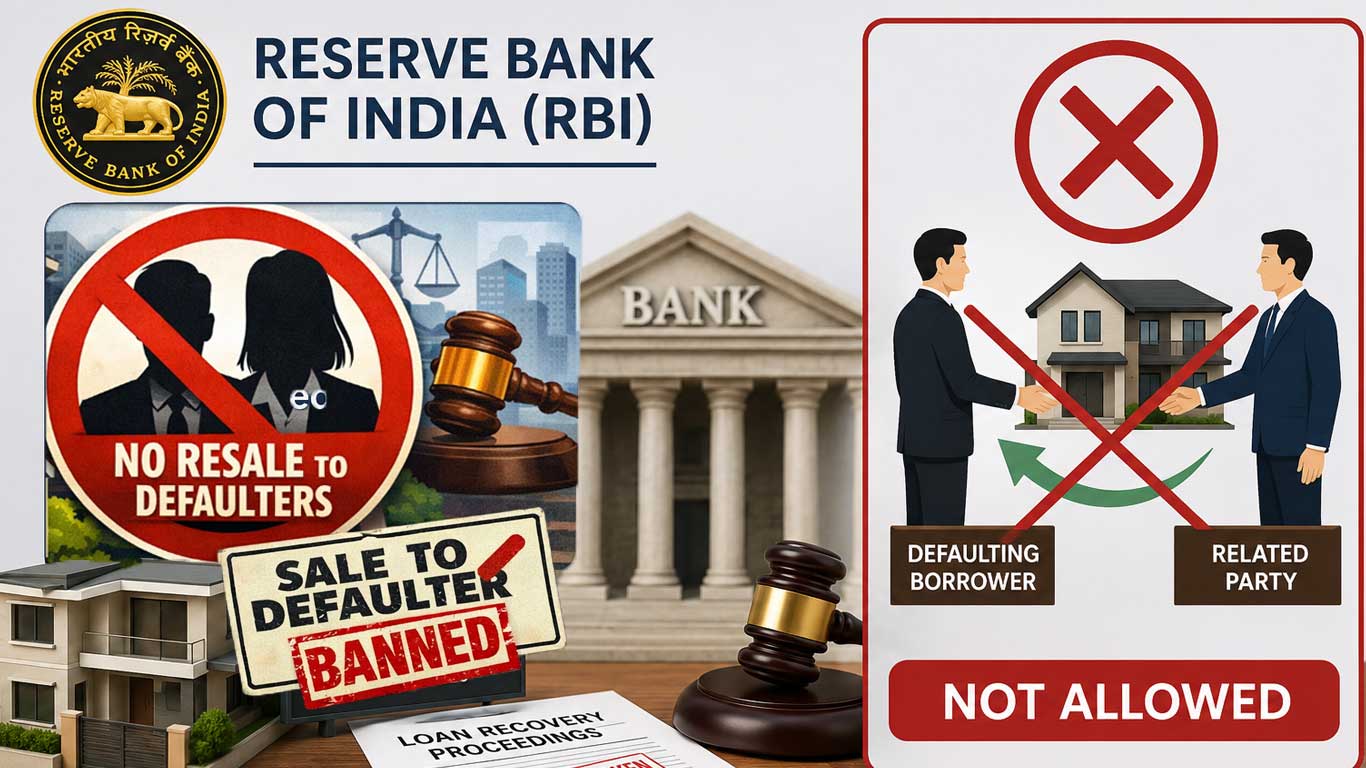
New Delhi, Jul 17 (KNN) The Reserve Bank of India (RBI) has clarified that banks cannot sell immovable properties acquired during loan recovery proceedings back to the defaulting borrower or related parties, citing risks to credit discipline.
The revised prudential norms, issued under the Resolution of Stressed Assets framework, will come into effect from October 1, 2026, providing clearer rules on the treatment and disposal of non-financial assets acquired during recovery proceedings.
Asset Acquisition Only in Exceptional Cases
The central bank noted that banks are generally not expected to hold non-financial assets as part of routine lending. However, in exceptional situations—such as when a loan turns non-performing and recovery measures are initiated—banks may take ownership of immovable assets pledged as collateral.
Mandatory Disposal Within Seven Years
To ensure such assets do not remain indefinitely on bank balance sheets, the RBI has directed that they must be disposed of within a maximum period of seven years, in line with each bank’s internal policy. Lenders have been advised to sell these assets at the earliest, preferably through public auctions.
Borrower Buyback Proposal Rejected
The RBI also rejected suggestions received during stakeholder consultations that would allow defaulting borrowers to repurchase these assets. It stated that such a move could create a ‘moral hazard’ by giving defaulters an undue advantage and weakening repayment discipline.
Valuation and Accounting Norms
Under the new guidelines, banks must record acquired assets at the lower of the outstanding loan value or the distress sale value, determined by at least two independent valuers. If such assets are later used by the bank for its own operations, they will be reclassified as fixed assets.
(KNN Bureau)













Leave a comment