

Introduction & Market Context
presented its first quarter fiscal 2027 results on July 13, 2026, showcasing robust financial performance and strengthening its position as India’s second-largest asset manager. The company reported a 23% year-over-year surge in profit after tax to ₹9.6 billion, outpacing its 18% revenue growth and demonstrating strong operating leverage.
The results came against a favorable industry backdrop, with India’s mutual fund sector reaching quarterly average assets under management of ₹83.28 trillion, up 15.4% year over year. ICICI Prudential’s growth outpaced the broader industry by nearly 3 percentage points, driven by market leadership in equity and hybrid categories.
The company’s stock rose 1.46% to $3,205.6 following the presentation, trading near the upper end of its 52-week range of $2,165 to $3,611, reflecting investor confidence in its sustained growth trajectory.
Quarterly Performance Highlights
ICICI Prudential AMC delivered strong financial results across all key metrics for the quarter ended June 30, 2026. As detailed in the following performance overview, the company demonstrated consistent double-digit growth in revenue, operating profit, and profitability.
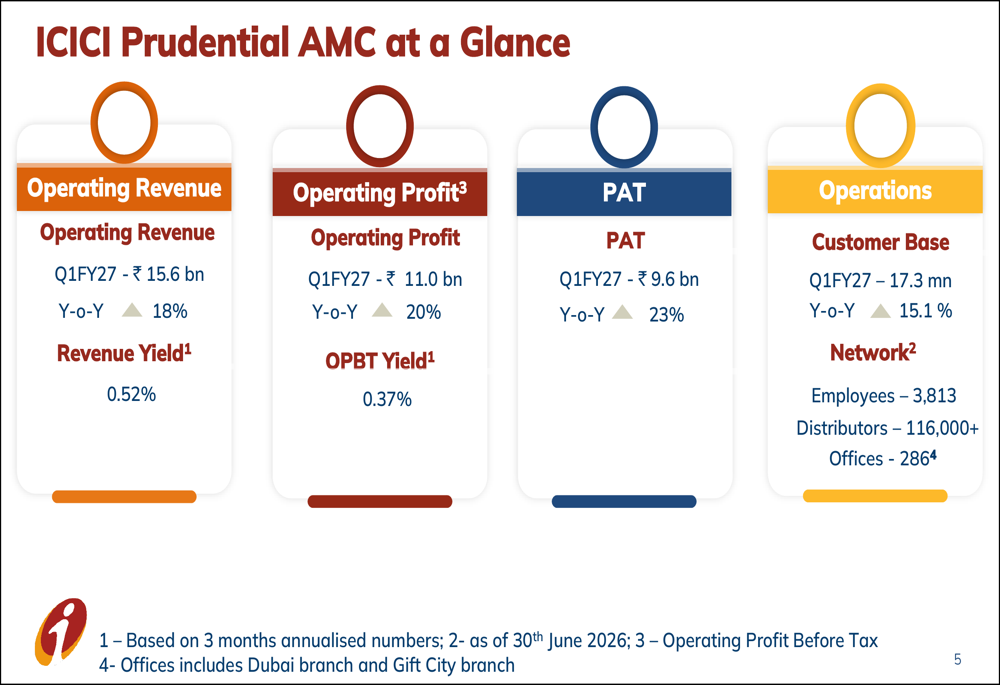
Operating revenue reached ₹15.6 billion, marking an 18% year-over-year increase with a revenue yield of 0.52%. Operating profit before tax grew even faster at 20% to ₹11.0 billion, translating to an operating profit yield of 0.37%. The company’s profit after tax of ₹9.6 billion represented a 23% year-over-year expansion, highlighting improving operational efficiency.
The company’s customer base expanded to 17.3 million, up 15.1% from the prior year, while its distribution network encompassed 3,813 employees, over 116,000 distributors, and 286 offices including international branches in Dubai and Gift City.
The following detailed breakdown shows the year-over-year comparison of the company’s profit and loss statement:
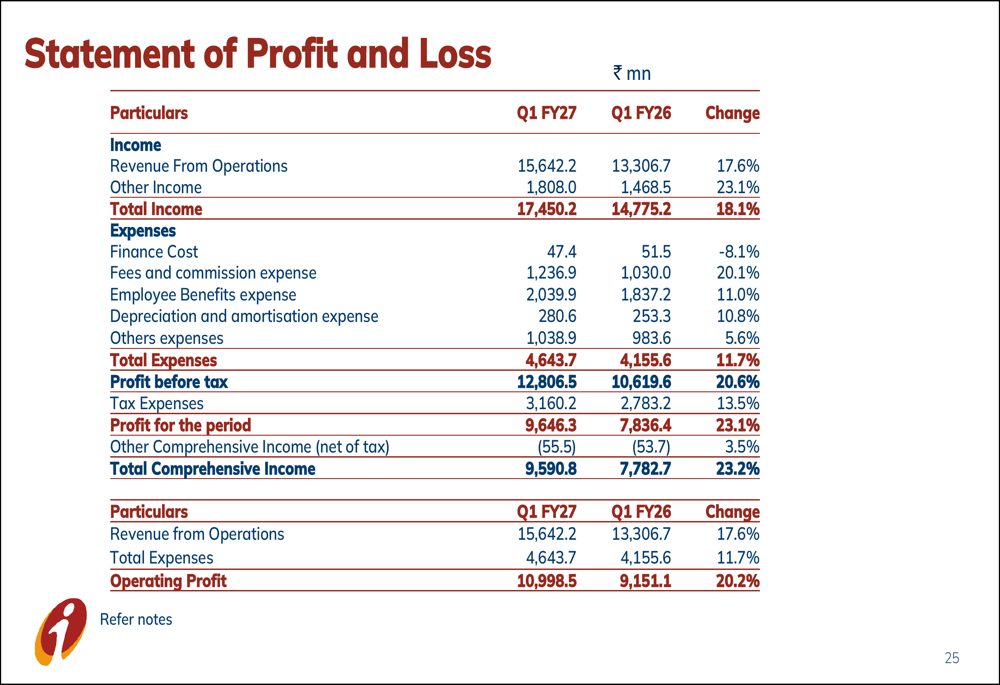
Total income for the quarter reached ₹17.45 billion, up 18.1% from ₹14.78 billion in the prior-year period. Operating expenses rose 11.7% to ₹4.64 billion, reflecting annual salary increases and ESOP charges, though expense growth remained below revenue growth. This operating leverage contributed to the 20.6% increase in profit before tax and the 23.1% surge in profit for the period.
Asset Management Leadership
ICICI Prudential AMC maintained its position as India’s second-largest mutual fund manager with commanding market shares across multiple categories. The company’s asset base demonstrated balanced growth across equity, hybrid, and alternative investment segments.
As illustrated in the following overview of key metrics, the company achieved market-leading positions in several critical categories:
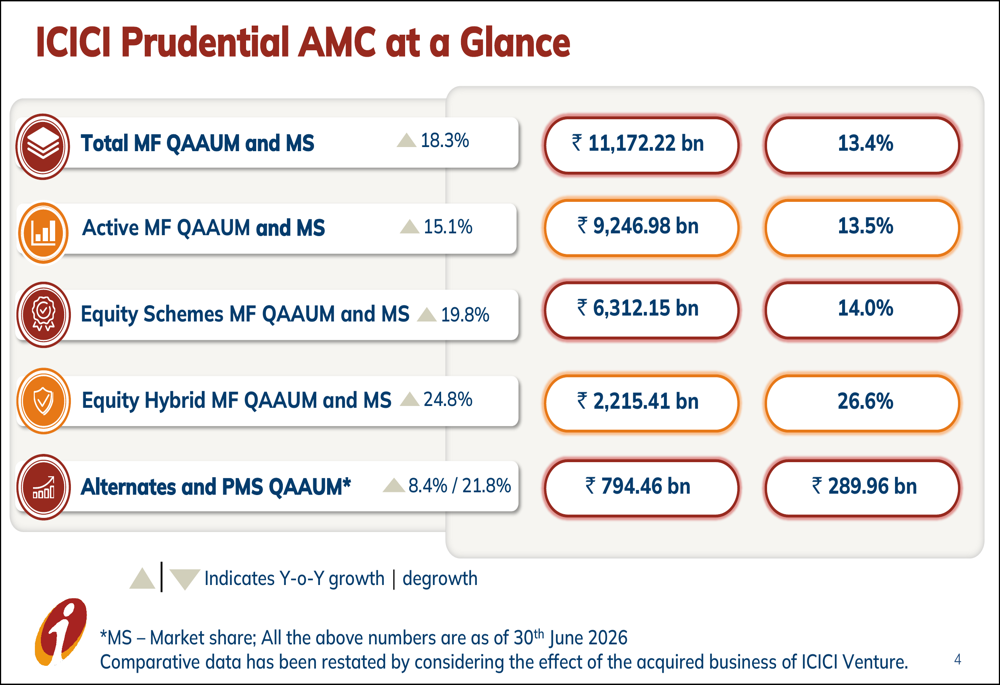
Total mutual fund quarterly average assets under management reached ₹11,172.22 billion, representing a 13.4% market share and 18.3% year-over-year growth. More significantly, the company held the highest market share of 13.5% in actively managed mutual funds, with active MF QAAUM of ₹9,246.98 billion growing 15.1% year over year.
The company’s strength was particularly evident in equity-oriented products. Equity schemes QAAUM stood at ₹6,312.15 billion with the highest market share of 14.0%, while equity hybrid schemes reached ₹2,215.41 billion with a dominant 26.6% market share—the highest in the industry.
The following chart details the company’s total and active mutual fund AUM performance:
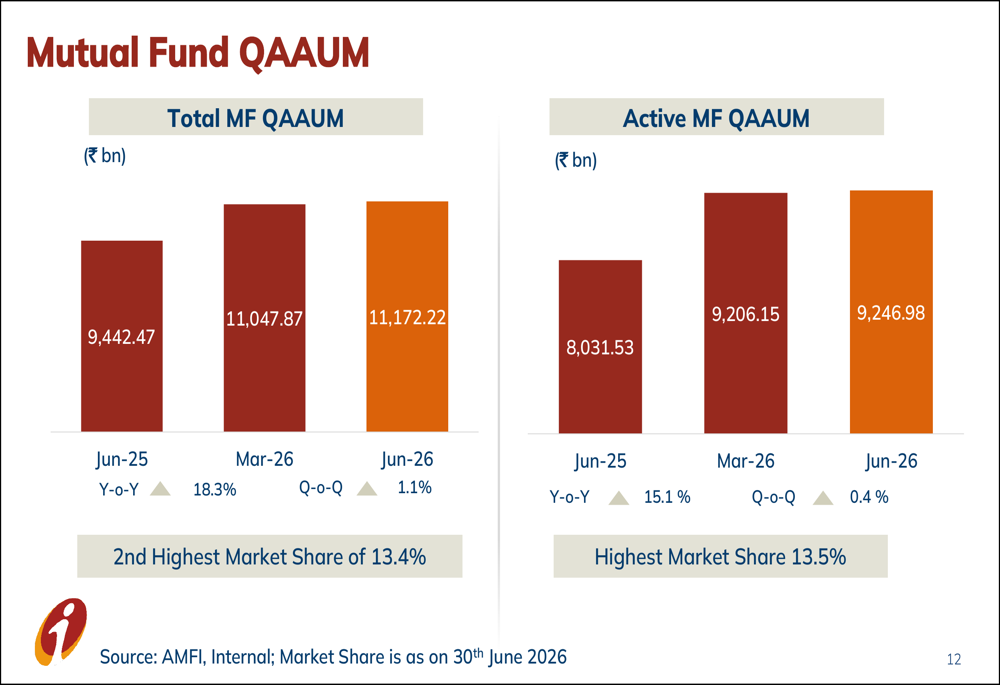
The company’s leadership in active management is noteworthy given the industry’s shift toward passive products. While total MF QAAUM grew 18.3% year over year, active MF QAAUM expanded at a still-healthy 15.1%, demonstrating continued investor confidence in the company’s active investment strategies.
Breaking down performance by category, the following charts show the company’s equity and equity hybrid segments:
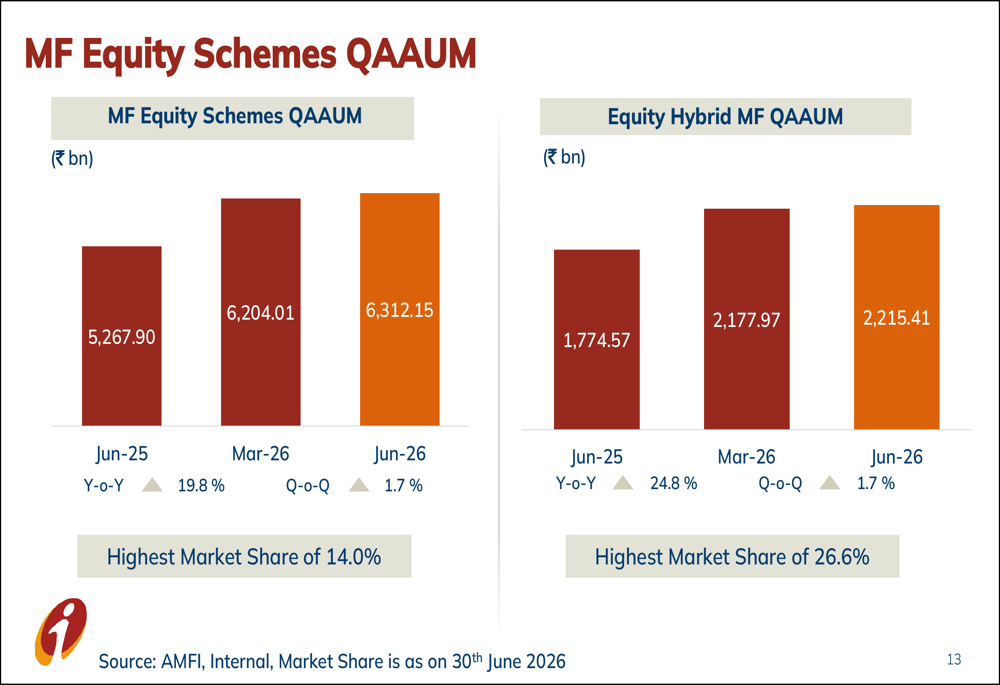
Equity hybrid MF QAAUM delivered particularly strong growth of 24.8% year over year, reflecting investor appetite for balanced risk-return products. This category’s 26.6% market share positions ICICI Prudential as the clear leader in hybrid strategies, which have gained traction as investors seek diversification.
Industry Context and Competitive Position
The broader Indian mutual fund industry demonstrated robust growth during the quarter, providing a favorable operating environment for asset managers. The following industry overview shows the expansion in assets under management across different categories:
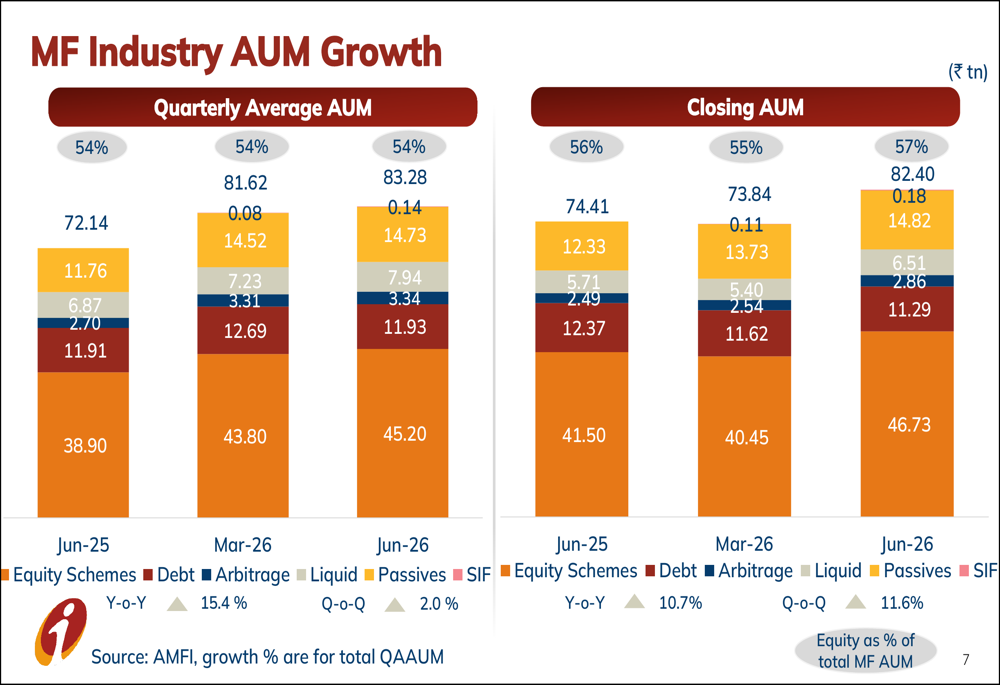
Industry quarterly average AUM reached ₹83.28 trillion, up 15.4% year over year and 2.0% quarter over quarter. Equity schemes maintained a steady 54% share of total mutual fund AUM at ₹45.20 trillion, while closing AUM showed even stronger momentum with 11.6% sequential growth.
Net sales into equity schemes remained robust, as shown in the following trend analysis:
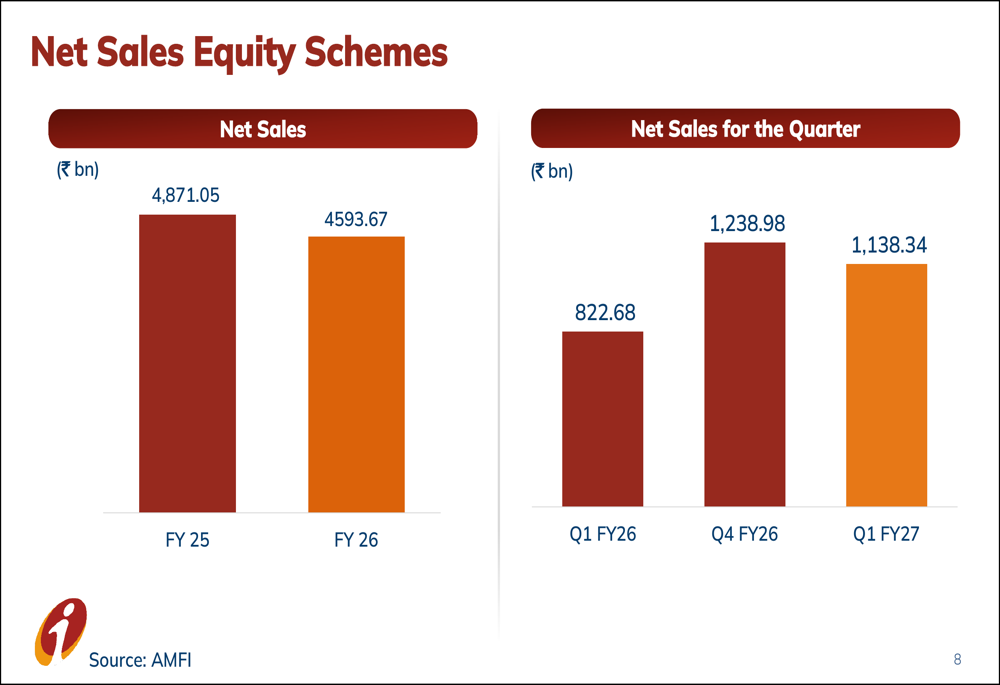
Quarterly net sales into equity schemes reached ₹1,138.34 billion in Q1 FY27, down slightly from the previous quarter’s ₹1,238.98 billion but maintaining strong momentum. Annual net sales for FY26 totaled ₹4,593.67 billion, reflecting sustained investor interest in equity products.
Retail participation continued to expand, with industry-wide unique investors reaching 61.9 million and systematic investment plan flows totaling ₹317.81 billion monthly, as detailed below:
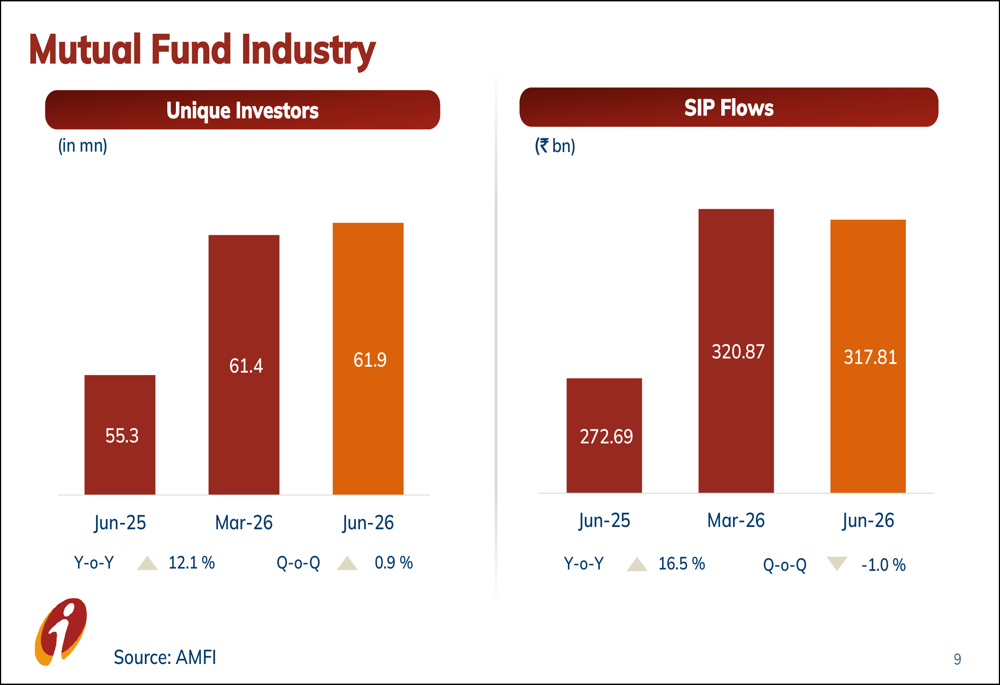
The 12.1% year-over-year growth in unique investors and 16.5% expansion in SIP flows underscore the structural shift toward systematic investing in India. ICICI Prudential captured a significant portion of this growth, with 7 out of 10 new customers during the quarter coming from the broader industry.
Portfolio Composition and Distribution Strategy
ICICI Prudential’s diversified portfolio spans multiple asset classes and investment strategies. The following breakdown illustrates the company’s QAAUM split across scheme types:
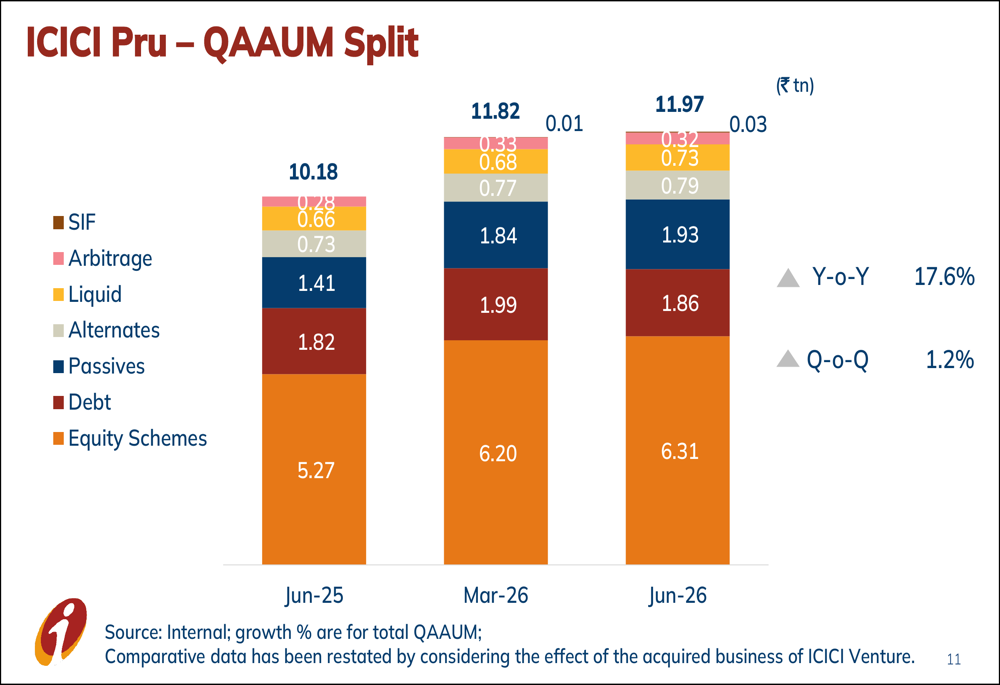
As of June 2026, equity schemes represented the largest component at ₹6.31 trillion, followed by passive products at ₹1.93 trillion and debt schemes at ₹1.86 trillion. The alternates category reached ₹0.79 trillion, reflecting the company’s expansion into alternative investment funds and portfolio management services.
The company’s customer growth trajectory remained strong, with both unique customers and individual monthly average AUM expanding at double-digit rates:
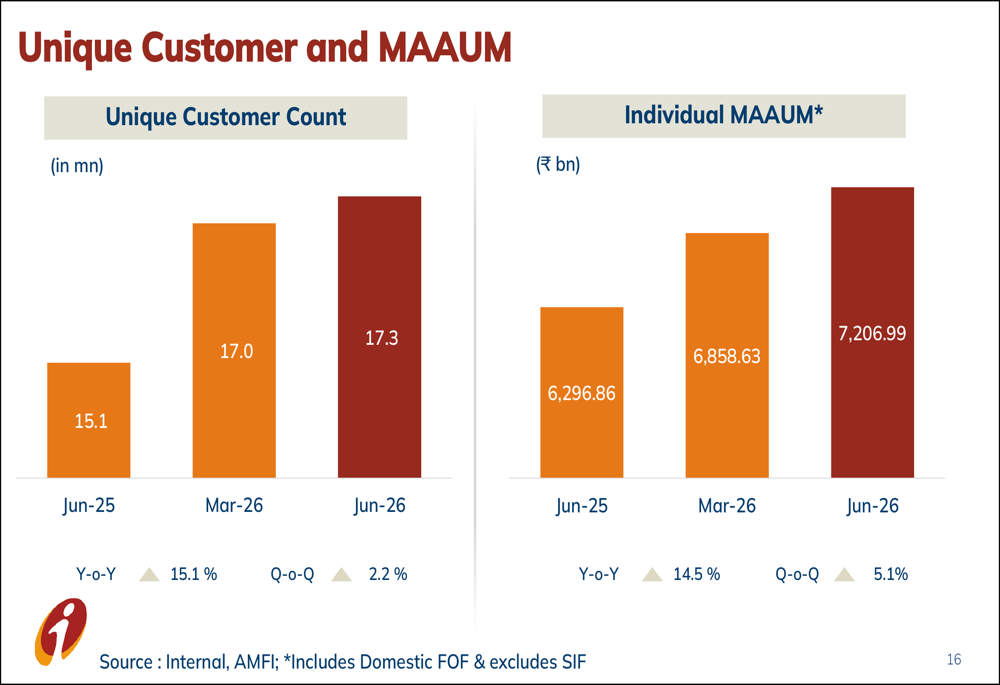
Individual MAAUM grew 14.5% year over year to ₹7,206.99 billion, outpacing the 15.1% growth in unique customers to 17.3 million. This suggests deepening engagement with existing clients alongside new customer acquisition.
The company’s distribution strategy emphasizes a multi-channel approach, as illustrated in the following network analysis:
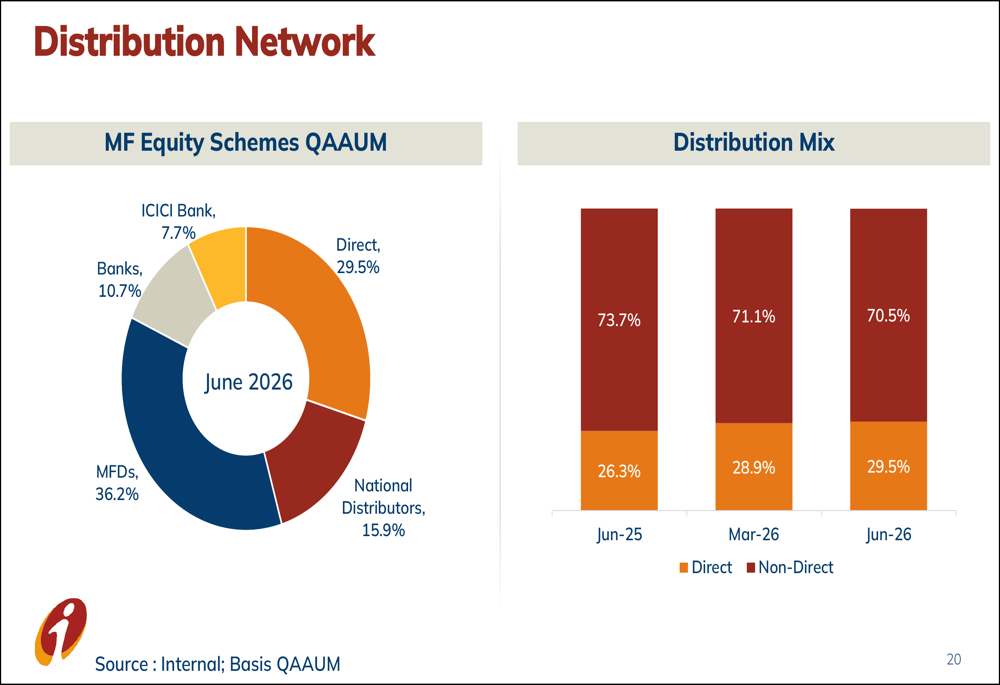
Direct channels accounted for 29.5% of equity schemes QAAUM as of June 2026, up from 26.3% a year earlier, while mutual fund distributors represented 36.2% and national distributors 15.9%. The steady increase in direct distribution reflects growing investor sophistication and the company’s digital capabilities.
Strategic Initiatives and Technology Leadership
ICICI Prudential AMC emphasized its commitment to technology-driven innovation and operational excellence. The company has developed a comprehensive digital ecosystem serving investors, partners, and internal operations.
The company’s digital infrastructure encompasses multiple platforms across investor services, partner tools, and operational systems:
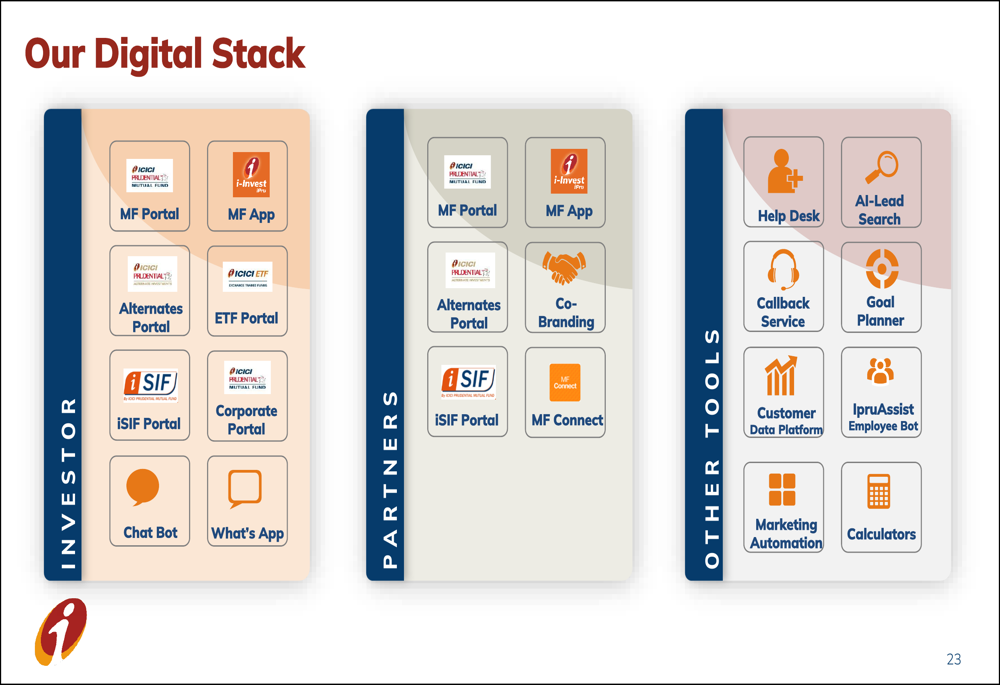
The digital stack includes dedicated portals for mutual funds, alternates, ETFs, specialized investment funds, and corporate clients, complemented by mobile applications and AI-powered chatbots. Partner-facing tools support distributors with co-branding capabilities and transaction platforms, while internal systems leverage artificial intelligence for customer service, marketing automation, and data analytics.
The company’s AI strategy focuses on three key areas: investment processes, customer and distribution support, and operational efficiencies. Management noted that 60% of customer email queries are now handled through AI systems, while the technology is being deployed for SIP renewal calls and investment research analysis.
The company operates under a “Trust Compass” framework that guides strategic decisions across three dimensions: customer focus, profitable growth, and risk management. This philosophy underpins the company’s approach to product development, technology investments, and market expansion.
Financial Deep Dive and Profitability Analysis
The company’s financial performance reflected strong operating leverage and disciplined expense management. The following breakdown details the components of operating revenue and margin:
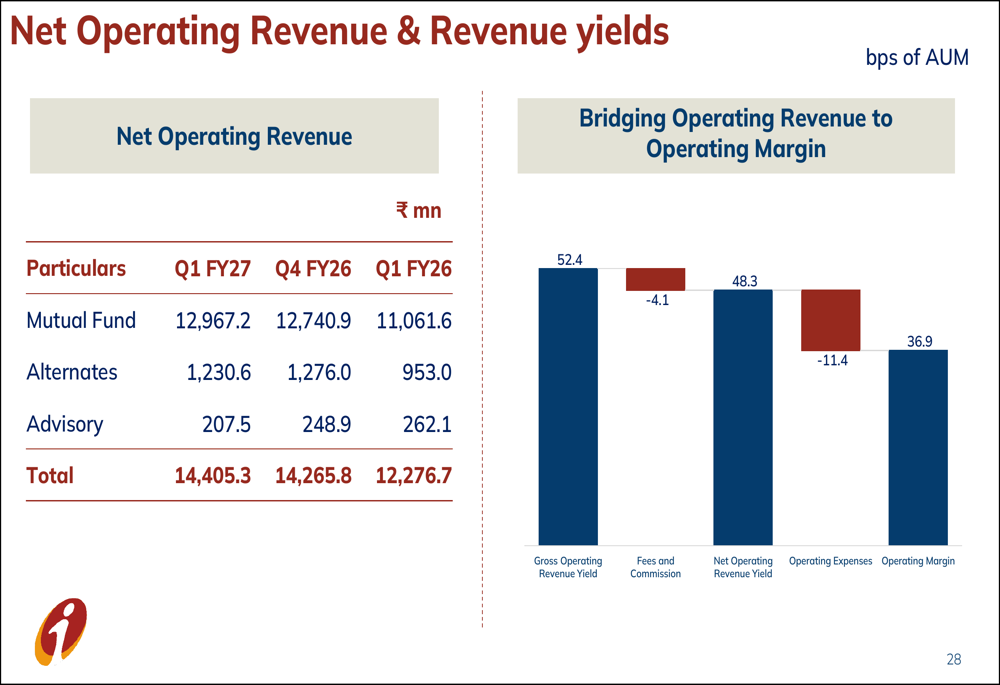
Net operating revenue totaled ₹14.4 billion for the quarter, with mutual funds contributing ₹13.0 billion, alternates ₹1.2 billion, and advisory services ₹0.2 billion. The waterfall chart illustrates how gross operating revenue yield of 52.4 basis points translates to an operating margin of 36.9 basis points after deducting fees, commissions, and operating expenses.
The company’s investment portfolio, totaling ₹42.3 billion as of June 30, 2026, is strategically allocated across asset classes:
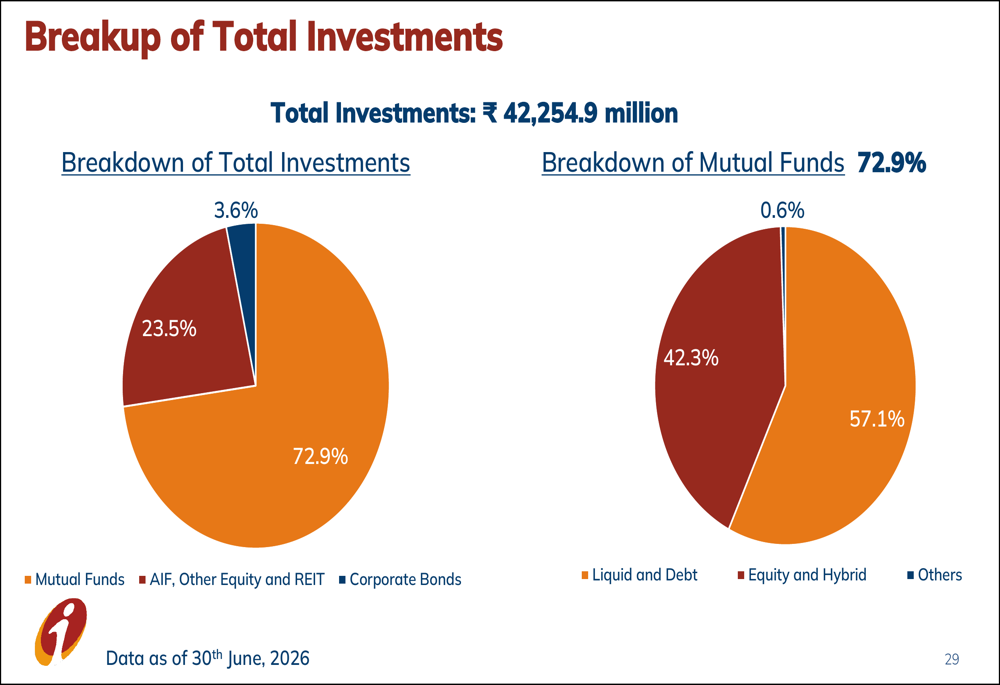
Mutual funds represented 72.9% of total investments, with 57.1% in liquid and debt instruments and 42.3% in equity and hybrid products. Alternative investments, other equity, and REITs accounted for 23.5%, while corporate bonds comprised 3.6%. This balanced allocation supports both capital preservation and growth objectives while providing seed capital for new product launches.
The company’s comprehensive key performance indicators demonstrate consistent execution across operational and financial metrics:
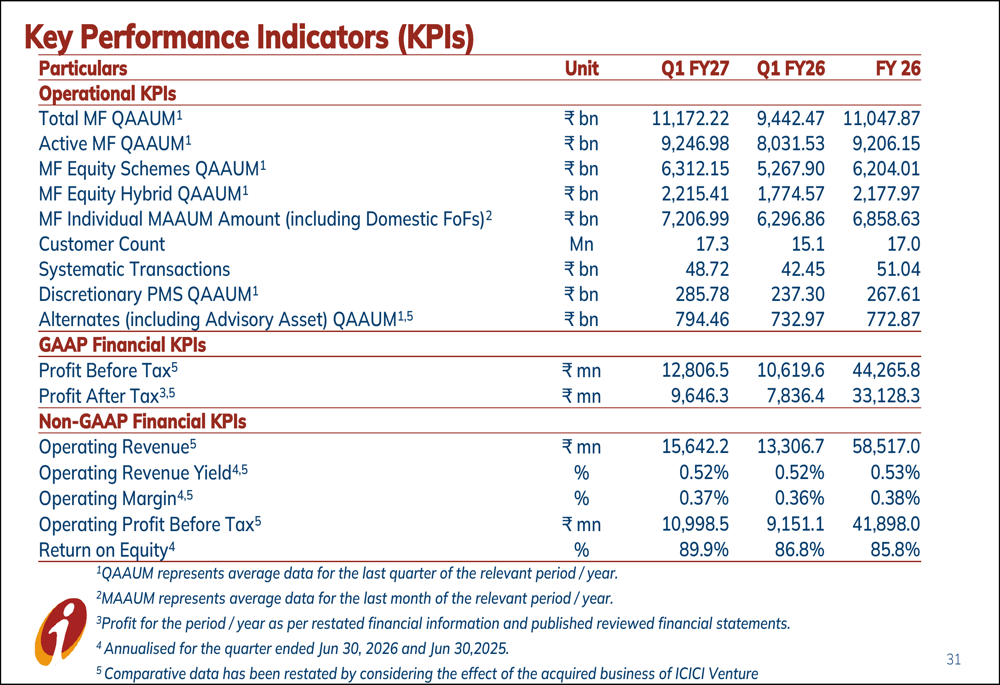
Return on equity reached 89.9% on an annualized basis for Q1 FY27, up from 86.8% in the prior year, reflecting efficient capital deployment. The operating margin of 0.37% remained stable, while systematic transactions of ₹48.72 billion monthly demonstrated the strength of recurring revenue streams.
Forward-Looking Statements and Growth Outlook
While the company did not provide formal financial guidance, management outlined several strategic priorities for the coming quarters. The product pipeline includes life cycle funds with 2031, 2036, and 2041 vintages, contra funds, multiple ETF products, fund-of-fund categories, and a new commercial real estate series.
In the alternatives segment, the company has four specialized investment fund strategies currently in market with one additional sector-rotation strategy approved. Management emphasized building scale in the alternates business before setting detailed long-term targets, while continuing to expand the GIFT City offering through its Smart Navigator Fund.
The company faces several near-term challenges, including moderation in SIP trigger values during the quarter, pressure in the debt segment from institutional redemptions, and higher employee costs from annual salary increases. Management noted that debt AUM weakness reflected corporate working capital needs rather than seasonal factors, while SIP trends remained broadly in line with industry patterns.
Despite these headwinds, management expressed confidence in the structural growth opportunity for systematic investing in India. The company’s managing director characterized the current environment as favorable for disciplined investing, noting that moderate return expectations tend to encourage more careful evaluation and longer-term commitment from investors.
The company’s focus on technology, particularly artificial intelligence, aims to enhance both customer experience and operational efficiency. Initiatives include conversational interfaces over investment data, automated service ticket resolution, and AI-driven outbound calls for customer engagement. These investments position the company to scale operations while maintaining service quality as the customer base expands.
With market-leading positions in equity and hybrid categories, a diversified product portfolio, and continued investment in technology and distribution, ICICI Prudential AMC appears well-positioned to capitalize on India’s growing mutual fund industry while navigating near-term market volatility.
Full presentation:
This article was generated with the support of AI and reviewed by an editor. For more information see our T&C.














Leave a comment