
Key Takeaways
- Costco is a wholesale retailer whose main competitors include other wholesale clubs like BJ’s and Sam’s Club, along with big-box retailers Walmart and Target.
- Costco’s liquidity trends have shifted over time, while operating efficiency remains strong.
- The company’s balance sheet shows that its financial risk is manageable.
- Investors can analyze trends for Costco’s return on assets and return on equity ratios and compare them with industry peers to evaluate investor return.
Get personalized, AI-powered answers built on 27+ years of trusted expertise.
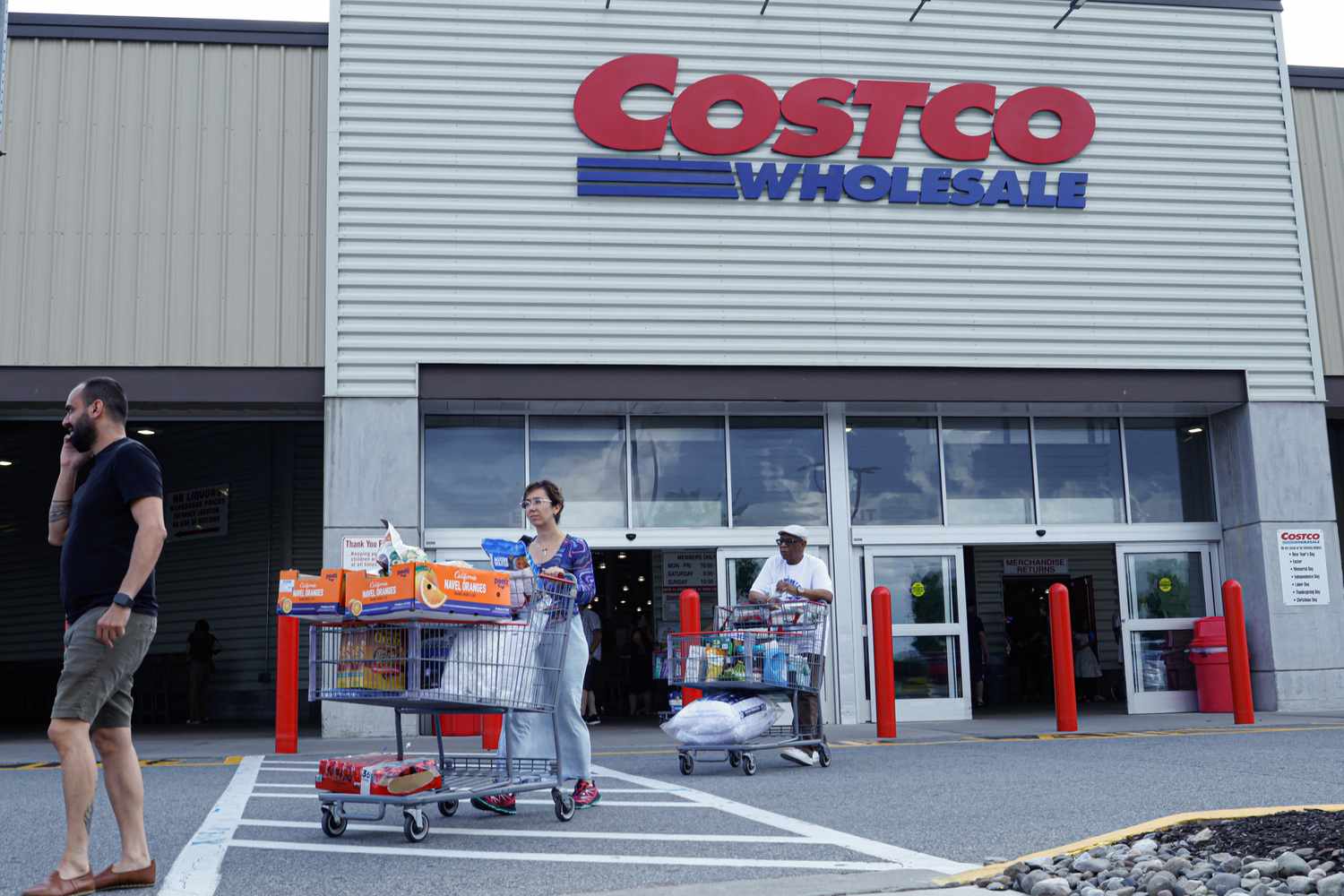
In April 2026, Costco Wholesale (COST) had a market capitalization of $432.72 billion. While it competes with warehouse clubs like BJ’s Wholesale Club (BJ) and Sam’s Club, as well as big-box stores Walmart (WMT) and Target (TGT), investors may wonder how financially healthy Costco really is.
One way to gauge a company’s financial health is to review its balance sheet, which shows what it owns and what it owes. A strong balance sheet—one with more assets than liabilities and good liquidity, among other things—indicates stability, efficient use of capital, and the ability to sustain growth.
To evaluate Costco’s financial condition, the following analysis compares key figures from its 2025 and 2024 balance sheets with reports from 2021, highlighting whether the company is improving, holding steady, or weakening in how it manages its resources.
What’s in a Balance Sheet?
A balance sheet provides a snapshot of a company’s financial health at a specific point in time. All balance sheets consist of three sections: assets, liabilities, and equity. Each section includes line items that provide the total value for that section when they’re added together. Each line item consists of inputs that aren’t listed on the balance sheet. These inputs can be found in the footnotes and management discussion section of the report.
Current assets reflect the company’s short-term liquidity, or the amount of cash Costco will have available within one year. Current liabilities are bills that must be paid within that year. These two categories show how financially sound the company is within the noted period. For instance, you can subtract the figure for current liabilities from that for current assets to get a sense of whether Costco can meet its short-term liabilities. In addition, comparing relevant financial ratios across multiple years is important for investors. Looking at trends over time makes the numbers easier to interpret and reveals whether a company’s performance is improving or declining.
Understanding Costco’s Liquidity Ratios
The table below highlights three of Costco’s liquidity ratios for its 2025 and 2024 fiscal years, calculated using figures on its balance sheet:
- Current ratio: This ratio tells you whether a company can pay its short-term liabilities (which are due within a year) using its short-term assets, such as cash, cash equivalents, accounts receivable (AR). inventories, and other liquid assets.
- Quick ratio: This ratio indicates whether a company can meet its short-term liabilities with its more liquid assets, including AR and excluding inventories.
- Cash ratio: This ratio shows you how well-positioned a company is to pay off its short-term liabilities using only its most liquid assets, which are cash and cash equivalents.
| Costco’s Liquidity Ratios (2025 vs. 2024) | ||
|---|---|---|
| Liquidity Ratios | 2025 | 2024 |
| Current Ratio Current Assets ÷ Current Liabilities |
1.03 | 0.97 |
| Quick Ratio (Cash + Marketable Securities + AR) ÷ Current Liabilities |
0.50 | 0.39 |
| Cash Ratio (Cash + Marketable Securities) ÷ Current Liabilities |
0.41 | 0.31 |
They show that Costco’s liquidity improved from 2024 to 2025. The company’s current ratio is the strongest, showing that the company has more than enough in current assets to cover its current liabilities. Put simply, for every dollar it owed, it had $1.03 in current assets.
Costco’s liquidity was stronger in 2021 than in 2024 and was generally weaker compared to 2025. In 2021, its current, quick, and cash ratios were 1.00, 0.48, and 0.41, respectively. You can see from the balance sheets that the company’s current liabilities grew faster between the 2021 and 2024, and fewer current assets were highly liquid. Costco’s merchandise inventory, which isn’t counted in the quick and cash ratios, also increased.
Fast Fact
Costco’s balance sheet can also show how well it converts its inventory or collects its receivables.
Analyzing Costco’s Operational Efficiency Through Activity Ratios
Activity ratios measure operational efficiency, showing how well a company uses its assets to generate revenue.
| Costco’s Activity Ratios (2025 and 2024) | ||
|---|---|---|
| Activity Ratios | 2025 | 2024 |
| Receivables Turnover Net Sales ÷ Average Receivables |
84.3 | 91.7 |
| Average # of Days Receivables Outstanding 365 ÷ Receivables Turnover |
4.0 | 4.3 |
| Inventory Turnover COGS ÷ Average Inventory |
13.2 | 11.9 |
| Average # of Days in Stock 365 ÷ Inventory Turnover |
27.7 | 30.7 |
| Payables Turnover Annual Purchases ÷ Annual Payables |
12.1 | 11.4 |
| Average # of Days Payables Outstanding 365 ÷ Payable Turnover |
30.2 | 32.0 |
These ratios show that Costco’s collection times dipped slightly in 2025 from 2024. On average, it kept its inventory in stock for fewer days in 2025 compared to 2024. Costco’s payables turnover was slightly higher in 2025, and the average number of days the company’s payables remained outstanding was lower.
For FY 2021, receivables turnover was 106.5x, average collection period was 3.4 days, inventory turnover was 12.0x, average days in stock was 30.4, payables turnover was 10.5x, and average days payables outstanding was 34.7. Overall, these figures also indicate that Costco’s receivables management dipped between 2021 and 2024, but its inventory turnover was consistent, while its payables timing dropped.
Evaluating Costco’s Use of Assets With Operating Efficiency Ratios
The operating efficiency ratios describe how well Costco runs its business, as shown in the table below.
| Costco’s Operating Efficiency Ratios (2025 and 2024) | ||
|---|---|---|
| Operating Efficiency Ratios | 2025 | 2024 |
| Total Asset Turnover Net Sales ÷ Total Sales |
3.50 | 3.57 |
| Fixed Asset Turnover Net Sales ÷ Net Fixed Assets |
8.46 | 8.60 |
| Equity Turnover Net Sales ÷ Total Equity |
9.93 | 10.57 |
On a year-over-year basis, there was a slight drop in all three operating efficiency ratios. But Costco was still able to generate revenue using its assets.
For FY 2021, total asset turnover was 3.24x, fixed asset turnover was 8.18x, and equity turnover was 10.63x. These figures are relatively flat compared to 2024.
Assessing Financial Risk at Costco Using Key Ratios
The financial risk ratios show Costco has low debt-to-capital and debt-to-equity ratios and a positive trend.
| Costco’s Financial Risk/Solvency Ratios (2025 and 2024) | ||
|---|---|---|
| Financial Risk/Solvency Ratios | 2025 | 2024 |
| Debt to Total Capital Total Debt ÷ Total Capital |
0.30 | 0.31 |
| Debt to Equity Total Debt ÷ Total Equity |
0.44 | 0.46 |
| Financial Leverage Total Assets ÷ Total Equity |
3.00 | 2.96 |
| CFO to Debt Cash Flow from Operations ÷ Total Debt |
1.25 | 1.06 |
It also shows that the cash flow from operations-to-total debt is high and improving, another positive trend. The financial leverage ratio shows that for every $3.00 of assets, there is $1.00 of equity financing them (and $2.00 of debt financing the remainder). If this ratio goes higher, it may become unsustainable for Costco to pay the increased interest costs. In general, equity financing is not cheaper than debt. So in a low-interest-rate environment, it may be prudent to use more debt.
For FY 2021, Costco’s debt-to-capital was 0.29, and its debt-to-equity was 0.41.
Measuring Costco’s Returns: Insights From Investment Ratios
Costco’s return on investment ratios are strong and show a consistent trend.
| Costco’s Return on Investment (ROI) Ratios (2025 and 2024) | ||
|---|---|---|
| ROI Ratios | 2025 | 2024 |
| Return on Assets (ROA) EBIT ÷ Total Assets |
10.5% | 10.5% |
| Return on Equity (ROE) Net Income ÷ Total Equity |
27.8% | 31.2% |
These ratios have meaning when you’re looking at trends for a company and when comparing the company to its peers. Over time, a trend should be analyzed for changes. The ratios are very industry-specific and need to be compared with the same ratios for competitors. Based on data from Morningstar, Costco’s return ratios are in line with or better than those of its peers, BJ’s, Wal-Mart, and Target.
It’s important to analyze ROA and ROE since return on assets ignores capital structure (debt versus equity). This is important because Costco can receive a high return on its assets, but if the assets are 100% financed by equity or debt, for example, then the shareholders’ return may differ greatly.
For FY 2021, Costco’s ROE was approximately 25%.
The Bottom Line
Generally, Costco’s balance sheet analysis indicates that the company was in good financial health at the end of its 2025 fiscal year. The company’s operating efficiency trend is consistent and strong. Its financial risk ratios show a manageable level of risk, with a positive trend. Lastly, its return ratios are better than those of its peers and consistent. Overall, its financial position improved throughout 2025.
Get personalized, AI-powered answers built on 27+ years of trusted expertise.








Leave a comment