
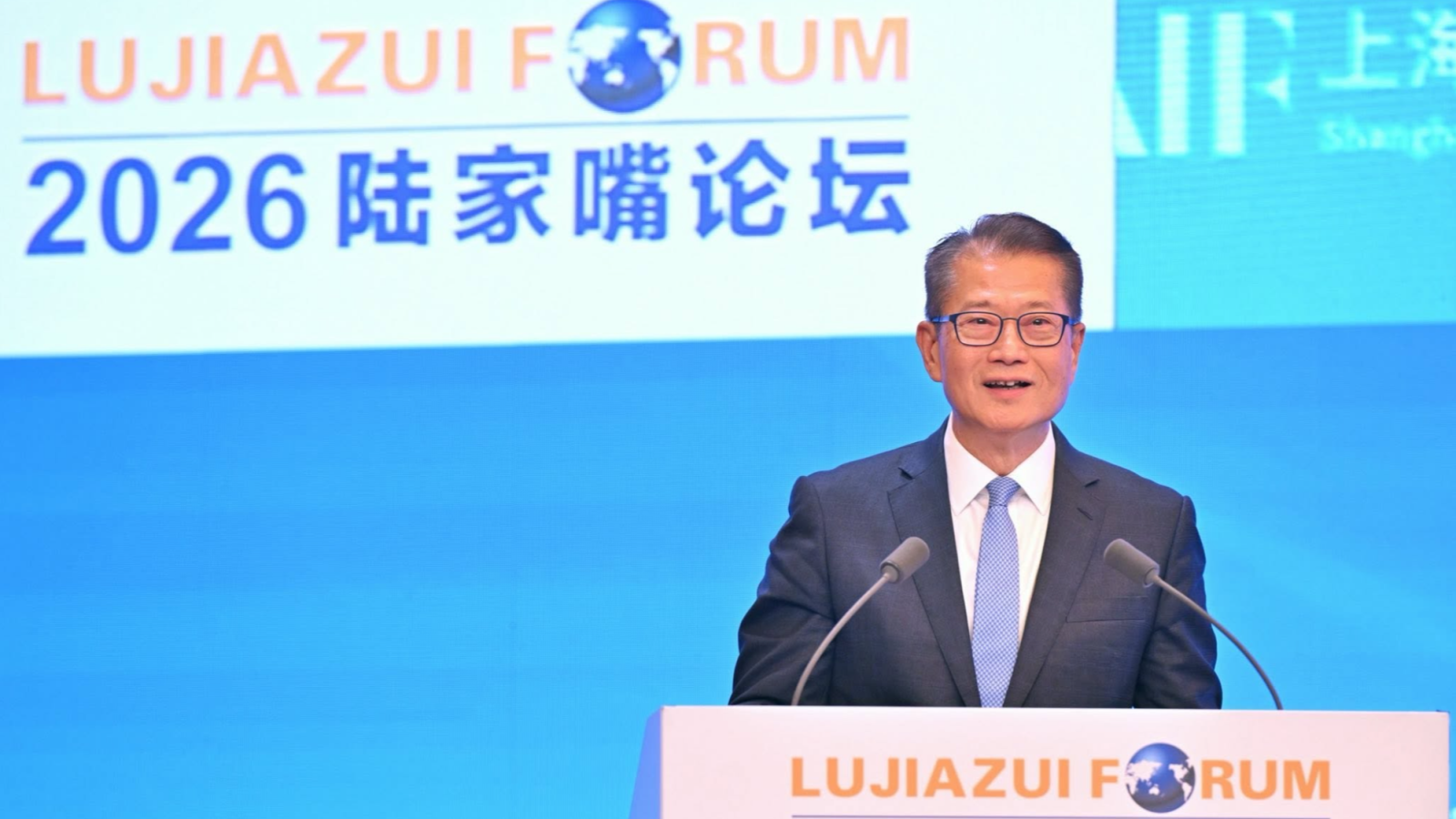
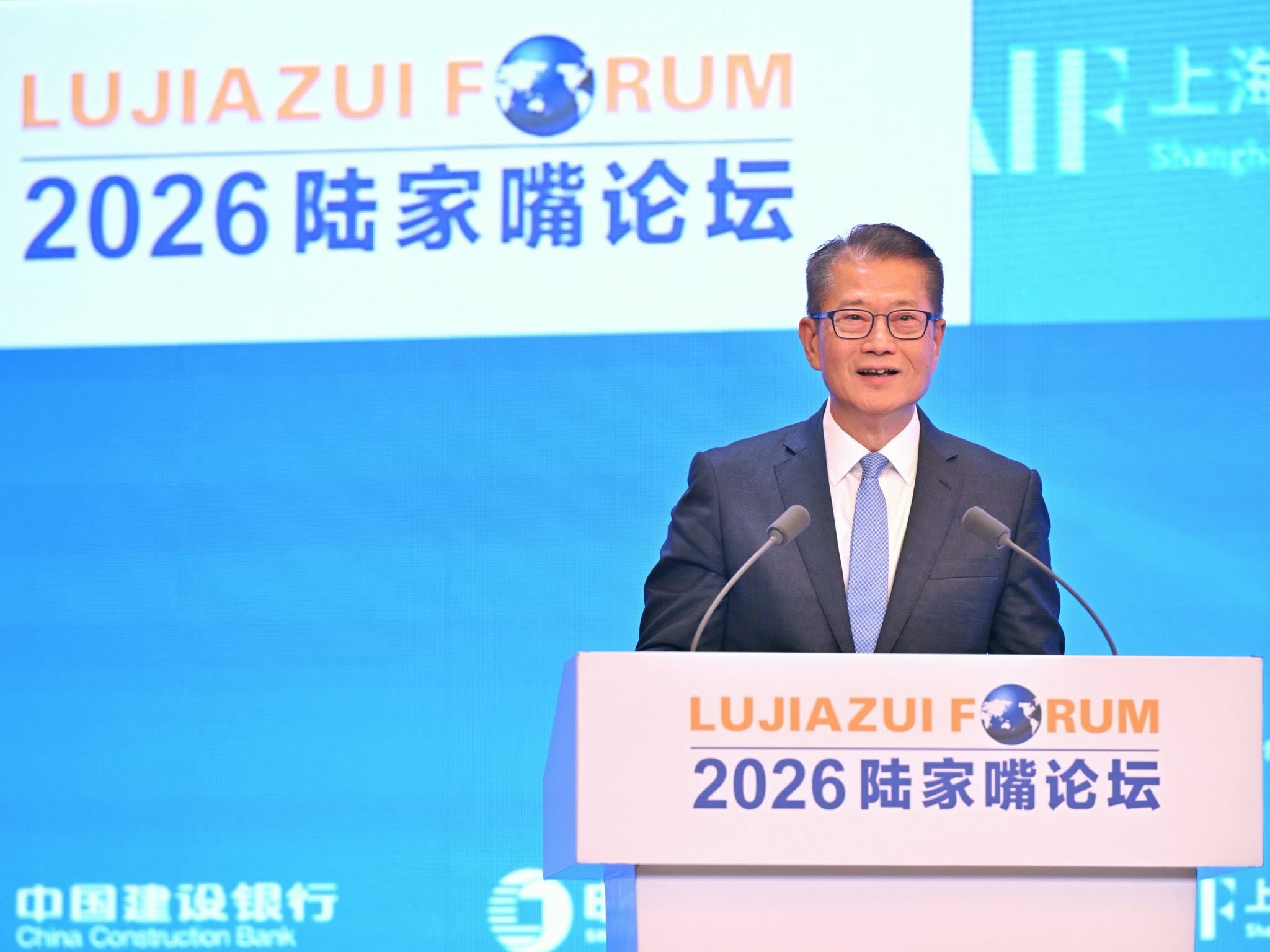
Hong Kong is discussing with the Chinese mainland authorities ways of broadening channels to allow eligible investors to access a wider range of Hong Kong-listed securities products in order to enhance market liquidity and meet rising demand for diversified investment opportunities, Financial Secretary Paul Chan Mo-po said.
His remarks come as market regulators on both sides have tightened oversight of illegal cross-border securities activities. Overseas institutions will be prohibited from conducting marketing and client solicitation activities, providing account opening, trade execution and fund transfer services relating to securities, futures, and fund businesses on the mainland.
Chan said legitimate investment will still be encouraged, and placing such activity under a compliant regulatory framework will bolster the confidence of the mainland authorities.
“Greater confidence will facilitate deeper cooperation between mainland and Hong Kong markets and create room for further relaxation of outbound asset allocation in the future,” he said.
Since 2014, a series of programs linking capital markets between the Hong Kong Special Administrative Region and the mainland have been introduced, allowing investors in each market to trade in shares, bonds and exchange-traded funds in the other.
A prudent approach was adopted at the initial stage, with most eligible products being relatively low-risk, the finance chief said.
ALSO READ: HK targets Aug 3 launch of 5-year RMB treasury bond futures
In a recent interview, Chan said proposals being discussed with the mainland include lowering entry thresholds for qualified investors, raising southbound investment quotas under cross-border trading programs, and expanding the range of eligible products.
“For investors in mainland cities, particularly in the Guangdong-Hong Kong-Macao Greater Bay Area, Hong Kong is naturally the preferred destination for them to allocate some of their assets offshore,” Chan said. He added he is optimistic that expanding connectivity will bring additional liquidity to Hong Kong’s markets.
According to financial data provider Wind, net southbound inflows via the Stock Connect, which enables mainland investors to buy Hong Kong-listed shares, had exceeded HK$1.4 trillion ($178.6 billion) last year, the highest annual figure since the program’s launch.
Chan said drawing high-quality companies to list in Hong Kong is “the most fundamental measure” to improve liquidity. “If you have good companies, investors will find their way and capital will follow,” he told China Daily.
Beyond mainland firms, the SAR is stepping up efforts to attract companies from Southeast Asia, the Middle East and Central Asia, with the Association of Southeast Asian Nations a primary target. Authorities are studying approaches, including shortening settlement cycles and refining listing rules to enhance competitiveness, Chan said.
According to Hong Kong Exchanges and Clearing, which runs the city’s bourse, 90 biotechnology companies have been listed since earlier this month under Chapter 18A — a framework introduced in 2018 for pre-revenue biotech firms — while 18 high-growth technology enterprises have gone public under Chapter 18C.
Chan said new-economy companies now account for about 25 percent of the total market capitalization — up from 2.8 percent in 2018.
READ MORE: Chan: HKSAR’s first five-year plan to better chart the future
To further improve capital efficiency, the Hong Kong Monetary Authority and HKEX are exploring the establishment of a multi-asset class post-trade securities infrastructure. The system would allow investors to deposit securities, including stocks and bonds, and use them as collateral across products for financing or supporting the issuance of derivative instruments.
The expansion of Hong Kong’s equity market also underpins the growth of its wealth management industry. According to the Global Wealth Report 2026 published by the Boston Consulting Group last month, Hong Kong has overtaken Switzerland to be the world’s largest cross-border wealth management center.
Official data showed that assets under management in Hong Kong reached HK$35.1 trillion at the end of 2024 — equivalent to roughly 11 times the city’s gross domestic product. Chan said figures for 2025 will be released next month and are expected to show “another decent growth”.
He said Hong Kong will continue to diversify sources of its cross-border wealth management business, targeting capital from ASEAN, the Middle East and Europe.
Referring to his visit to France, Belgium and Switzerland last month, Chan said European investors, whose portfolios have traditionally focused on Europe and the United States, are placing growing emphasis on diversification. They’re expected to organize delegations to visit Hong Kong to explore opportunities, he said.
The trend also aligns with the development needs of mainland enterprises. In a blog post on Sunday, Chan said he had met representatives of companies in sectors like artificial intelligence and semiconductors during a recent visit to the Yangtze River Delta.
Many have chosen Hong Kong as the platform for their international expansion, reflecting their confidence in the SAR’s global investor network and its role as a bridge linking China’s technological innovation with international capital, he added.
Contact the writer at irisli@chinadailyhk.com










Leave a comment