
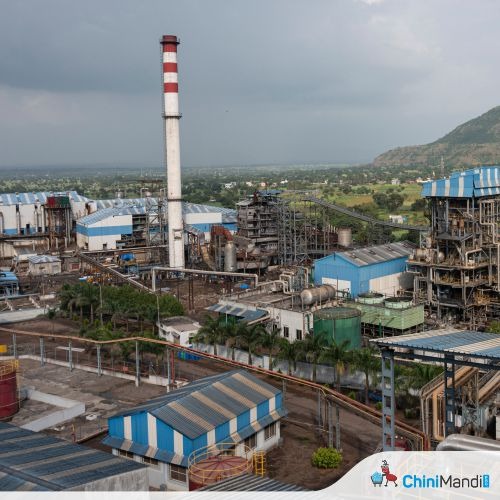
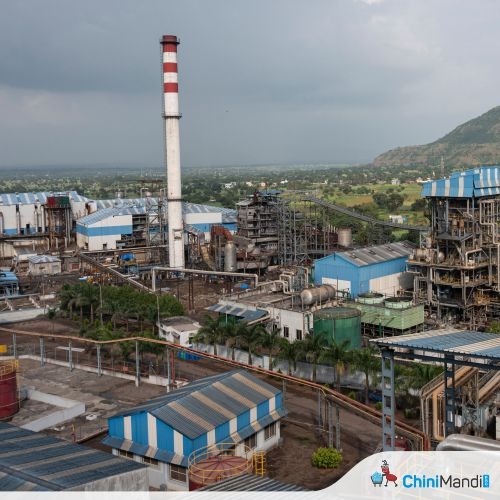
Machinery and spare parts worth nearly Tk 100 crore at Kushtia Sugar Mills are deteriorating rapidly after the factory remained closed for four years, while workers continue to await unpaid dues and local stakeholders press for the mill’s reopening.
Kushtia Sugar Mills, which began operations in the 1965–66 fiscal year, was once a profitable enterprise. However, the mill started experiencing financial difficulties in the 1990s and continued to incur losses despite repeated efforts to keep operations running. In the 2020–21 fiscal year alone, the mill recorded losses of Tk 57.56 crore, leading to the suspension of crushing operations, Deshkan News reported.


Since then, sugar production has remained completely halted. Industry sources say machinery and spare parts valued at nearly Tk 100 crore have been left unused and are suffering damage due to a lack of maintenance.
Despite the closure, the government continues to spend approximately Tk 25 lakh every month on salaries and operational expenses for 75 officials and employees still attached to the mill.
According to sources, political interference, excessive recruitment and corruption contributed to the mill’s financial decline over several decades. By the time crushing operations were suspended, accumulated losses had reached Tk 606 crore.
Although production activities have ceased, 75 officials and employees remain on the payroll. With limited operational responsibilities, many spend their time at the facility despite the absence of manufacturing work.
The only revenue-generating activity currently underway involves leasing portions of the mill’s 220-acre property, including land and ponds. These leases generate an annual income of around Tk 27 lakh.
The closure has also left hundreds of workers facing financial uncertainty. Around 202 workers and employees are reportedly owed Tk 23.48 crore in unpaid dues.
Abdul Quddus, president of the Retired Workers, Employees and Officers Welfare Association, said that when the mill closed, 262 individuals were owed nearly Tk 21 crore. By 2025, an additional 100 workers had joined the list of unpaid employees, increasing outstanding dues by about Tk 3.5 crore.
Many former workers are struggling to meet essential expenses, including healthcare, education costs and family obligations. Worker representatives have demanded immediate settlement of arrears and the resumption of mill operations.
As the closure stretches into its fourth year, concerns are growing over the condition of valuable industrial equipment.
Mohammad Hamidul Islam, Managing Director of Kushtia Renwick Jajneshwar & Co., said machinery left unused for long periods naturally deteriorates. Without regular maintenance using oil and grease, between 25 and 40 percent of the equipment could become unusable.
The mill also became the centre of national attention in June 2021 when 52.7 tonnes of sugar reportedly disappeared from its warehouse. Following the incident, the Anti-Corruption Commission filed a case against three individuals, including storekeeper Faridul Haque, former Deputy Managing Director Al-Amin and Sardar Bashir Uddin.
The prolonged closure has also affected sugarcane cultivation in the region. Farmers say low-yielding seed varieties and limited government support have reduced the attractiveness of sugarcane farming.
Local farmer Moniruzzaman Atu said five farmers leased about 20 acres of mill land this year for sugarcane cultivation, but many growers are gradually abandoning the crop due to economic challenges.
Farmers argue that government incentives are insufficient and reach only a small number of growers. They also point out that sugarcane requires 12 to 18 months to mature, while other crops can be harvested up to three times within the same period.
Local groups continue to campaign for the revival of the mill. Abu Moni Saklayen Elin, General Secretary of the Kushtia Sugar Mills Modernisation and Protection Committee, said the movement to reopen the factory has been ongoing for years and urged authorities to take immediate action.
He noted that the shortage of suitable sugarcane cultivation areas and limited support for farmers remain major challenges for restarting operations.
Meanwhile, Engineer Zakir Hossain Sarkar, Member Secretary of Kushtia district BNP, said the government appears committed to reviving the mill. He stated that between 60,000 and 80,000 metric tonnes of sugarcane would be required each crushing season to restart operations effectively.
However, current production levels remain below that target. Sarkar said traditional cultivation methods are unlikely to produce more than 40,000 metric tonnes annually, making the adoption of high-yield sugarcane varieties essential for the mill’s future revival.















Leave a comment