
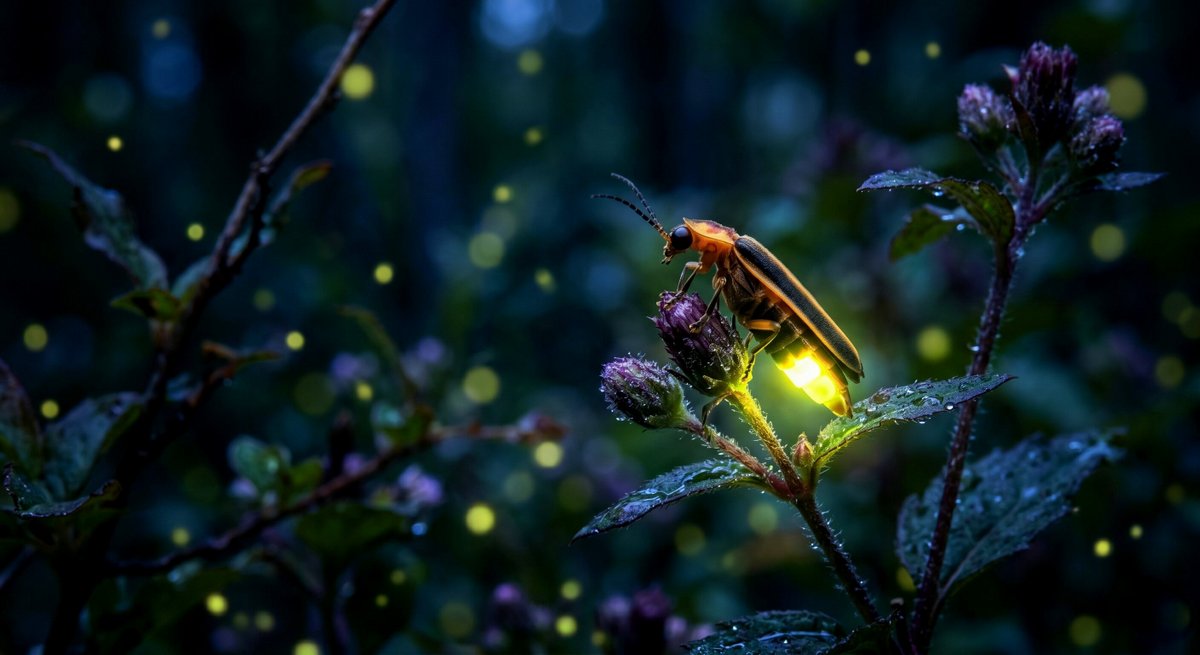
LEWISBURG, W.Va. — Few summer experiences are as deeply woven into the culture of the eastern United States as watching fireflies flicker across a meadow after sunset.
For generations, children spent warm evenings chasing “lightning bugs” through fields, collecting the glowing insects in mason jars before releasing them into the darkness. Those memories remain vivid for many Americans, but scientists say the perception that firefly displays have diminished over time is not simply nostalgia.
Researchers generally agree that firefly populations have declined across many parts of the U.S., though the extent of those declines varies by region and species. Habitat loss, climate change, artificial light pollution, pesticide use, and intensive landscaping practices are believed to have contributed to the decline.
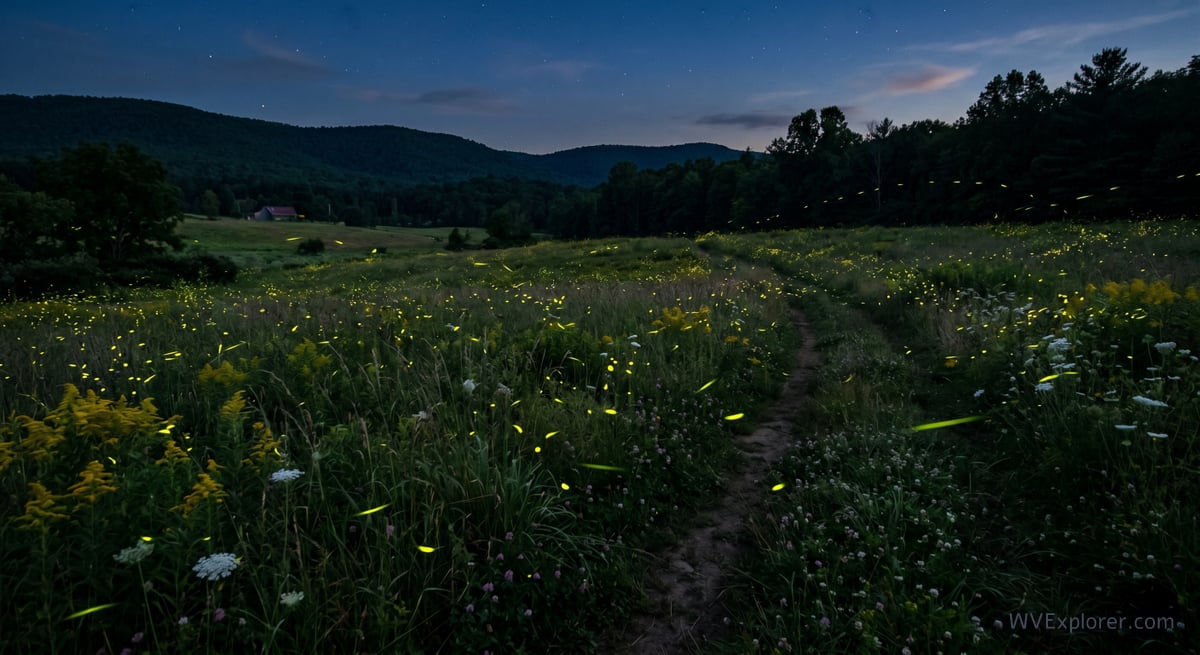
Yet while fireflies have struggled in many places, West Virginia remains one of the strongest refuges for the insects in the eastern United States.
According to firefly conservation organizations and researchers, some of the nation’s most favorable firefly habitat stretches across a broad Appalachian corridor running from Pennsylvania through West Virginia into Tennessee and North Carolina.
Its extensive forests, rural landscapes, relatively low levels of development, and dark night skies have helped preserve conditions that many firefly species require to survive.
As a result, many West Virginians continue to witness remarkable summertime displays that have become increasingly uncommon elsewhere.
During June and July, river bottoms, hayfields, woodland edges, wetlands, and mountain valleys throughout the state often come alive with thousands of flashing lights on warm evenings. In some locations, entire meadows appear to shimmer with floating points of green and yellow light.
A growing obsession for firefly researchers
Among those working to better understand West Virginia’s fireflies is natural heritage vegetation ecologist Krista Noe of the W.Va. Division of Natural Resources.
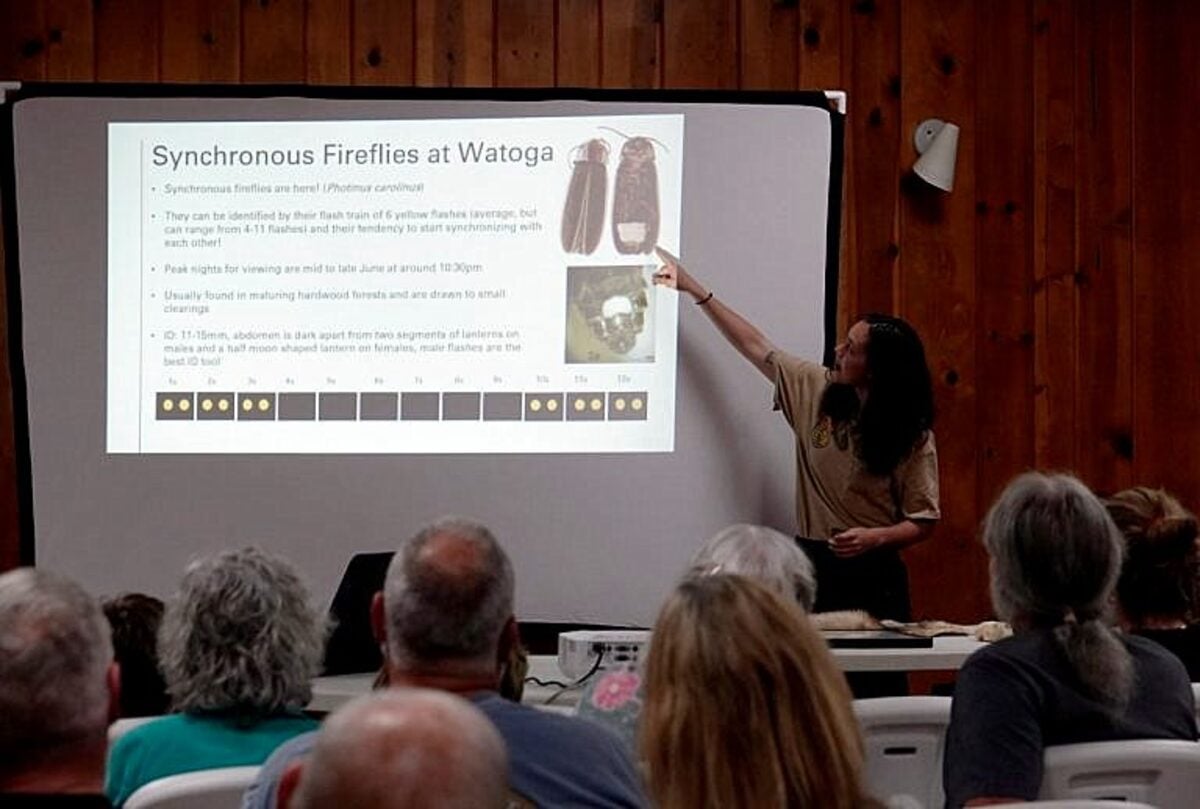
Although her professional work focuses primarily on plants, Noe has become one of the state’s leading advocates for firefly research and education. She has helped conduct surveys across West Virginia and has led workshops introducing residents to the diversity and ecology of the state’s firefly species.
“I’ve fallen into an obsession with fireflies,” Noe says.
What began as a professional responsibility evolved into a deeper appreciation for the insects and their role in the state’s natural heritage.
Noe says one encouraging aspect of firefly conservation is that local populations can recover when habitat conditions improve. Unlike some wildlife species that require decades to rebound, fireflies can respond relatively quickly when suitable habitat is restored, and nighttime environments are protected from excessive artificial lighting.
She has also established a web-based resource on West Virginia fireflies, featuring illustrations to help observers distinguish among species.
“It includes general descriptions of most species found in West Virginia—flash animations, since they are so tricky to photograph and record on video—and general information about fireflies,” she said.
How Homeowners Can Help Fireflies
Conservationists say residents can take several practical steps to make their properties more welcoming to fireflies. Among the most effective measures are:
- Leaving leaf litter on the ground rather than removing it.
- Reducing outdoor lighting during summer evenings.
- Avoiding broad-spectrum insecticides.
- Allowing portions of lawns and fields to grow naturally.
- Maintaining moist areas and native vegetation.
- Supporting efforts to reduce unnecessary nighttime lighting.
Artificial light at night, often referred to by researchers as “ALAN,” has emerged as one of the most significant challenges facing many firefly species. Because fireflies depend on bioluminescent flashes to communicate and locate mates, excessive artificial lighting can interfere with reproduction.
To address the issue, the W.Va. Division of Natural Resources will host an “Artificial Lights at Night” workshop July 17-18, 2026, at the Appalachian Headwaters facility in Lewisburg.
The free public event will explore the effects of nighttime lighting on wildlife, including fireflies, bats, birds, and moths. Organizers also plan evening firefly and moth observation activities.
West Virginia emerging as a firefly tourism destination
As interest in fireflies grows nationwide, West Virginia is becoming an increasingly popular destination for nature enthusiasts seeking nighttime wildlife experiences.
Visitors travel from across the country, including nearby metropolitan areas such as Washington, D.C., to witness the state’s summer firefly displays.
The state’s rise as a firefly tourism destination has been driven in large part by the discovery of rare synchronous fireflies at Watoga State Park.
Biologists confirmed the presence of synchronous fireflies there in 2020, making the park one of only a handful of locations in North America where the insects are known to flash in coordinated patterns.
The phenomenon is most famously associated with the Great Smoky Mountains, where synchronized flashing attracts thousands of visitors annually. The discovery of similar displays in West Virginia immediately attracted attention among researchers, photographers, and nature travelers.
Tim Lavender, activities director at Watoga, helps organize firefly events at the park each June, welcoming visitors who have never witnessed the flickering magic of a display.
“Even when we have a slow night here at the park, people are still amazed,” he says.
The park’s status as an International Dark Sky Park enhances the viewing experience by allowing visitors to observe the insects against exceptionally dark nighttime conditions.
The area is also known for sightings of the elusive Blue Ghost firefly, a species that has become a focus of ongoing research and citizen science efforts.
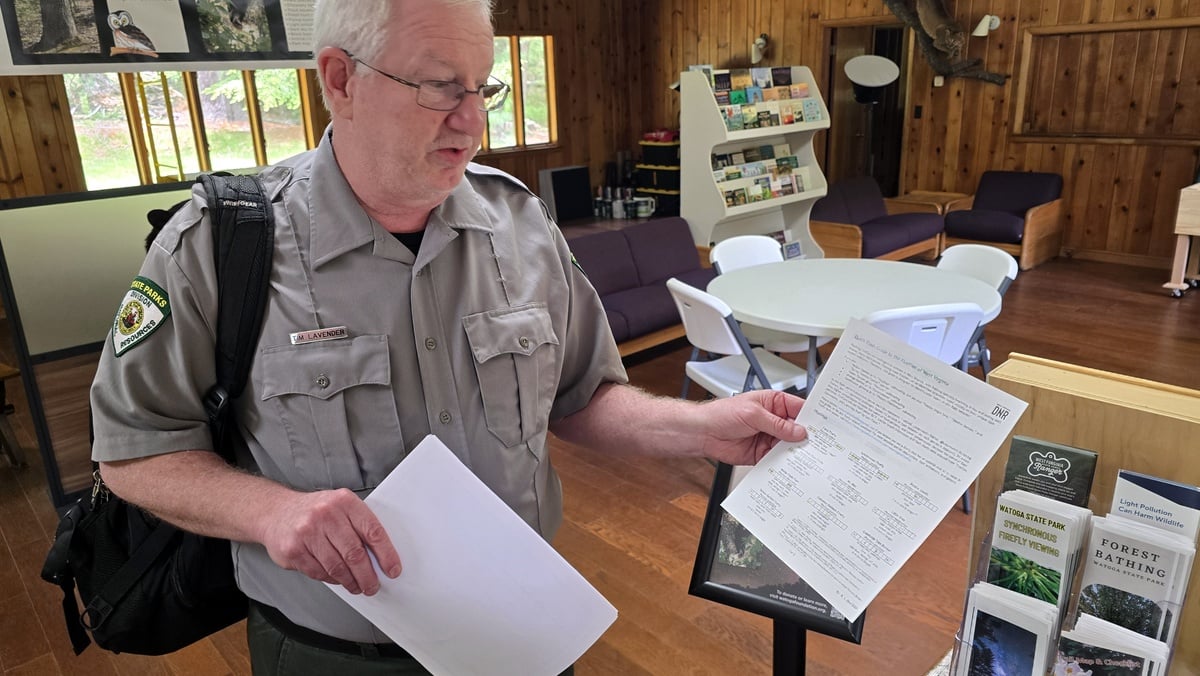
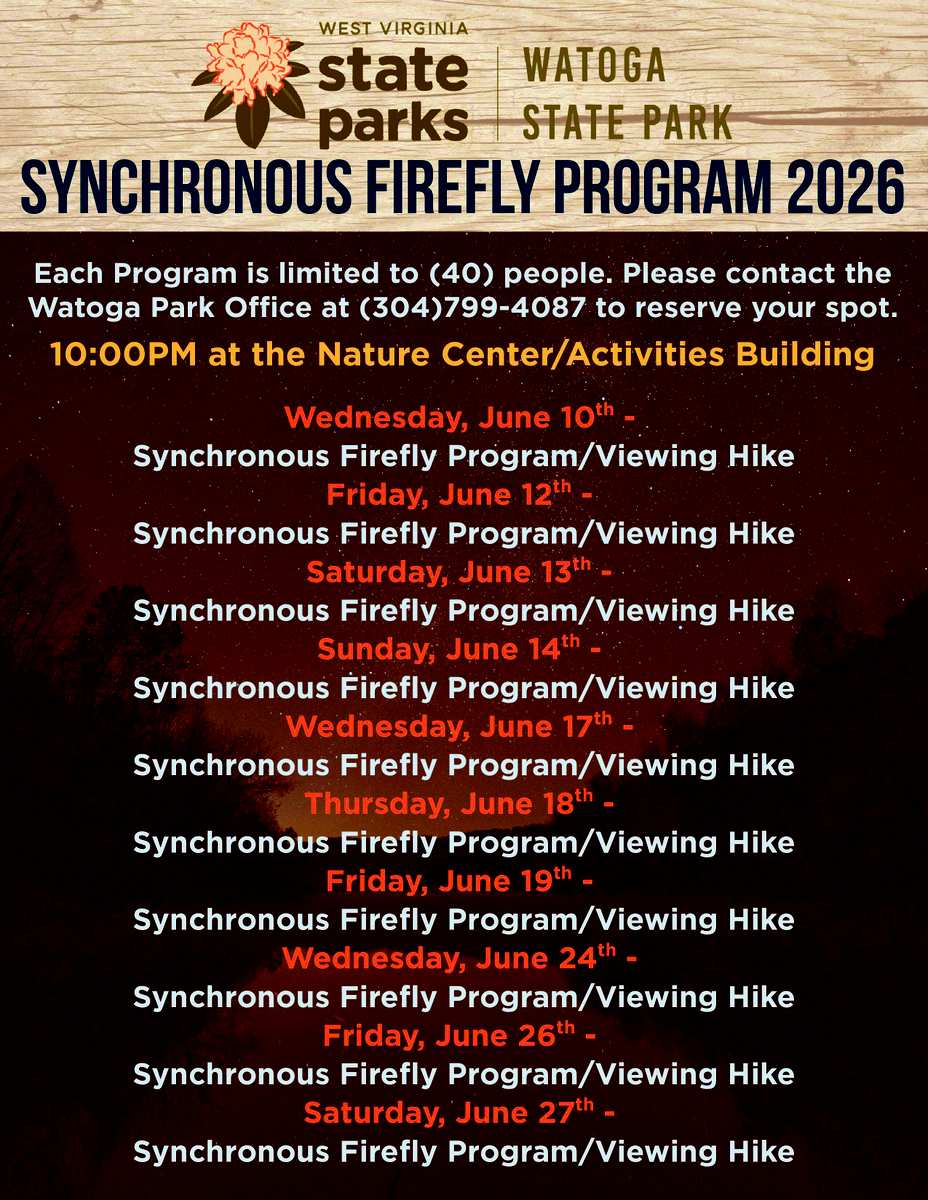
Watoga will host its 2026 series of synchronous firefly programs and viewing hikes on ten nights in June. Each program begins at 10 p.m. at the Nature Center/Activities Building and is limited to 40 participants. The scheduled dates are June 10, 12, 13, 14, 17, 18, 19, 24, 26, and 27. Because attendance is limited, advance reservations are required. Visitors may reserve a spot by contacting the Watoga State Park office at 304-799-4087.
Combined with extensive public lands, dark skies, and diverse mountain habitats, these attractions are helping establish West Virginia as one of the premier firefly destinations in the eastern United States.
Local communities, state parks, tourism organizations, and natural resource agencies have increasingly embraced firefly-focused events and educational programs, creating new opportunities for nature-based tourism and highlighting the importance of habitat conservation.
Where to See Fireflies in West Virginia
Watoga State Park
Widely regarded as the state’s premier firefly-viewing destination, Watoga hosts the rare synchronous fireflies that have attracted national attention. Peak displays generally occur from mid-June through late June. The park is also known for Blue Ghost sightings and regularly offers educational programming.
Calvin Price State Forest
Located adjacent to Watoga, Calvin Price State Forest shares similar habitat characteristics and dark-sky conditions. Many visitors explore both areas during a single trip.
Droop Mountain Battlefield State Park
Open meadows and forest edges provide excellent opportunities to observe fireflies throughout June and July.
Canaan Valley National Wildlife Refuge
The refuge’s wetlands, meadows, and dark skies support abundant firefly populations. While it is not known for synchronous displays, visitors often report impressive numbers of flashing insects on warm evenings.
Dolly Sods Wilderness
The wilderness area’s dark skies and mountain meadows create memorable viewing opportunities, particularly along sheltered forest edges.
Greenbrier River Trail
Wetlands, river corridors, and adjacent forests along the trail provide ideal habitat for numerous firefly species. Areas near Marlinton and Watoga can be especially productive during humid summer evenings.
Best Times to Observe Fireflies
Different species emerge throughout the season.
- Blue Ghost fireflies are typically observed during late May and early June in portions of the southern mountains.
- The synchronous fireflies of Watoga generally reach peak activity from mid-June through late June.
- Most of West Virginia’s common firefly species are most abundant from late June through July.
Regardless of location, the best viewing conditions usually occur 30 to 90 minutes after sunset, particularly on warm, humid evenings following rainfall.
Citizen scientists helping expand firefly knowledge
The W.Va. Division of Natural Resources continues to encourage public participation in firefly research, according to Noe.
She previously developed an educational website devoted to West Virginia fireflies, featuring species descriptions, flash-pattern animations, and general information about the insects. The resource was designed to help residents identify species that are difficult to photograph or record.
The agency also maintains educational materials from earlier citizen science surveys and is currently conducting a statewide effort to locate Blue Ghost fireflies.
According to a division report, Blue Ghosts commonly occur alongside synchronous fireflies elsewhere in Appalachia. In West Virginia, however, researchers have documented the species at only a single location.
Officials hope citizen observations will help determine whether additional populations exist elsewhere in the state.
For a creature often associated with childhood memories, the firefly has become an increasingly important symbol of conservation, scientific discovery, and nature tourism in West Virginia. While populations may be declining across much of the country, the Mountain State’s forests, valleys, and dark skies continue to offer one of the best opportunities in America to witness the magic of a summer night lit by thousands of living lights.












Leave a comment