
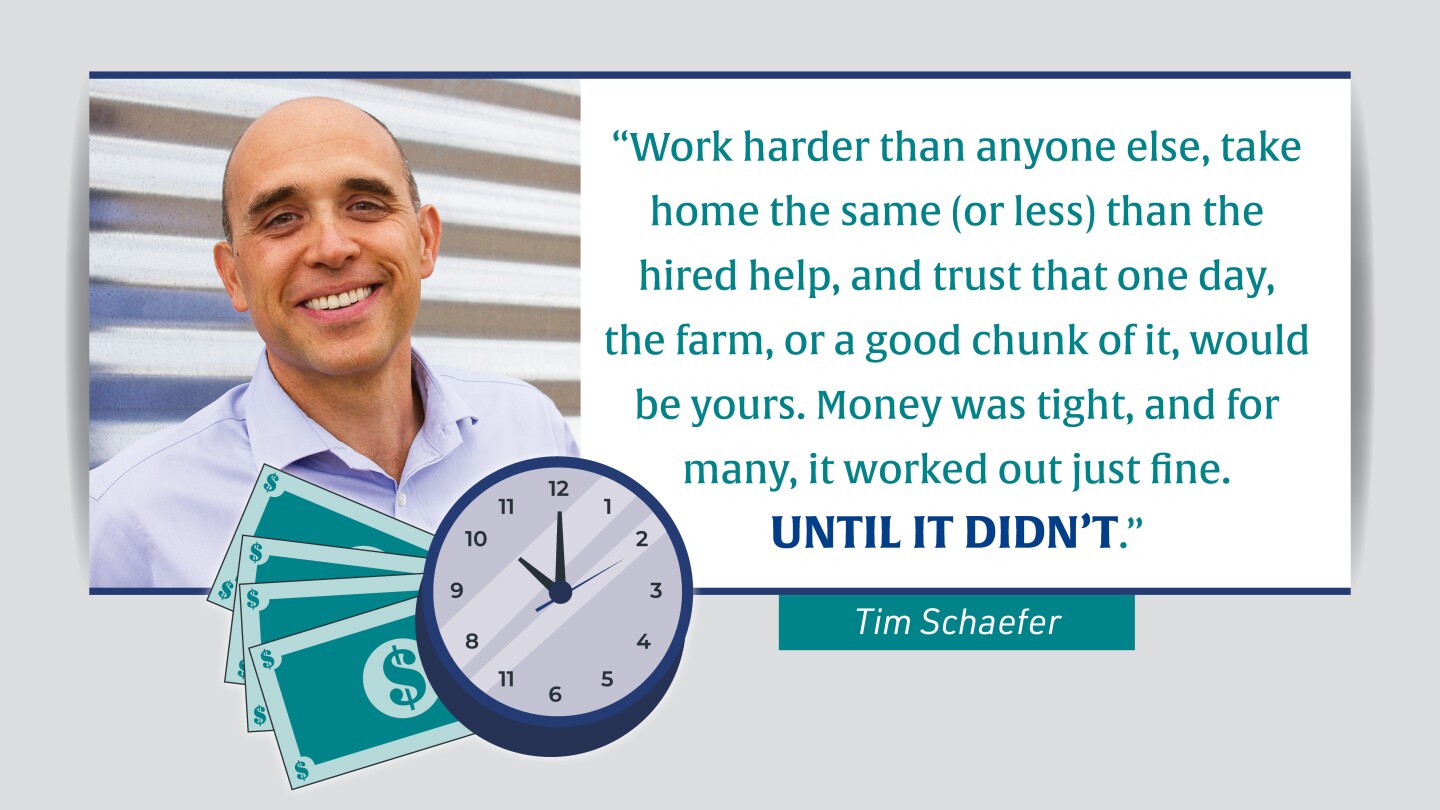
For generations, sweat equity wasn’t talked about. It was assumed. Work harder than anyone else, take home the same (or less) than the hired help, and trust that one day, the farm — or a good chunk of it — would be yours. Money was tight, and for many, it worked out just fine — until it didn’t.
The truth is, today’s dairies track the hours and contributions of employees and pay them accordingly. Why not do the same for family members? The old sweat equity model — where family members accept below-market wages in exchange for a promised future inheritance — brings as many headaches as it solves, especially when it comes to succession planning and family harmony.
A Double-Edged Machete
Sweat equity, in the dairy context, means logging long hours for less pay and banking on the idea that hard work will eventually translate to ownership or a larger share of the business at some point in the future. On paper, it looks good for cash flow by cutting down on wage expenses. There can be tax advantages for the farm and the worker because compensation is tied up in assets instead of regular income.
However, sweat equity is infamously hard to define and track. Few families keep records of hours worked, responsibilities taken on or the value of those hours. When the time comes to settle up the estate, emotions can run high and misunderstandings multiply. Non-farming siblings might feel cheated, while those who put in the sweat may feel undervalued. Resentment often flows freer than milk from a cow 85 days post-calving.
Another challenge is that most non-farming relatives are in the dark about what sweat equity arrangements exist — or what they’re worth. Estate planning becomes a minefield, with parents trying to assign value to decades of labor. In the end, what was supposed to ensure fairness can leave everyone feeling shortchanged.
The Need for Modern Solutions
It’s time to modernize. Dairies are sophisticated businesses, and it’s time to upgrade compensation models. Paying family members fair, market-based wages — now, not at some undetermined point in the future — creates clarity and goodwill. Transparent agreements, clear tracking of contributions and a focus on merit help ensure succession planning is less about guesswork and more about fairness.
Sweat equity had its place, but in today’s world, “work now, get paid later” is a risky bet. Risky for the junior generation and even riskier for family harmony. When family harmony goes, the family legacy probably isn’t far behind.
Modern dairies need compensation systems that are equitable, transparent and sustainable, for the business and the family. You already have this for your employees. Why not for those you love, work with, and are entrusting your legacy to?
Your Next Read:
The High-Tech Transformation of a Dairy Visionary












Leave a comment