
Latin America has a dynamic and growing pipeline of infrastructure and natural resource projects, which has become a key barometer of regional economic development and a major source of opportunities for investors, contractors and suppliers.
However, an equally relevant part of the market remains less visible: assets that are already in operation, where a significant share of business decisions and opportunities is concentrated. Once these projects begin operating, a different —and often much longer— phase of the asset lifecycle begins.
At this stage, the need for maintenance, modernization, process optimization and regulatory compliance becomes constant.
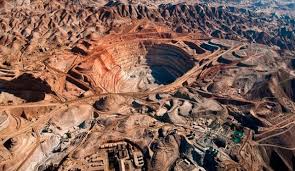
In mining, the scale of operating expenditure clearly illustrates the magnitude of the business in operating assets. According to estimates by Wood Mackenzie, global copper production costs (including direct and sustaining costs) are around US$1.81 per pound, equivalent to roughly US$4,000 per tonne. As this figure reflects the middle of the cost curve, more intensive or lower-grade operations can exceed this level significantly, placing total costs in the range of several thousand dollars per tonne. In large-scale operations, this translates into billions of dollars annually in operating expenditure, including maintenance, energy, inputs and associated services.
In thermal power generation, operation and maintenance costs represent a structural component of generation costs. According to the U.S. Energy Information Administration (EIA), fixed costs for a combined-cycle plant can exceed US$15 per kW-year, while variable O&M is around US$3–5 per MWh, which in large-scale plants translates into tens or hundreds of millions of dollars per year in operation and maintenance.
Applied to large portfolios, this creates a sustained flow of expenditure and opportunities for suppliers over decades, often less visible than initial capex, but more stable.
As an illustration, highway operator EcoRodovias recently won the concession auction for a 735km road stretch in the state of Minas Gerais, Brazil. The contract, which also covers a 735km extension, will run for 30 years, with estimated capex of US$1.4bn and opex of US$1.1bn. This was the first federal highway concession auctioned in Brazil this year, out of an estimated total of 14 contracts expected to be offered throughout 2026.
Moreover, it is at this stage that key strategic decisions materialize: capacity expansions, changes in asset ownership, or consolidation processes through mergers and acquisitions (M&A). For banks, operators and consultants, understanding the performance and context of these assets is essential to assess investment opportunities and risk.
Despite their relevance, information on operating assets in Latin America remains fragmented. Sectors such as energy, mining, oil & gas, and water and sanitation present significant gaps in data on installed capacity, production levels or ownership structures. This makes it difficult to build a comprehensive view of the market and limits the identification of opportunities beyond projects under development.
In this context, it has become essential to complement project tracking with a deeper view of the installed base.
Initiatives such as BNamericas’ Assets module reflect this shift in approach by incorporating structured information on operating assets and their dynamics.
Rather than displacing the importance of the project pipeline, this approach aims to enrich market analysis. Understanding what is being built remains essential, but understanding what is already operating –and how it evolves– is becoming increasingly critical to capture opportunities and make informed decisions in the region.
Learn more details about the Assets database











Leave a comment