
Unlock the Editor’s Digest for free
Roula Khalaf, Editor of the FT, selects her favourite stories in this weekly newsletter.
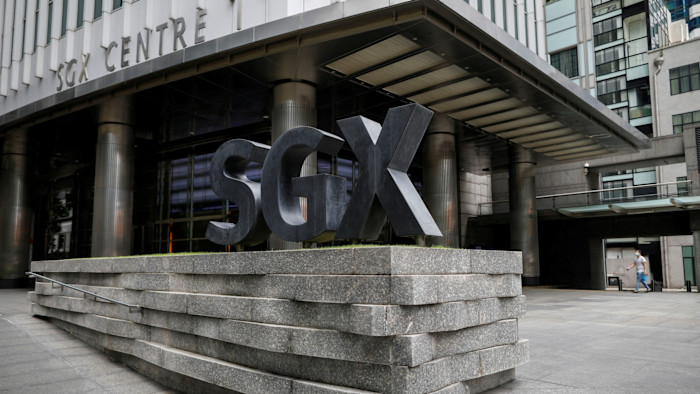
Singapore’s stock market notched up its strongest performance since 2009 last year, but its success in attracting investor flows has so far shown only modest signs of arresting its decades-long struggle for new listings.
The Straits Times index of the top 30 companies listed on the Singapore Exchange (SGX) rose 23 per cent in 2025 and crossed the 5,000 mark for the first time in February, just as Prime Minister Lawrence Wong promised incentives to support the stock market.
His pledge follows other initiatives that SGX, Monetary Authority of Singapore and the government have taken to improve the meagre number of initial public offerings, which has been blamed on low trading volumes and its small investor base.
There are signs these efforts are beginning to work, with IPOs rising from six in 2024 to 16 last year, but this pales in comparison with regional rival Hong Kong’s 119 IPOs in 2025.
SGX is also still suffering from more delistings and mergers than IPOs, as private equity firms buy public companies and smaller businesses go private. The number of listed companies fell to a 20-year low of 605 in October.

Some of Singapore’s brightest companies have also listed overseas in recent years, especially in the US, where there are deeper pools of capital. Super app Grab — which started in Malaysia, but has headquarters in Singapore — went public on the Nasdaq via the largest US special purpose acquisition merger to date in 2021.
Investment group GLP, which delisted from SGX in 2018 in a private equity buyout, intends to relist in Hong Kong this year.
While Singapore has floundered, Hong Kong has enjoyed an IPO boom, mainly driven by companies from mainland China. It was the second most active IPO destination by value last year, behind only the US.
High-growth companies Asia-Pacific

This article is part of the High-growth companies Asia-Pacific Special Report.
Other articles include:
Macquarie Capital head of Asean research Jayden Vantarakis says: “Improving [stock market] liquidity will be very important to driving better multiples and listings over time.”
Recognising the need to boost listings, MAS set up a review group two years ago to assess what could be done, which decided that supply and demand needed to improve by bringing in a wider range of investors and attracting more companies to list.
This resulted in MAS’s commitment to put S$5bn (US$3.9bn) into funds that invest in domestic companies, particularly smaller ones, to encourage investment and increase liquidity. This was recently topped up with another S$1.5bn from the country’s budget.
Fullerton Fund Management was one of the first nine investment groups to receive a tranche of the MAS capital and launched a Singapore equities fund in October.
Nearly half the fund’s holdings are financials, dominated by Singapore’s three biggest banks — DBS, OCBC and UOB. But portfolio manager Shawn Ang says its strategy is not just about big companies paying dividends.
The fund contains stocks that are likely to “drive returns and return on equity”, he adds. “The whole ecosystem is starting to move towards companies looking to reward shareholders.”
Singapore is also offering incentives to entice more companies to list, such as streamlining the IPO process and setting up a dual-listings agreement with Nasdaq so that companies can go public in both venues at the same time.

These measures are starting to help, with last year’s 16 listings marking the highest number for six years, delivering a total deal value of $2.5bn.
In December, medical technology company UltraGreen raised US$400mn in the biggest non-real estate investment trust IPO on SGX since 2017. It is the sort of high-growth, innovative business that the initiatives are designed to attract.
SGX head of equities Ng Yao Loong says: “We’re getting more IPOs, including big Reits, but I’d like to see more high-growth companies so that over time the market develops depth and variety.”
Register for the 2027 ranking
The FT/Statista list of Asia-Pacific’s high-growth companies is published every April. Find out about next year’s list and pre-register for potential inclusion.
There is also evidence that investors are more interested in mid-size and smaller companies, which have historically been overshadowed by the large corporations. Macquarie says a year ago, 10 per cent of daily turnover in the stock exchange was in companies outside the largest 30, which has since risen to 25 per cent.
Ng says about 20 companies are in talks with SGX over an IPO this year.
“Stock market narrative is important, but it has to be backed by execution,” he says. “More IPOs, broader investor participation and deeper liquidity across more stocks.”













Leave a comment