
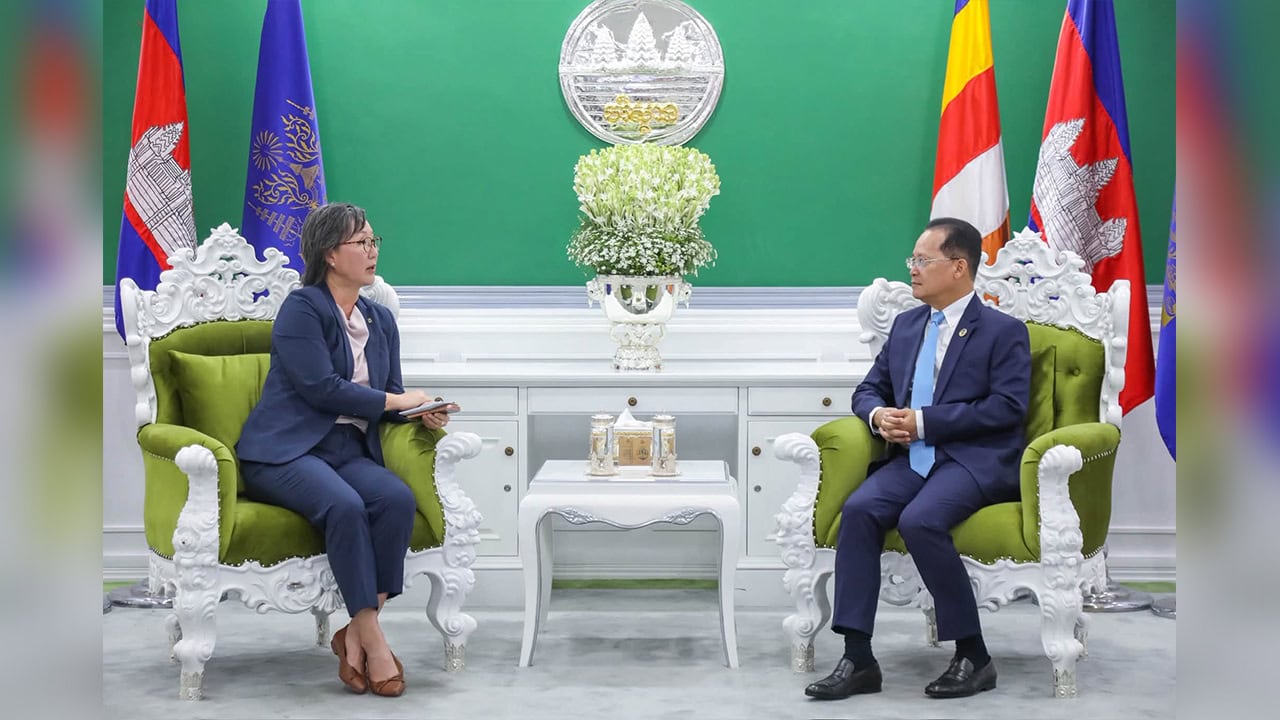
Cambodia and the World Wide Fund for Nature (WWF) are strengthening cooperation to protect and conserve key natural resources, including Mekong River dolphins and the Tonle Sap ecosystem, while improving the livelihoods of local communities and expanding tree planting to help address climate change.
The cooperation is being pursued through separate meetings between senior officials from the agriculture and environment ministries and Sang Lee, WWF’s regional director.
Following an August 26 meeting between Minister of Agriculture, Forestry and Fisheries Dith Tina and Lee, Tina praised the close cooperation between the ministry and WWF in protecting Cambodia’s dolphins, , which he described as a “national treasure”, in recent years. He encouraged the organisation to continue its work.
The two sides also discussed potential cooperation to improve livelihoods in communities living around natural resource protection areas. According to the ministry, such efforts could increase household incomes while reducing pressure on natural resources.
Restoring ecosystems, building climate resilience
Minister of Environment Eang Sophalleth met with Lee a day earlier. He expressed support for key areas of existing and planned cooperation on natural resource protection, ecosystem restoration and building resilience to climate change.
He said efforts to improve livelihoods in communities around protected areas, including through giant grass planting projects, could generate income, reduce illegal forest logging and provide cleaner energy alternatives for factories and enterprises.
Such alternatives could replace firewood and charcoal, which have placed pressure on natural forests, while also delivering environmental benefits, he said.
The environment ministry is also strengthening cooperation with relevant ministries and institutions, authorities at all levels, development partners, associations, civil society organisations and environmental advocates to promote environmental conservation, natural resource protection and climate action.
Highlighting the importance of Tonle Sap as the “heart” of Cambodia and a major source of biodiversity, Sophalleth encouraged cooperation on tree-planting and flooded-forest restoration projects around the lake.
Such projects would help protect and maintain the environment while preventing the loss of natural resources caused by the impacts of climate change, he noted.
Lee highlighted WWF’s strong partnership with Cambodia in protecting and conserving the country’s natural resources.
She reaffirmed WWF’s continued participation and support for the implementation of the environment ministry’s cross-sectoral strategic action plans and the government’s policies, with the goal of ensuring a clean, green and sustainable Cambodia, according to the ministry.











Leave a comment