
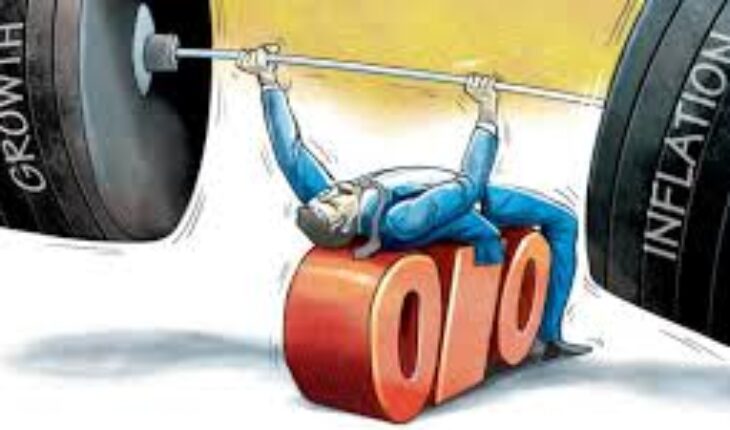
“Holding the repo rate is not a sign of policy inertia, but an acknowledgement of the difficult balance between price stability, economic expansion and orderly financial conditions.”
The Reserve Bank of India’s decision at its August review to retain the repo rate at 5.25% and maintain a ‘neutral’ monetary policy stance was broadly in line with market expectations. Yet, to view it merely as an instance of rates being left unchanged would understate the policy’s message. The central bank is no longer confronting a simple choice between inflation control and growth support. Its more demanding task is to recognise how the balance of risks is shifting while preserving policy credibility. In this context, the status quo is not inaction; it is a strategy of waiting, assessing incoming evidence and retaining room to respond when circumstances warrant.
The most difficult part of the policy calculus is the changing character of inflation. The projection that consumer price inflation will average 5% in 2026-27 offers little ground for complacency. The quarterly path points to inflation rising from 4.7% in the second quarter to 5.9% in the third, before easing only marginally to 5.5% in the fourth. The annual average therefore conceals the possibility of renewed price pressure in the second half. When inflation is at risk of repeatedly moving above the target rather than settling around it, premature monetary easing could unsettle expectations and ultimately require sharper corrective action.
A substantial part of the present price pressure is also associated with supply-sensitive items such as food and fuel. Higher interest rates cannot increase vegetable arrivals, improve a harvest or moderate global crude oil prices. This does not, however, make monetary policy irrelevant. Persistently expensive food can feed into wages, transport costs and services prices, turning an initially temporary supply shock into more generalised inflation. The RBI’s task is not necessarily to prevent the first-round rise in prices, but to contain its second-round effects and keep the inflation expectations of households and businesses anchored. Moderation in core inflation is reassuring, but it does not justify complacency.
The growth outlook, on the other hand, gives the Monetary Policy Committee some room to remain patient. The forecast for real gross domestic product growth has been raised from 6.6% to 6.7%. Projected growth of 7% in the first quarter and between 6.4% and 6.8% in the subsequent quarters suggests that the economy is not headed towards an abrupt slowdown. Resilient services, improving private consumption, public capital expenditure and infrastructure activity continue to support demand. When growth appears reasonably durable, there is little justification for making money cheaper merely to satisfy financial-market expectations. The more pertinent questions are whether the expansion is broad-based and whether private investment and employment are advancing at a comparable pace.
An important qualification follows. Strong aggregate GDP growth does not imply that every segment of the economy is equally robust. Rural demand, the cost of credit for small enterprises, the quality of employment and private capital expenditure may continue to display unevenness. With the repo rate unchanged, the burden on fiscal and structural policy consequently becomes greater. Food inflation requires better storage, more efficient supply chains, calibrated trade management and higher agricultural productivity. Durable growth, meanwhile, needs stronger skills, employment, manufacturing and private investment. Asking monetary policy to resolve every economic difficulty would exceed both its capacity and its mandate.
On liquidity, it is essential to distinguish the policy rate from the availability of funds. The repo rate indicates the price of central bank money, while system liquidity influences the ease with which funds are available at that price. Keeping the standing deposit facility rate at 5%, and the marginal standing facility and Bank Rate at 5.5%, preserves the monetary policy corridor. At the same time, the willingness to use open market operations and other instruments when required indicates that the RBI does not intend to allow a systemic shortage of cash to place an unnecessary brake on growth. Adequate liquidity, however, is not the same as a permanent surplus. Excess cash can dilute the anti-inflation signal, while persistent scarcity can push market rates needlessly above the policy rate. The appropriate test is whether overnight rates remain orderly around the policy rate and productive credit is not constrained.
This balance is not easy for banks. Even as demand for credit remains firm, the cost of mobilising deposits, the differing pace at which loan and deposit rates are repriced, and pressure on net interest margins can shape lending decisions. Adequate system liquidity does not mean that every borrower will receive funds on identical terms; banks are likely to attach greater importance to asset quality and risk-based pricing. The success of policy should therefore be judged not only by the quantity of liquidity in the system, but also by how efficiently credit reaches productive sectors, small businesses and viable investment projects.
The global setting strengthens the case for caution. Geopolitical tensions, volatility in crude oil and other commodity prices, the policy direction of major central banks, and trade-related uncertainties can affect domestic inflation, the exchange rate and capital flows. India’s dependence on imported energy means that a sharp rise in oil prices could strain both domestic prices and the external balance. Unexpected changes in global interest rates could similarly influence capital movements and the rupee. In such an environment, the value of a neutral stance lies in its flexibility: the MPC can respond to incoming data without having committed itself in advance to a particular course.
For households and industry, the immediate message is one of stability, not an assurance of relief. Equated monthly instalments on floating-rate loans are unlikely to change substantially merely because the policy rate has been held, but actual borrowing costs will depend on banks’ funding costs, the borrower’s risk profile and the transmission of earlier policy actions. The path of term-deposit rates will likewise not be determined by the repo rate alone. Industry may benefit from the continued availability of system liquidity, yet investment decisions will also turn on final demand, capacity utilisation and global uncertainty. A policy pause should therefore not be interpreted as a promise of universally cheaper credit or a guaranteed market rally.
The real merit of the August review lies not in a dramatic intervention, but in keeping policy options open. By raising its growth forecast, the RBI has expressed confidence in the economy’s underlying resilience; by refraining from premature easing, it has acknowledged the risk of a renewed rise in inflation. Future action should depend on food prices, core inflation, the monsoon and supply conditions, credit and deposit trends, and global financial developments. If price pressures ease durably and expectations remain anchored, space for monetary accommodation could emerge. If inflation becomes broad-based, caution may have to persist for longer.
Monetary policy credibility is tested most severely when no easy option is available. The present decision is an answer to precisely that challenge: to guide inflation towards the target without damaging growth, and to maintain liquidity without weakening monetary discipline. This balance is not a fixed point but a continuing process of adjustment. In the months ahead, the RBI’s success will be judged less by whether it changes the policy rate than by whether its response to changing data is timely, transparent and proportionate.
Satish Singh– Senior Banking and Economic Columnist. The views expressed in the piece are personal.
Email: [email protected], Mobile: 8294586892









Leave a comment