
Swiss pension funds have enjoyed three strong years. According to Pictet Asset Management, many pension funds are currently in robust financial health. Recent estimates indicate that the average funding ratio rose from 114 percent in 2024 to around 117 percent in 2025.
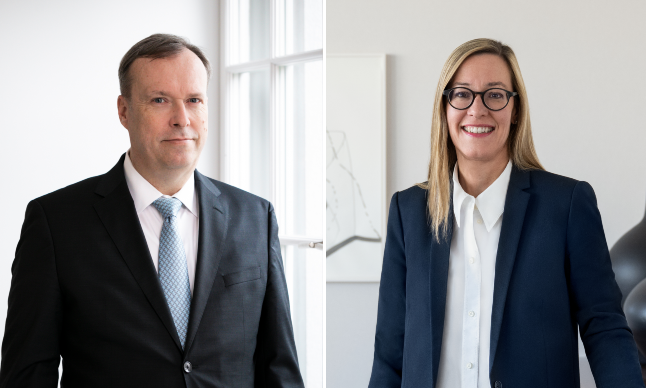
«The starting position is significantly stronger today than it was just a few years ago,» Viviane Sorg, Head Institutional Market Switzerland at Pictet Asset Management, told finews. Higher funding ratios allow pension funds to take targeted risks to generate the returns required to meet their long-term objectives.
«At the same time, we need to keep a close eye on the rapidly changing environment,» she said, noting that markets remain volatile and funding ratios can fluctuate depending on market developments.
Equities remain the main return driver
Pictet’s assessment of the long-term return outlook is particularly clear. According to the firm’s latest «Secular Outlook,» equities, alongside private equity and European real estate, remain the most attractive asset classes for Swiss investors over a ten-year horizon. Depending on the market segment, expected annual returns range from around 4 percent to just under 7 percent in Swiss francs.

«Looking ahead over the next ten years, we expect equities to generate the highest returns among liquid asset classes,» Sorg said. «This is particularly true compared with most fixed-income investments.»
This does not mean that pension funds should continuously increase their equity allocations. Rather, the key is to remain invested for the long term and avoid making strategic decisions in response to short-term market fluctuations.
Swiss pension funds have a strong home bias
Sorg sees geographic diversification as one area that warrants closer attention. Compared with their international peers, Swiss pension funds have a relatively strong home bias.
The main reason is their traditionally high allocation to Swiss real estate, which often ranges between 25 and 30 percent. Combined with Swiss equities and bonds, domestic assets can quickly account for close to 50 percent of a pension fund’s portfolio.
«Historically, this allocation has worked very well,» Sorg said. «However, investors should regularly assess whether historically driven allocations remain appropriate in today’s environment.»
International diversification has become indispensable for managing returns and risks.
«The objective of a diversified portfolio is to achieve a robust mix of domestic exposure and international return potential across bonds, equities and real assets.»
Depending on liquidity requirements, allocations to private markets can also make sense.
«At the same time, deglobalization, geopolitical tensions and the fragmentation of capital markets are forcing institutional investors to continuously reassess their diversification assumptions and provide a stronger qualitative rationale for regional allocations,» Sorg said.
No retreat from private markets
Despite recent discussions surrounding liquidity issues at certain private credit and private equity products, Pictet sees no fundamental shift in sentiment among institutional investors.
Alternative investments currently account for slightly more than 10 percent of Swiss pension funds’ average asset allocations. This includes private equity, private debt, infrastructure, hedge funds and commodities.
«We are not seeing a broad retreat from private markets. What we are seeing is greater selectivity.»
Private equity and infrastructure each account for 2.5 percent, while private debt represents 1.5 percent – relatively low levels by international standards.
«We are not seeing a broad retreat from private markets,» Sorg said. «What we are seeing is greater selectivity.»
Investors are taking a closer look at whether investment structures, managers and liquidity profiles are genuinely aligned with their liabilities. Certain evergreen structures, in particular, are facing greater scrutiny.
Alain Gallati, Market Head German Speaking Switzerland at Pictet Asset Services, noted that allocations to private equity and infrastructure have risen steadily over the years. Infrastructure investments, in particular, have also benefited from regulatory changes to Switzerland’s occupational pension framework.
Private equity versus venture capital for pension assets
Private equity investments are becoming increasingly important as a portfolio allocation for pension funds. Direct investments in venture capital or startups, by contrast, remain relatively rare.
«One key reason is that most pension funds operate with very lean investment teams and lack the human and specialist resources required to actively cover this area,» Gallati said.
«The recent debate over the extent to which pension assets should be invested in startups shows that pension funds need to systematically build up their expertise, which requires corresponding investments in personnel and specialist capabilities,» he added.
Cost pressure continues to rise in custody
In addition to asset management, Pictet serves numerous Swiss pension funds as a global custodian.
While clients’ fundamental requirements have changed little in recent years, pressure on pricing and efficiency continues to increase.
«Artificial intelligence allows us to accelerate reporting processes while simultaneously improving quality.»
«The business is facing significantly greater pricing pressure today,» Gallati said. At the same time, technological requirements continue to rise.
Clients increasingly expect modular reporting solutions as well as customized data and information services. Artificial intelligence is playing an increasingly important role in this area.
«Artificial intelligence allows us to accelerate reporting processes while simultaneously improving quality,» Gallati said.
Tokenization moves closer to reality
Pictet also sees further potential in the digitalization of financial assets. Together with SIX, the firm has successfully completed a pilot project involving the tokenization and fractionalization of bonds.
Under the project, corporate bonds were tokenized on the SDX platform and allocated fractionally across individual portfolios. The technology could ultimately enable significantly greater flexibility in portfolio construction.
While the technology is still at an early stage, Gallati and Sorg see it as a long-term trend. Applications involving funds and money market investments could prove particularly attractive.
Service remains a key competitive advantage
Despite digitalization, automation and AI, one factor remains crucial for Pictet: personal service.
«When price differences become marginal, the quality of the relationship often becomes the deciding factor,» Gallati said.
This is particularly true in the Swiss pension fund market, which is characterized by long-term partnerships. Personal service therefore remains a key competitive advantage.
Pictet has made clear that it intends to further expand its position in the institutional business.
«We want to grow in the Swiss pension fund market and offer a genuine alternative,» Gallati said. «This is a strategically important market for us.»












Leave a comment