

After years of playing second fiddle to US equities, emerging-market stocks delivered a striking performance over the last 12 months to the end of May 2026. The MSCI Emerging Markets Index returned 38% – comfortably ahead of the S&P 500’s 16% and the MSCI World Index’s 14%. For investors who had long underweighted the asset class, it raised an uncomfortable question: Did they miss a once-in-a-cycle entry point? For those who stayed invested, the question is equally pressing: Was last year a blip, or the start of a trend?
Market consensus increasingly suggests that the case rests not on momentum alone, but on a genuine shift in the conditions that drove developed markets to dominate for over a decade.
The conditions have changed
To dismiss last year’s outperformance as a temporary reversal, one would need to believe the structural forces behind years of US equity dominance remain intact. Most specialist managers believe they do not – and point to three pillars.
The first pillar is the US dollar. Over the past 15 years, the dollar has risen by about 40% against a broad basket of major trading partners’ currencies. This has been a major headwind for emerging-market equities because many emerging economies borrow and trade in US dollars, making it more expensive when the dollar strengthens. That cycle now appears to be turning. Aggressive US trade policy (that is, President Donald Trump’s tariffs) has eroded confidence in dollar assets, potentially triggering the first sustained dollar downcycle since the early 2000s. Dollar cycles tend to last close to two decades – meaning this shift, if confirmed, represents a long-duration tailwind for investors with unhedged emerging-market exposure.
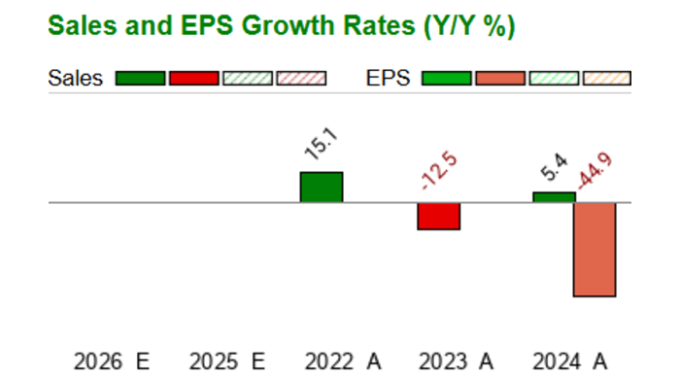
The second pillar is earnings. Emerging-market corporate profits bottomed in 2023 and have recovered steadily since, with cumulative earnings-per-share growth of around 40% forecast for 2026 and 2027, a powerful signal for equity index returns. Crucially, the headwind of heavy net equity issuance in China – which diluted returns and weakened the link between earnings growth and equity performance in the early-to-mid 2010s – has now largely faded, increasing the likelihood that earnings growth this time will translate meaningfully into stock prices.
The third pillar is valuation. The relative value of emerging-market equities versus US equities currently sits within the 10th percentile of data points over the past 35 years, meaning that emerging-market equities are historically cheap compared with their developed-market peers. History offers a compelling precedent: When emerging-market valuations have been in the top quintile of cheapness relative to US equities, emerging-market stocks have on average outperformed US equities by more than 50% over the subsequent five-year period. That is the kind of starting-point asymmetry that shapes long-term allocation decisions.
The AI angle: Emerging markets’ most underappreciated story
There is a fourth structural shift that fund managers argue the market has been slow to price in: emerging markets’ role at the heart of the global artificial intelligence value chain.
The AI narrative has been dominated by US mega-cap software platforms such as Microsoft, Alphabet, Amazon.com, and Meta Platforms. Specialist managers argue this misses where the real bottlenecks – and the real pricing power – sit. A cluster of semiconductor and technology companies across Taiwan, China, and South Korea has become indispensable to the AI buildout, supplying leading-edge logic chips (TSMC, Samsung), high-bandwidth memory (SK Hynix, Samsung), advanced packaging (ASE, TSMC), and data center power systems (Delta, Foxconn). Positive earnings-per-share revisions of between +20% and +80% in Taiwan and South Korea are among the clearest evidence that earnings growth is broadening beyond US mega-caps, and several managers explicitly name these two markets as preferred overweights.
For investors, the logic is pointed: Gaining AI exposure through developed-market software stocks at historically stretched valuations is not the only route. Emerging-market leadership in hardware may be the more durable entry into the same theme.
Country conviction: China and India
Within the broad EM universe, two markets dominate the equity debate – for very different reasons.
China, at roughly 30% of the MSCI Emerging Markets Index, remains unavoidable. The narrative has been bruising: a prolonged real estate crisis, subdued consumer confidence, and persistent geopolitical friction. Yet the structural picture is shifting. Since the property bust, China has reoriented its economy toward domestic consumption, services, and innovation across electric vehicles and AI. Those who spend time there describe a pace of industrial development – in EVs, robotics, and power infrastructure – that has no equivalent elsewhere. Vehicle models taking five-plus years to develop in the West are turned around in eight months in China, and the same accelerated logic is spreading into AI hardware. China is adding electricity generation capacity at 6 times the US rate over the next five
years, a structural power advantage as AI demand scales. Yet the investment opportunity and the governance challenges are inseparable. Misalignment between controlling shareholders and minority investors is persistent, and state involvement means companies can become riskier as they grow larger. Selectivity, not broad exposure, is essential.
India, by contrast, is the conviction overweighting across almost every manager we spoke to despite high valuations. Demographics, urbanization, household wealth formation, and a supportive policy environment are converging precisely as a prolonged corporate deleveraging cycle ends – historically one of the most reliable setups for continued equity outperformance. India’s maturing and broadening listed universe – spanning financials, industrials, consumer staples, and technology – gives active managers the ability to express long-term views through stock selection rather than index-level bets.
The verdict
The case for emerging-market equities rests on four reinforcing pillars: a turning dollar cycle, a recovering earnings trajectory, historically wide valuation discounts versus the US, and structural leadership in the AI hardware economy. The tariff shock of 2025 tested the thesis and ultimately reinforced it – accelerating supply chain diversification into emerging markets and contributing to the very dollar weakness that now supports the asset class. That represents a fundamentally different backdrop from the one that suppressed emerging-market returns for much of the past decade.
For investors looking to allocate to emerging markets, implementation is critical. Active management often adds value given the inconsistent corporate disclosures, concentrated ownership structures, uneven minority shareholder protections, and high retail participation all create pricing anomalies that skilled active managers can exploit. At the same time, maintaining sufficient breadth through diversified exposure helps capture the full opportunity set while reducing the risk that any single position or theme dominates portfolio outcomes.















Leave a comment