
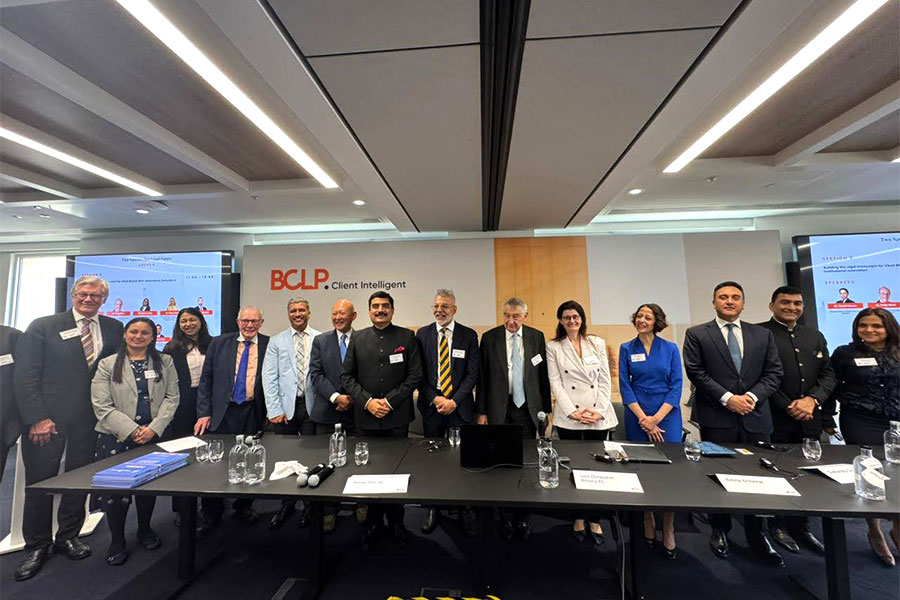
The General Counsels’ Association of India (GCAI) has deepened cross-border collaboration after convening senior government officials, general counsel, law firms and legal institutions from India and the UK at its London conference.
The conference, titled Two Nations, One Legal Future: India-UK Partnership 2026, took place against the backdrop of the recently concluded India-UK Free Trade Agreement. “India is on track to become the third largest economy by 2028 … India-UK Trade Agreement, its benefits will be shared by both countries and their people, and is expected to increase trade by about GBP25.5 billion annually, which will be the most important bilateral arrangement of the century,” said Richard Hermer, attorney general for England and Wales.
Hosted by global law firm Bryan Cave Leighton Paisner (BCLP) with support from The Law Society of England and Wales, the event attracted delegates to discuss the legal frameworks underpinning bilateral trade, dispute resolution, governance and legal market reform.
Shivani Sanghi, a partner at BCLP, opened the conference, welcoming the speakers and guests, and GCAI founders Sanjeev Gemawat and Akhil Prasad. In his opening remarks, Ghemawat highlighted GCAI’s vision of strengthening India-UK legal collaboration. He also underlined opportunities arising from the India-UK Free Trade Agreement, alongside collaboration in arbitration, legal services, technology regulation and artificial intelligence governance.
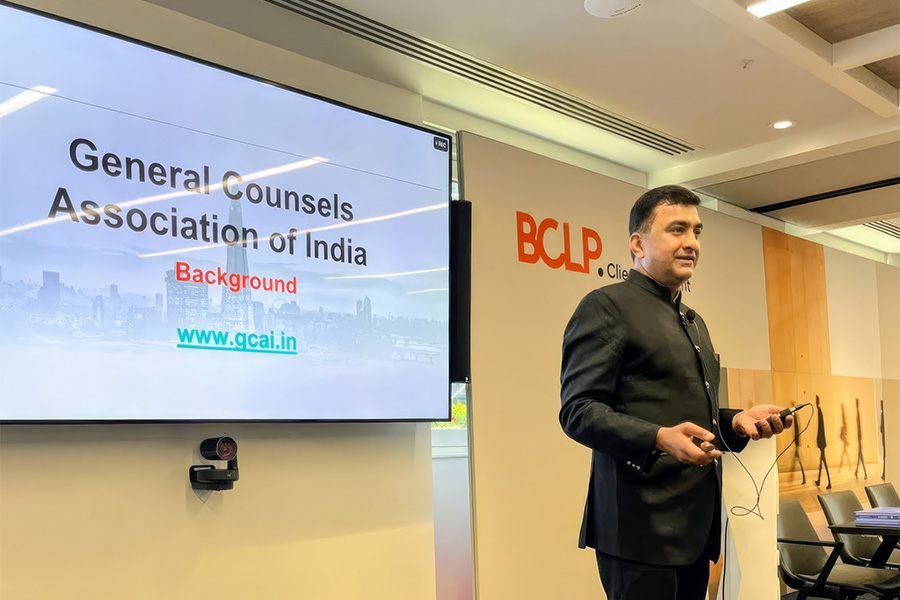
Prasad emphasised the need for greater integration of legal services across jurisdictions and highlighted the GCAI’s efforts towards building a future-ready legal profession capable of supporting India’s emergence as a leading global economy.
Brett Dixon, vice president of the Law Society of England and Wales, discussed the increasingly strategic role of corporate legal departments in navigating cross-border business challenges, while expressing the Law Society’s commitment to strengthening ties with India’s in-house legal community through collaboration with the GCAI.
Speakers also explored market liberalisation, digital courts, artificial intelligence, governance and institutional innovation as India pursues its long-term vision of becoming a developed economy by 2047, the centenary of its independence.













Leave a comment