
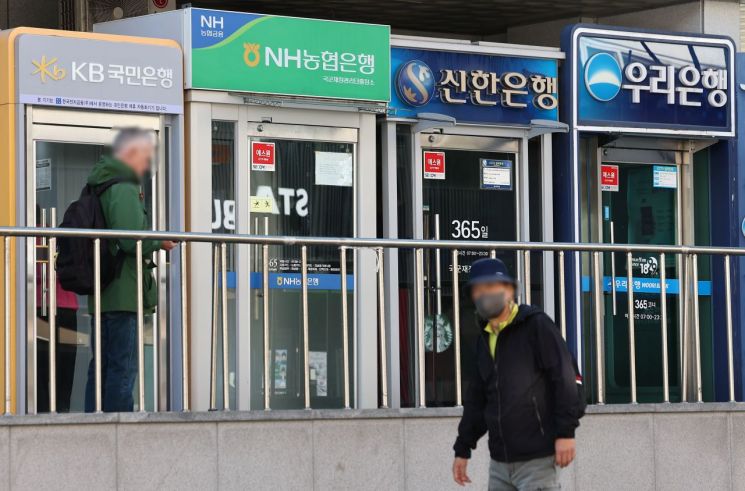
Average Delinquency Rate at End of Q1 Reaches 1.35%
Twice That of Single-Homeowners
67.3% of Homes Owned by Borrowers with Three or More Properties Located in the Metropolitan Area
Policy and Lending Regulation Tightening Expected to
While the value of real estate assets has surged, resulting in a substantial increase in the net assets of multiple-homeowners, the financial soundness of borrowers with three or more homes has actually deteriorated. The average delinquency rate for these borrowers has recently risen sharply, reaching twice the level of single-homeowners. As housing prices in Seoul and the greater metropolitan area are once again seeing significant increases, there is growing consensus that differentiated policy management based on homeownership type is needed to ensure stability in the real estate and financial markets.

High DSR for Multiple-Homeowner Households… Weak Debt Repayment Capacity from Income Perspective
According to the Financial Stability Report for the first half of the year published by the Bank of Korea on June 24, household debt composition in Korea varies depending on homeownership status and the number of homes owned. Data from the Household Financial Welfare Survey (March 2025) shows that single-homeowner households have a high proportion of financial debt for home purchases, such as mortgage loans, while households with two or more homes rely more on rental deposits than on loans from financial institutions. Households with no homes hold debt such as Jeonse or monthly rent loans and unsecured loans, mainly for securing rental deposits and living expenses.
As the number of homes owned increases, households show stronger financial status in terms of net assets. However, their ability to service debt through financial assets is relatively weak. The net assets of multiple-homeowner households (1.007 billion won) are seven times greater than those of non-homeowner households (145 million won). This is largely due to the significant growth in real estate asset values outpacing debt. However, the debt-to-financial asset ratio for homeowner households (1.63 times) is much higher than that of non-homeowner households (0.55 times).
Non-homeowner households generally face a lower debt repayment burden, but the cost of rent, particularly in the metropolitan area, is increasing. The rent-to-income ratio (RIR) of tenant households in the metropolitan area is 18.4%, exceeding the national average of 15.8%. The average interest payment by non-homeowner households in the metropolitan area has also increased sharply, reaching 3.21 million won last year.
The debt repayment capacity of households also varied depending on the type of homeownership. While the debt-to-asset ratio (DTA) of multiple-homeowner households was at a sound level, their debt service ratio (DSR) was higher than that of non-homeowner and single-homeowner households, reflecting relatively weak repayment capacity from income sources apart from assets. The DSR of low-income multiple-homeowner households (72.9% as of March 2025) was more than twice that of high-income multiple-homeowner households (31.4%), and far exceeded the management threshold (40.0%).
![[Financial Stability Report] Net Assets Surge Amid Soaring Home Prices... Financial Soundness of Borrowers with Three or More Homes Worsens](https://www.asiae.co.kr/news/img_view.htm?img=2024112716571027374_1732694231.png)
Average Delinquency Rate for Owners of Three or More Homes, Twice That of Single-Homeowners… Policy Should Reflect Borrower Characteristics
In particular, the financial soundness of borrowers with three or more homes is deteriorating. At the end of the first quarter this year, the average delinquency rate for such borrowers was 1.35%, twice as high as that of single-homeowners (0.70%). The average delinquency rate for borrowers with three or more homes surged to 1.71% in the first quarter of last year, decreased to 1.15% in the fourth quarter, but then began rising again in the first quarter of this year. Jang Jeongsu, Deputy Governor of the Bank of Korea, stated, “Given that 67.3% of homes owned by borrowers with three or more homes are located in the metropolitan area, and that the government has recently tightened tax and loan regulations on multiple-homeowners, we can expect improvements in their financial soundness through the sale of homes in the metropolitan area and related loan repayments.”
Given the differentiated financial soundness of households by homeownership type, there is analysis that policy responses should reflect the characteristics of each borrower. Deputy Governor Jang commented, “While non-homeowner households have a relatively low debt repayment burden, the rising cost of rent in the metropolitan area is increasing the housing cost burden, so policy support should focus on vulnerable groups. For single-homeowner households, which generally have sound financial structures and repayment capacities for residential purposes, it is important to maintain loan accessibility within their repayment ability. For multiple-homeowner households, as they are more susceptible to changes in market interest rates and housing prices, there should be preemptive strengthening of financial soundness management and efforts to encourage orderly home sales.”

Shin Hyun-song, Governor of the Bank of Korea, is speaking at the Monetary Policy Direction press conference held at the Bank of Korea headquarters in Jung-gu, Seoul, on the 28th of last month. Photo by Yonhap News Agency Joint Coverage Team
Base Rate Hike Expected… Need to Strengthen Management of Vulnerable Sectors
The household debt ratio is expected to see a significant decline in the first quarter of this year due to a sharp increase in nominal GDP. While the easing of aggregate risk can be seen as positive, there are still concerns because the ratio remains high compared to major economies and there has been no improvement in the quality of debt in vulnerable segments. Deputy Governor Jang noted, “Since the nominal GDP growth is concentrated in specific sectors such as semiconductors, its effect on easing the debt ratio of borrowing households may be limited. It is also noteworthy that household loans have begun to increase again recently.”
He also pointed out that with the Bank of Korea’s base rate hike on the horizon, attention must be paid to increased financial market volatility caused by rising market interest rates. The Bank of Korea has maintained the base rate at 2.50% per annum since the second half of last year, but is now considering a rate increase at an appropriate time factoring in inflationary pressures, economic trends, and financial stability risks.
Hot Picks Today
!["Stock Surges from 255,000 Won to Over 2.2 Million"... Up 773% Yet Set to Climb Higher [This Week's Hot Stock]](https://cwcontent.asiae.co.kr/asiaresize/93/2026042810243143173_1777339471.jpg)
Market interest rate hikes before and after a base rate increase could, in the short term, amplify financial market volatility amid internal and external risks. There is also a persistent possibility of increased delinquencies among vulnerable segments. Therefore, there is a call to manage the risk of defaults in these sectors in a timely manner. If, following the end of the COVID-19 pandemic, the expanded delinquencies in vulnerable segments are not sufficiently reduced and interest rates on loans rise, the risk of default may increase and delinquency rates may remain high. As of the end of the first quarter this year, the household debt-to-disposable income ratio was estimated at 134.1%, a significant decrease from 139.7% at the end of the third quarter last year; however, the proportion of vulnerable borrowers (by number of borrowers) rose to 6.7%, up from 6.4% at the end of the third quarter of 2025.
This content was produced with the assistance of AI translation services.
© The Asia Business Daily(www.asiae.co.kr). All rights reserved.










Leave a comment