Yum Brands on Tuesday said it struck a $1.5 billion deal to sell the bulk of the pizza chain’s global operations to private-equity firm LongRange Capital. Yum China Holdings agreed in a separate deal to acquire Pizza Hut’s mainland China business for $1.2 billion.
Most Read from The Wall Street Journal
The sales are the latest in a string of deals in the restaurant sector, which is struggling with declining sales and pressed consumers who have curbed their eating-out budgets. Yum, which has operated the 68-year-old Pizza Hut brand since the late 1990s, said it would focus on its better-growing Taco Bell and KFC brands.
Pizza chains’ sales growth has run behind the larger fast-food industry for several years, and pricing battles have cut into profit margins. Beyond Pizza Hut, Papa John’s and the parent of Papa Murphy’s have also been considering sales or other strategic options.
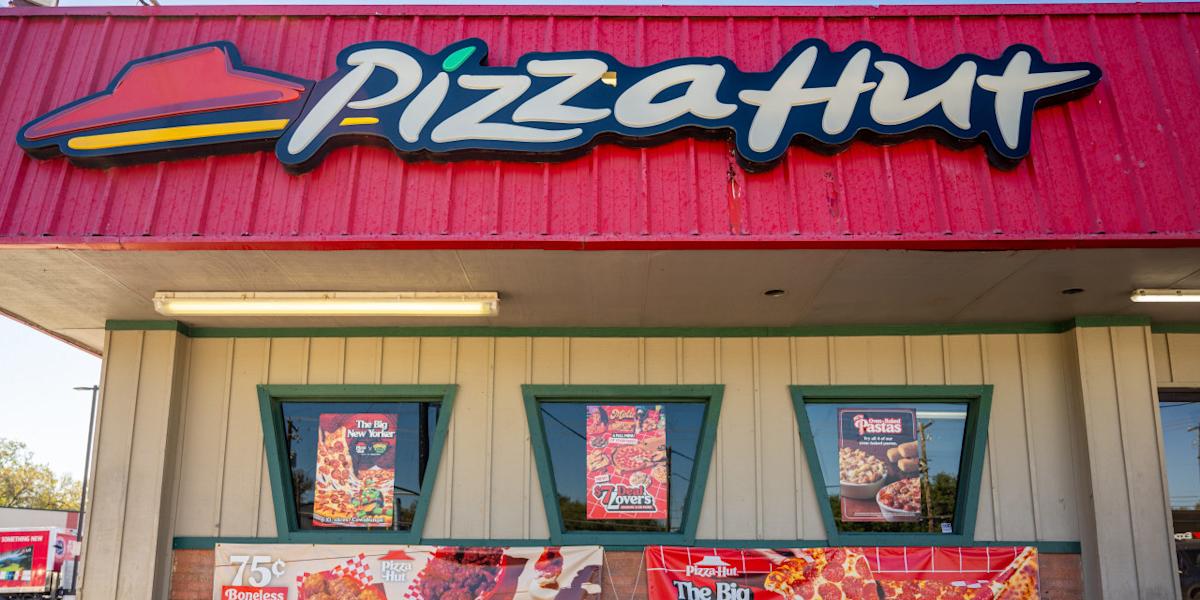
Famed for its red-roofed buildings, Pizza Hut helped make pizza a go-to for football games, slumber parties and office lunches as it expanded nationwide over the latter half of the 1900s. In the U.S. Pizza Hut is the second-largest pizza-restaurant operator behind Domino’s, with about 6,300 stores and $5.1 billion in domestic sales last year, according to market-research firm Technomic.
Pizza Hut’s U.S. sales have fallen for roughly two years, however, and Yum has said it would close around 250 underperforming U.S. units this year. Since Yum Chief Executive Chris Turner took over at the company last year, he has said he wanted to sell the brand.
Tuesday’s deal announcement makes Pizza Hut the latest restaurant brand sold to private-equity firms, which have shown a willingness to take on venerable chains in need of capital injections. Private-equity firms have spent around $64 billion on U.S. restaurant deals since 2010, accounting for roughly 64% of total sector transactions during that time, according to data provider Dealogic.
“Under LongRange and Yum China, Pizza Hut will be well positioned for future growth with ownership that brings deep expertise in the restaurant industry,” Turner said Tuesday. Yum shares gained 2%.
Piece of the pie
Pizza Hut traces its roots to 1958, when Frank and Dan Carney borrowed $600 from their mother to open the first location in Wichita, Kan., naming it in honor of their boxy building. The tight quarters meant takeout orders became the norm, though as the chain expanded it built up a big dine-in business.
PepsiCo acquired the chain in 1977, building a restaurant portfolio that came to include KFC and Taco Bell. The beverage maker spun out the restaurant businesses as Yum Brands in 1997, another period when the restaurant sector endured sluggish sales.
Private-equity firms in recent years have also acquired Subway, Dunkin’, Jersey Mike’s and other chains. Some firms have rolled up multiple brands, aiming to boost profits by cutting overhead and sharing back-office functions—like Roark Capital Group has sought to do with Dunkin’, Jimmy John’s and Sonic, which the firm operates under Inspire Brands.
Other private-equity owners have invested to help U.S. chains expand abroad, including Jersey Mike’s, Dunkin’ and Subway.
Mixed investor interest in restaurant stock offerings and shaky consumer sentiment has made it harder for private-equity firms to exit some investments. After trying to reduce costs at Panera ahead of a long-planned initial public offering, controlling shareholder JAB Holding is now backing a multimillion-dollar investment in the brand to try to return the fast-casual chain to growth.
Inspire, which Roark started forming with its purchase of Arby’s in 2011, has been aiming for an IPO following years of acquisitions, and now is poised to soon take the step. One of its other restaurant conglomerates, now named GoTo Foods, has remained private for more than two decades.
Sliding sales
Pizza Hut found a believer in LongRange, whose portfolio includes gym chain 24 Hour Fitness and Batesville, a company that makes caskets and cremation urns. “Pizza Hut is a beloved global brand with a rich heritage and a loyal customer base that few brands can match,” said Bob Berlin, founder and managing partner at LongRange.
The U.S. pizza industry boomed following the Covid-19 pandemic, but growth has stalled since then. U.S. sales among fast-food pizza chains fell 0.3% last year compared with 2024 levels, making pizza the only food category to register a decline during the period among the 10 tracked by Technomic.
“Pre-Covid, the usual suspects would have lined up to buy Pizza Hut,” said John Hamburger, president of the Franchise Times trade publishing group. “I can’t imagine a tougher time to be in the pizza business than right now.”
Pizza Hut has introduced deals and menu items in the U.S. this year, including a new membership program and a Crispy Parm Pan Pizza, among other new crust options. It has also leaned in to nostalgia, bringing back the decades-old Book It! youth reading program for the summer.
Pizza Hut’s business has fared better in China, where Yum said it is the largest casual dining brand in the country, with $2.3 billion in sales last year. The chain operates 4,375 restaurants in China and offers a novel range of pizzas, along with steak and pasta. But competition for food delivery is cutthroat in the country, contributing to costs.
Yum China, which operates as a separate company, said acquiring Pizza Hut’s China business will help the company develop its menu, stores and operations. Yum said the deals are expected to close in the third quarter.














Leave a comment