
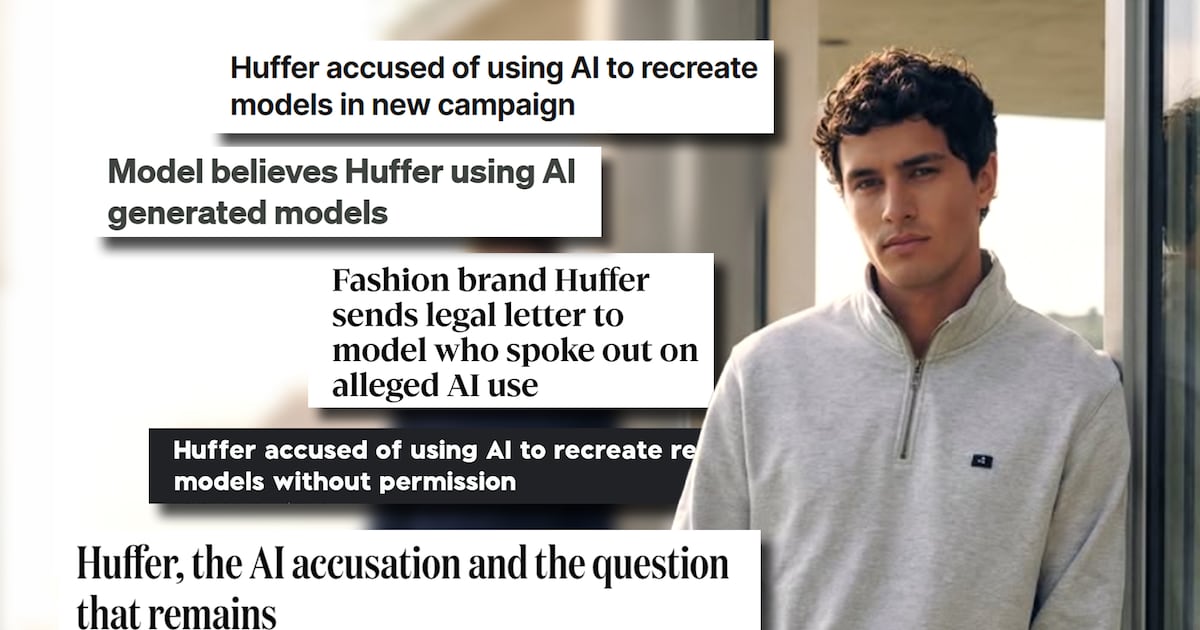
An AI-generated photo by clothing brand Huffer continues to ignite debate over image rights and New Zealand’s outdated laws, the brand having since released a statement maintaining they did use the likeness of a former contracted model.
Elijah Timmins-Scalon (Te Āti Haunui-a-Pāpārangi) posted a viral Instagram video in June, raising concerns that the brand was using AI to reuse past campaign images of himself and other models without consent or notice.
The model was later met with legal action from the company, which asked him to “immediately remove, or amend, any posts or comments that may breach the Harmful Digital Communications Act” and to refrain from posting “more harmful, false or misleading material about Huffer, its people, or associated parties”.
Huffer has since taken to social media to state they are sorry to hear how “upsetting” the debacle has been for models who made a claim, however they still maintain they did not use Timmins-Scalon’s photo, while admitting the advertisement was an AI generated one.
Te Ao Māori News has been supplied with photos from four models who maintain their images strongly resemble Huffer’s advertisements. When contacted, Managing Director Kate Berry declined to comment on specific photos.
“I can categorically say we do not generate any images from models in New Zealand we have paid. We categorically do not do it” she said.

She further claimed no technology could do it.
“Any generation of [Huffer’s] images is not from an individual person. The technology doesn’t exist to do that. So that would be what’s called photoshopping”.
Intellectual property lawyer Lynell Huria-Tuffery says the case is complex, as New Zealand’s laws have failed to keep pace with technological advances.
“It becomes really difficult to prove…currently our legislative framework doesn’t protect a person’s image unless you’re fairly well known and you can liken it to a claim under the Fair Trading Act… other than that, it’s pretty difficult to protect the use of your image unless you own the image of yourself” she says.

“Our Copyright Act was passed in 1994, so it’s well out of date, and the technology that was available then is much different to the technology we have available now.”
Huria-Tuffrey says the world is yet to catch up with AI developments, noting that Denmark is one of the few nations to implement a strategy to ensure ethical use.
“We should probably think have a conversation about whether we should adopt a similar law here” says Huria-Tuffery.

She adds that if Huffer did use the image, it is not just a copyright issue, but also a cultural one.
“I think that’s a really good question whether generating an image that looks Māori is tika – well it’s not, because it’s essentially giving a projection that your product is endorsed by a Māori person and that may not necessarily be the case”.
“Our image incorporates our whakapapa…we need to be able to control how it is used and when it is used, and so those perspectives also need to be taken account when we have the conversation in this space”.












Leave a comment