Home Fixed Assets Big Tech wants to join the HALO club
Fixed Assets

Big Tech wants to join the HALO club

Share


When Microsoft began in a garage as a software start-up, value came from code and intellectual property. Today, its competitive advantage rests on data centres, energy access, semiconductor supply chains and physical compute capacity. The broader technology industry is undergoing a similar transformation from an asset-light digital sector into an asset-heavy industry.

This shift is profound. The question is no longer simply whether AI will reshape the economy. It is about transforming the world’s leading technology companies from disruptive software firms into infrastructure utilities. The investment decisions of these firms are pivotal for the path of global growth and financial stability.

For decades, the defining characteristic of large technology firms was scalability without corresponding physical capital intensity. Software businesses generated extraordinary returns from modest asset bases. Balance sheets were dominated by intellectual property and cash reserves. Frontier AI scales through compute, energy and infrastructure. AI compute is becoming a quasi-utility input into the economy where scale, reliability and continuous provision matter as much as software innovation itself.

The boundary between software firms and infrastructure utilities is beginning to blur.

The scale of capital expenditure by the hyperscalers – Microsoft, Alphabet, Meta and Amazon – is extraordinary. Capex is expected to reach $2 trillion soon, more than double year ago levels. Fixed assets already account for about one half of Big Tech assets, doubling since the turn of the decade.

The AI boom is therefore digitally American but physically and industrially Asian, reinforcing the growing intersection between technology, geopolitics and global capital allocation.

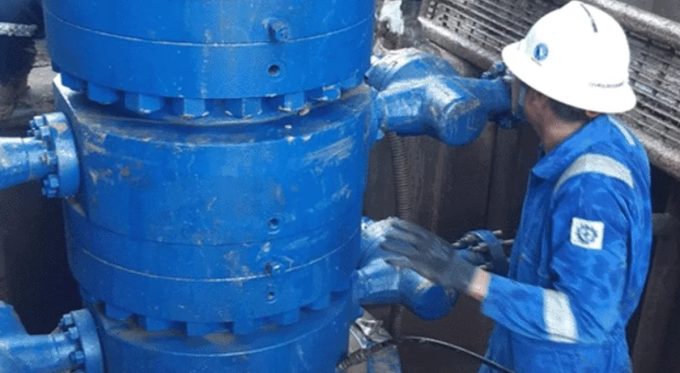
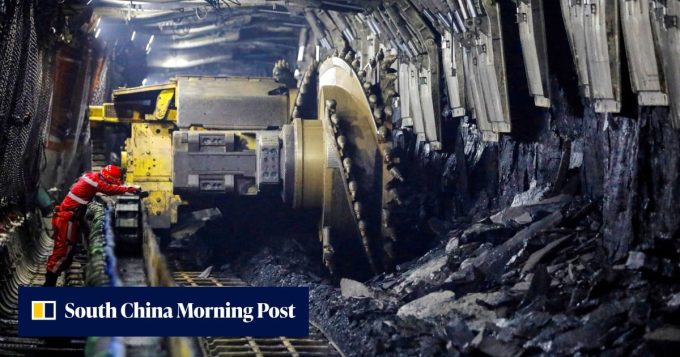
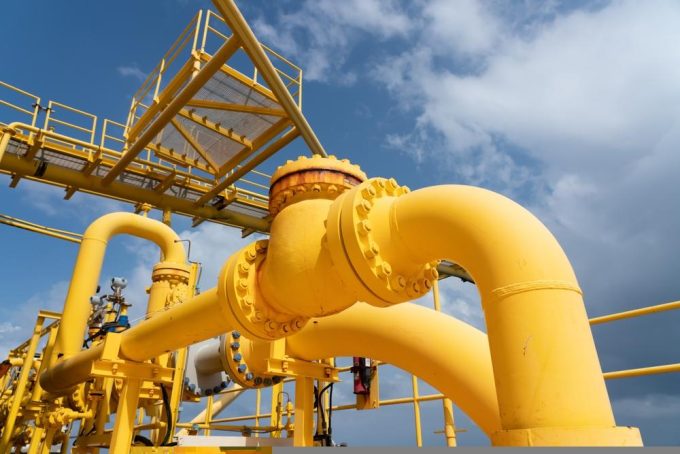
One way to understand this transformational shift is through the HALO (heavy assets low obsolescence) investment narrative. Investors unsettled by AI-driven disruption have favoured utilities, infrastructure operators and resource companies whose businesses are less vulnerable to technological disruption. AI may replicate software or automate services but it cannot easily replace electricity grids and pipelines.

Ironically, the companies driving AI disruption increasingly want to join the HALO club that their own technologies helped trigger. This creates a central paradox in the AI era. Can a sector built on rapid technological disruption simultaneously become a stable infrastructure utility sector?

Utilities traditionally derive value from predictability, long-lived assets and stable returns. Technology firms historically derived value from innovation, disruption and rapid cycles of creative destruction. Yet Big Tech increasingly appears to be combining both models.

AI infrastructure is emerging not merely as an economic asset class but as strategic infrastructure tied to industrial policy, energy security and geopolitical competition. Much of the industrial base underpinning the AI buildout relies on Asian production networks, particularly in semiconductors, memory chips and server assembly. The AI boom is therefore digitally American but physically and industrially Asian, reinforcing the growing intersection between technology, geopolitics and global capital allocation.

Moreover, economic growth and stability increasingly depend on the outcome of these Big Tech investments. Hyperscaler investment has become a material contributor to US and global growth, increasing the macroeconomic consequences of either sustained AI expansion or investment disappointment.

History offers both encouragement and warning.

Railways, electricity networks and telecommunications systems all began as transformational technologies before evolving into long-lived infrastructure systems that reshaped economic activity and productivity. The investment case for AI infrastructure ultimately rests on a similar assumption, that today’s buildout becomes the foundation for future productivity.

Yet infrastructure revolutions have rarely unfolded smoothly. Railway booms and busts, telecom crashes and the dot-com fibre overbuild all generated infrastructure that ultimately proved economically valuable while simultaneously destroying large amounts of capital. Infrastructure revolutions routinely overestimate short-term returns while underestimating long-term transformation.

We are witnessing an infrastructure buildout of historic scale before measurable productivity transformation has appeared across the broader economy. The investment thesis therefore rests not simply on future AI demand, but on the expectation that productivity gains eventually emerge on a scale large enough to justify the capital being deployed today.

The financing structure of the technology sector is also beginning to shift. Infrastructure economics differ fundamentally from software economics. As balance sheets become more leveraged to support infrastructure-scale investment, Big Tech requires utility-like stability to justify the scale of capital deployment. Debt-financed infrastructure depends on sustained utilisation rates and predictable returns rather than rapid cycles of disruption.

Beyond financing related risk, the analogy between Big Tech and traditional HALO companies will be tested by the pace of obsolescence, the “LO” of HALO membership.

Utilities and pipelines operate assets with economic lives measured in decades. AI infrastructure is different. Data centre buildings and power systems remain physically useful for long periods, but the computing systems inside them become economically obsolete far more quickly as chip performance and energy efficiency improve. Hardware that remains technically functional may become commercially uncompetitive within a few years.

This distinction between physical life and economic life sits at the centre of the uncertainty surrounding the AI buildout. The companies driving the next technological revolution are increasingly behaving like industrial infrastructure providers whose success depends on long-lived capital investment and stable returns. Yet they operate in a sector defined by rapid technological change and relentless disruption.

Big Tech has already acquired the heavy assets. The unresolved question is whether AI infrastructure can also achieve the low-obsolescence characteristics needed to earn full membership in the HALO club – the durability of the current global growth cycle increasingly depends on it.


Source link

Share

Leave a comment

Leave a Reply

Your email address will not be published. Required fields are marked *

Related Articles

Govt assets at almost N$70 billion so far – News

The government’s assets are valued at almost N$70 billion so far, with...

OECD members beware: Global tax might be on the way

 A 15% minimum global corporate tax income tax rate will probably arrive...

Fixed Cost: What It Is and How It’s Used in Business

What Is a Fixed Cost? A fixed cost is a business expense that...

Earnings Before Interest and Taxes (EBIT): Formula and Example

Key Takeaways Earnings before interest and taxes (EBIT) measures a company's operational...