

Among the most important questions is whether EGRs are backed by physical gold. The answer is yes. Every EGR is backed by corresponding physical gold stored with SEBI-registered vault managers. Depositories coordinate the creation, holding, transfer and extinguishment of EGRs, while the vault managers and depositories reconcile the quantity of EGRs issued against the physical gold stored in vaults. Depositories also conduct inspections of the gold deposited with vault managers.
Do investors need to own physical gold to trade EGRs on the NSE? No, like equities and other securities, EGRs are traded electronically. Investors can buy and sell EGRs by registering with an exchange-recognised broker and opening a demat account. Physical gold is only required when an investor wants to create EGRs by depositing gold into the system.
Can EGRs be converted back into physical gold? Beneficial owners can place a withdrawal request through their depository participant. The depository then forwards the request to the vault manager, who delivers the physical gold after completing the prescribed process. Once delivery takes place, the corresponding EGR is extinguished.
Will you receive documents? For exchange-traded transactions, investors will receive standard contract notes or trade confirmations from brokers, similar to securities market transactions. EGR holdings and transactions will also reflect in demat account statements.

If an investor chooses not to trade the EGR and later wants physical delivery of the gold, can a withdrawal request be generated? Yes, and it can be submitted through the depository participant or via the prescribed withdrawal process. The EGR will be extinguished once the vault manager delivers the underlying gold.
What are EGR’s
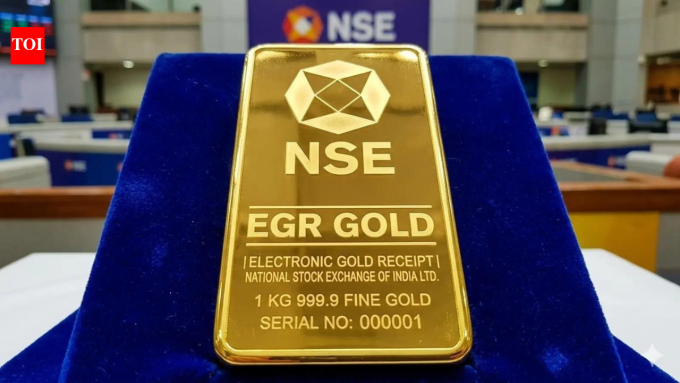
EGR’s are essentially a digital representation of ownership of physical gold. Each EGR corresponds to a fixed quantity of gold stored in a regulated vault under a framework supervised by the Securities and Exchange Board of India.
The NSE believes the launch of EGRs could significantly deepen India’s bullion market ecosystem by integrating physical gold with exchange-based trading infrastructure. The broader objective is to create a transparent, regulated and efficient gold trading framework while gradually positioning India as a global price setter in the bullion market.
The framework has also been designed to bring retail investors, jewellers, bullion traders and refineries onto a common platform. Over time, this could help create more uniform and market-driven pricing, replacing the fragmented city-wise pricing structure that currently dominates India’s physical gold market.
Any EGR drawbacks?
Despite the promise of EGRs, market experts believe the product still faces several challenges before it can achieve meaningful scale.
Liquidity remains one of the biggest concerns. Without active participation from market makers and institutional investors, retail participants may remain cautious about entering a market where exit liquidity is still evolving.
Broker enablement is another hurdle. Many trading platforms are yet to fully support EGR trading, which could restrict accessibility despite growing investor interest.
There is also a behavioural challenge. In India, gold ownership has traditionally been associated with physical possession. Convincing households to replace that emotional comfort with electronic receipts could take time, irrespective of how efficient the structure may be.
Taxation is another friction point. While EGR trades executed on exchanges do not attract GST, conversion into physical gold carries a 3% GST levy, potentially reducing flexibility for investors who may eventually seek physical delivery.
According to the exchange, live trading officially began on May 18 after a successful mock trading session conducted on May 16, which was completed without any system errors or operational exceptions.
The exchange said the EGR product has received a strong response from market participants and the broader bullion ecosystem. At present, vaulting and collection centres are operational in Ahmedabad and Mumbai, while four additional centres in Delhi, Kolkata, Chennai and Bengaluru have become operational effective Monday, it said in a statement. The NSE added that the network will continue expanding in phases and is expected to eventually cover nearly 120 centres across the country.
(Disclaimer: Recommendations, suggestions, views and opinions given by the experts are their own. These do not represent the views of The Economic Times)













Leave a comment