
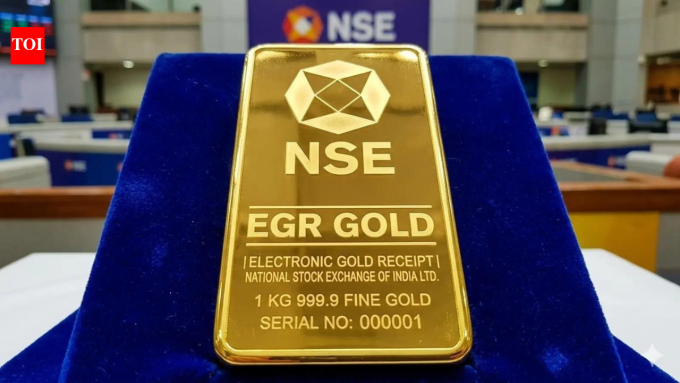
The launch of NSE’s Electronic Gold Receipts (EGRs) directly challenges India’s deeply ingrained and often opaque physical gold market. By creating a regulated, exchange-traded path for gold ownership, NSE aims to draw institutional investment and modernize a sector often handled through informal channels. EGRs are positioned to bridge India’s cultural connection to gold with the needs of a modern digital financial system.
Electronic Gold Receipts (EGRs) began trading on the National Stock Exchange of India (NSE) on May 18, 2026. The platform offers extended trading hours, from 9:00 AM to 11:30 PM IST (11:55 PM during US daylight saving), with efficient T+1 settlement. Supported by SEBI’s Gold Exchange Framework, this initiative tackles long-standing issues like purity, storage, and security for physical gold. Vaulting and collection centers are active in major cities, with plans for nationwide expansion. This structured approach contrasts sharply with many unregulated digital gold apps.
India’s gold market is vast, holding an estimated 25,000 tonnes. For decades, physical gold, especially jewelry, has been the primary investment and cultural store of value. While digital gold investments are projected to reach ₹9,841 crore by FY 2026-2027, and gold ETFs already manage ₹1.78 lakh crore (April 2026), EGRs face a competitive landscape. Gold ETFs, notably, saw record inflows in 2025. EGRs aim to provide the security of regulated instruments like ETFs but offer the unique benefit of conversion to physical gold. The challenge is persuading a population accustomed to tangible assets and traditional buying methods to adopt this new dematerialized, exchange-traded option. Global factors like geopolitical uncertainty and currency shifts have boosted gold prices, with gold outperforming the Nifty 50 in 2025, highlighting its role as a hedge. The Nifty PE ratio at 20.59 (May 15, 2026) suggests a moderately valued stock market, potentially drawing some investment from gold.
The EGR framework is robust, built on SEBI’s January 2022 Gold Exchange rules and 2021 Vault Manager Regulations. EGRs are officially recognized as securities, placing them under securities market laws. Vault managers, requiring a minimum net worth of ₹50 crore, handle physical gold storage, with EGRs issued only against deposits. This oversight aims to build confidence by guaranteeing purity, standardization, and security, setting EGRs apart from many digital gold offerings operating with less regulation. EGRs are taxed as listed securities, subject to capital gains tax. Converting EGRs to or from physical gold is not a taxable event.
Despite strong regulation and NSE’s reach, significant hurdles could slow EGR adoption. The main hurdle is investor behavior: Indian savers have a deep preference for physical gold, tied to culture and perceived tangible security, making digital alternatives a tough sell. Established gold ETFs, with substantial assets and consistent inflows, present a formidable competitor. Digital gold platforms available on popular apps like PhonePe and Google Pay already serve many users with easy access and convenience. Initial EGR liquidity may be lower than for established options, potentially leading to wider price spreads and less efficient trading, especially for large transactions. Reliance on vault managers and physical infrastructure introduces counterparty risk, though SEBI regulations offer mitigation. NSE’s track record in scaling new segments will be tested by the unique dynamics of the gold market.
NSE’s EGR launch is a strategic bid to formalize and deepen India’s gold market, integrating it with capital markets. Analysts see this standardized, exchange-traded instrument as a key channel for gold investment, promoting transparent pricing and institutional participation. Growth will hinge on NSE’s ability to drive investor education, boost liquidity, and show clear advantages over existing gold options.
Disclaimer:This content
is for educational and informational purposes only and does not constitute investment, financial, or
trading advice, nor a recommendation to buy or sell any securities. Readers should consult a
SEBI-registered advisor before making investment decisions, as markets involve risk and past performance
does not guarantee future results. The publisher and authors accept no liability for any losses. Some
content may be AI-generated and may contain errors; accuracy and completeness are not guaranteed. Views
expressed do not reflect the publication’s editorial stance.













Leave a comment