
Tax perks that have been used by property investors for decades to maximise profits and offset their losses will be restricted from budget night, in one of the most significant changes to the tax system in years.
Restrictions to negative gearing from this evening and capital gains tax (CGT) discounts from July 2027, and the closure of a family trust loophole, will shift how Australians are taxed in the favour of workers.
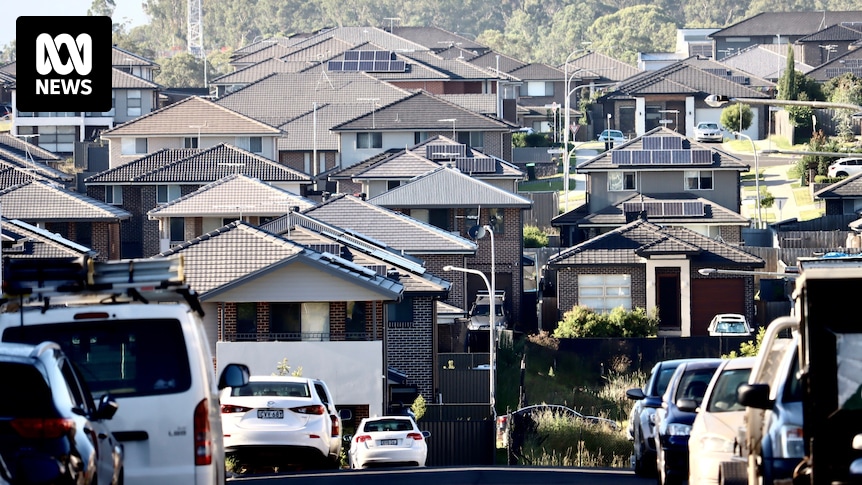
And the government expects it will move 75,000 properties from the hands of investors to homeowners, slow house price growth and eventually lead to lower rents.
The tax changes will lead to about 35,000 fewer homes being built, Treasury expects, though other taxpayer-funded measures will boost supply and lead to an overall increase in housing stock of about 30,000.
But it constitutes a breach of faith with voters, who were promised at last year’s federal election that a re-elected Albanese government would not do anything that could hurt supply, including tampering with negative gearing or capital gains tax.
Treasurer Jim Chalmers said the tax changes would shift who benefited from new housing supply.
“The tax system got out of whack, and we are trying to align it,” Mr Chalmers said.
“It has become increasingly clear to us that even though the challenges begin with housing supply, they don’t end there.
“We can’t let the intersection of the housing market and the tax system continue to lock out people from getting a toehold in the housing market, particularly young people.”

Jim Chalmers says it is worth breaking a promise to voters for the right reasons. (ABC News: Callum Flinn)
Mr Chalmers said it was worth breaking a promise to voters if it was done for the “right and justifiable reasons”.
“It would have been easy but wrong to see the way the housing market is developing, to see the way the pressures on young people are intensifying and to leave some of these structures unattended to.“
Alongside the changes to housing tax perks, a minimum tax rate of 30 per cent will also be applied to family trusts, ensuring people using them are not doing so to pay a lower rate of tax than they otherwise would.
Loading…
Shadow Treasurer Tim Wilson said the tax changes would lead to 35,000 fewer homes and higher rents, all while the budget forecasts increases to net migration.
“At the end of the day, the government has put forward a budget that is about broken promises, higher taxes, lower livings standards and fewer homes,” Mr Wilson said.
“By the government’s own admission it will lead to fewer homes being built … we won’t be supporting these measures.”
Negative gearing ends for established dwellings bought after tonight
Currently if a landlord’s expenses, including mortgage interest, repairs and rates bills for a home, exceed the income from tenants, those losses can be deducted from their taxable income.
Under the new scheme, established properties purchased after tonight will no longer be able to use negative gearing to reduce income tax.
Investors who already own properties will be exempt, along with purchases of new builds.
New builds are dwellings constructed on vacant land or where an existing property was demolished and replaced with a greater number of dwellings.
Knock-down rebuilds or substantial renovations that do not increase supply will not be eligible.
The government says the housing market needs rebalancing, with investors now making up about double the spending on housing compared to first home buyers.
Loading
Treasury estimates 83 per cent of that investor credit is going towards existing housing, not helping bring on new supply.
“Where people are negatively gearing in the future, we want that to be for new homes,” Mr Chalmers said.
After tonight, anyone buying an existing dwelling will still be able to deduct rental losses from the income generated by their residential property investments, with a carry forward measure allowing excess losses in previous years to be deducted from rental income in future years.
The new rules will apply to all established dwellings exchanged after tonight, and will commence from July 2027.
CGT discount overhauled, but guaranteed 30 per cent minimum tax
Under the current scheme, any profits made when an asset is sold are counted towards a person’s taxable income, though only half of that profit is counted if the asset has been held for more than a year.
Under the new scheme, tax is owed on any profit made from an asset’s sale beyond growth from inflation.
So if a property’s value grew in a year by 5 per cent, and inflation in that year was 3 per cent, tax would be owed on the 2 per cent growth in value above inflation.
And no matter what income tax a person owes, their tax payable on that profit can never be less than 30 per cent, closing a loophole that could allow someone to pay no tax on profits from selling properties, shares or other capital gains.
Pensioners and others receiving income support will be exempt from that minimum 30 per cent rate.
And as is currently the case, a person’s main residence is exempt from capital gains tax.
Loading
The new rules will apply to all assets purchased after July 1, 2027. For any assets purchased before that date and sold after it, any gains made before July 2027 will be taxed under the old system and any gains made after July 2027 will be taxed under the new system.
Taxpayers will be able to choose whether to seek a valuation of the asset at July 1, 2027, or calculate tax owed based on the time the asset was held under each scheme (meaning if an asset was held equally under both, half the profit would be calculated under the old scheme and half the profit under the new scheme).
The CGT discount restrictions also end a long-running exemption on assets before 1985, which will also become subject to tax on any gains made after July 2027.
Individuals investing in new builds will be able to continue to choose between claiming the 50 per cent discount or the inflation rate.
And the government says it will consult with the tech sector on how CGT should be applied to startups to ensure the new tax settings do not suppress innovation.
35,000 drop in supply from tax change to be offset by public spending
The negative gearing cut-off is expected to lead to a net 75,000 homes being sold by investors to owner-occupiers over 10 years, which the government says is equivalent to reversing a decade’s worth of decline in home ownership rates.
However, the fall in investor demand will also have a small impact on housing supply, reducing new supply by about 35,000.
Treasury expects that drop in demand to also cause a temporary slowing in house price growth, which for the capital cities was already at 0.3 per cent last month.
The negative gearing and capital gains tax changes are expected to slow house price growth by about 2 per cent a year in the near term, and cause a $2 per week increase to median rents, or about an extra $100 a year.
The government, however, says the fall in private investment will be more than offset by its taxpayer-funded boost to housing stock, which will also put downward pressure on rents longer term.
Two billion dollars has been committed to build more sewerage, roads and other enabling infrastructure to open up new housing lots, and is expected to bring on an additional 65,000 new homes over four years.
States will be able to access that money on the condition they agree to release more home-ready land and agree to productivity reforms to speed up housing approvals and simplify the National Construction Code.
And a temporary ban on foreign buyers will be extended by another two years to mid-2029.
Altogether, the government expects its housing measures will add 30,000 more dwellings over four years, a small extra step towards catching up to its goal of building 1.2 million new homes by the end of this decade.
In the long term, it will help fix another problem hanging over the government’s head: the budget deficit.
The revenue from the government’s tax package will net it an additional $77.2 billion over a decade.
But in the short term, the government expects its changes to raise $3.6 billion, which it says will mostly be paid back out in other tax relief measures such as its $250 tax offset for workers.
Albanese government breaks another tax promise
The changes to negative gearing and CGT are more broken promises not to fiddle with tax settings.
This is now the second time the government has gone to an election promising not to fiddle with a tax only to go back on its word, which it similarly did in 2022 after vowing not to amend the already-legislated stage 3 tax cuts.
On the campaign trail, Prime Minister Anthony Albanese snapped at a reporter who asked whether he could rule out changes to either tax perk, saying: “Yes. How hard is it? For the 50th time.”
The government has calculated the popularity of curbing negative gearing and the CGT discount, which have loomed over the debate for young people locked out of the housing market, will be worth the damage to trust of breaking another promise.
Mr Chalmers conceded the government had broken its promise to voters.
“The comments we made at the election reflected, I think, the government’s almost singular focus on housing supply, and we have maintained a focus in this budget on supply.
“I acknowledge this is a controversial change. I acknowledge this is a government coming to a different view than the view it held 12 months ago.”
Closing trust loophole a quiet budget money-spinner
The new minimum tax rate on family trusts has received less attention in the lead-up to the federal budget, but could prove a significant money maker for the government.
Discretionary trusts are designed to help protect assets and plan family succession.
But the government says some very-high-income earners use trusts to lower their tax owed by spreading the income they earn across their lower-earning family unit, meaning overall less income is taxed at the highest tax rates.
Loading
The government says the vast majority of trust income flows to the top-earning 10 per cent of families, generally to households with a net worth above $2.3 million.
From July 2028, trustees will pay a minimum 30 per cent tax rate on taxable income held in trusts, regardless of how it is spread around, and in 2029–30 alone, that is expected to raise $4.47 billion in revenue.
The government says that minimum tax closes a loophole benefiting wealthy families that the average worker is unable to use.
Loading…













Leave a comment