
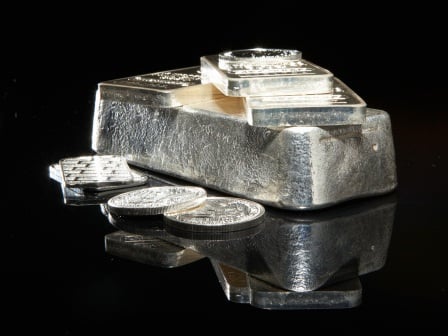
Contrary to conventional wisdom, not all commodity futures markets operate the same way. In the West, bullion markets are based on a credit model, where customers hold paper claims on the clearing bank, such as the UK London Bullion Market Association (LBMA) or the US COMEX (CME Group). Historically, 99% of transactions settle as bookkeeping ledger entries.
In China, the Shanghai Futures Exchange (SHFE) is predicated on an ownership model. Sellers are required to deposit physical gold or silver. 90% of trades result in physical delivery. India and Dubai operate in a similar fashion. Ironically, the notion of paper money originated in 7th Century Tang Dynasty China.
The backwardation of the silver market, which started in Q4 2025, has only increased since, with physical spot trades in China settling at a 12-13% premium over futures price quotes. This trend has spread globally, and is now threatening the stability of the COMEX. As a result, ETFs holding physical silver, such as Sprott Physical Silver Trust (NYSE: PSLV), which allows investors to redeem their shares in physical silver, and GraniteShares Gold Trust (NYSE: BAR), which owns both physical gold and silver bullion, would be the beneficiaries of a price spike that could make GameStop’s look mundane by comparison.
Cracks In the Veneer

The COMEX futures market has historically settled 99% of US silver transactions, but also has colluded in artificial price suppression, which is now cracking because of backwardation.
For roughly a half century, the COMEX and LBMA have controlled the price of silver bullion through a paper derivatives tacit agreement – the exchange executes trades and settles transactions in accounts while the bulk of physical silver remains stationary and in storage. With a few exceptions, such as when the Hunt Brothers cornered the silver market in 1980 by taking physical deliveries and hoarding it, the COMEX has served its institutional clients very well.
However, the COMEX has also artificially suppressed silver prices by facilitating naked shorts for traders that defied the realities of supply and demand. This kept silver between $20-$45/oz. for the bulk of the past few decades. October 2025 saw the LBMA nearly default when Indian Diwali celebrants drained inventories and the SHFE had to supply silver to cover London. Since then, the COMEX has seen inventories shrink at a startling rate. A tidal wave of physical delivery demands have flooded the markets, seeing a temporary silver price spike go as high as $121/oz.
CME has been forced to change margin requirements repeatedly in 2026 to try to cool the trade volume, price volatility, and delivery demands. In January 2026, COMEX switched from a dollar amount to a percentage system. Depending on volatility, rates have ranged from 9% to 18% from January to present.
Additionally, CME has been trying to fudge numbers as to its actual silver inventory available for delivery settlement. CME reports focus on “eligible” silver, which may or may not be subject to transport, or simply held on deposit by banking clients like Wells Fargo. However, only CME “registered” silver is officially earmarked for potential delivery settlement. The discrepancy is substantial.
Delivery demands have escalated dramatically. CME recently had to execute 120 silver delivery settlements in a single day. Across 4,748 contracts with counterparties including Wells Fargo, HSBC, and BNP, this amounted to COMEX silver inventory depletion of -23.47 million oz.
Silver: The Critical Element of the Digital Age
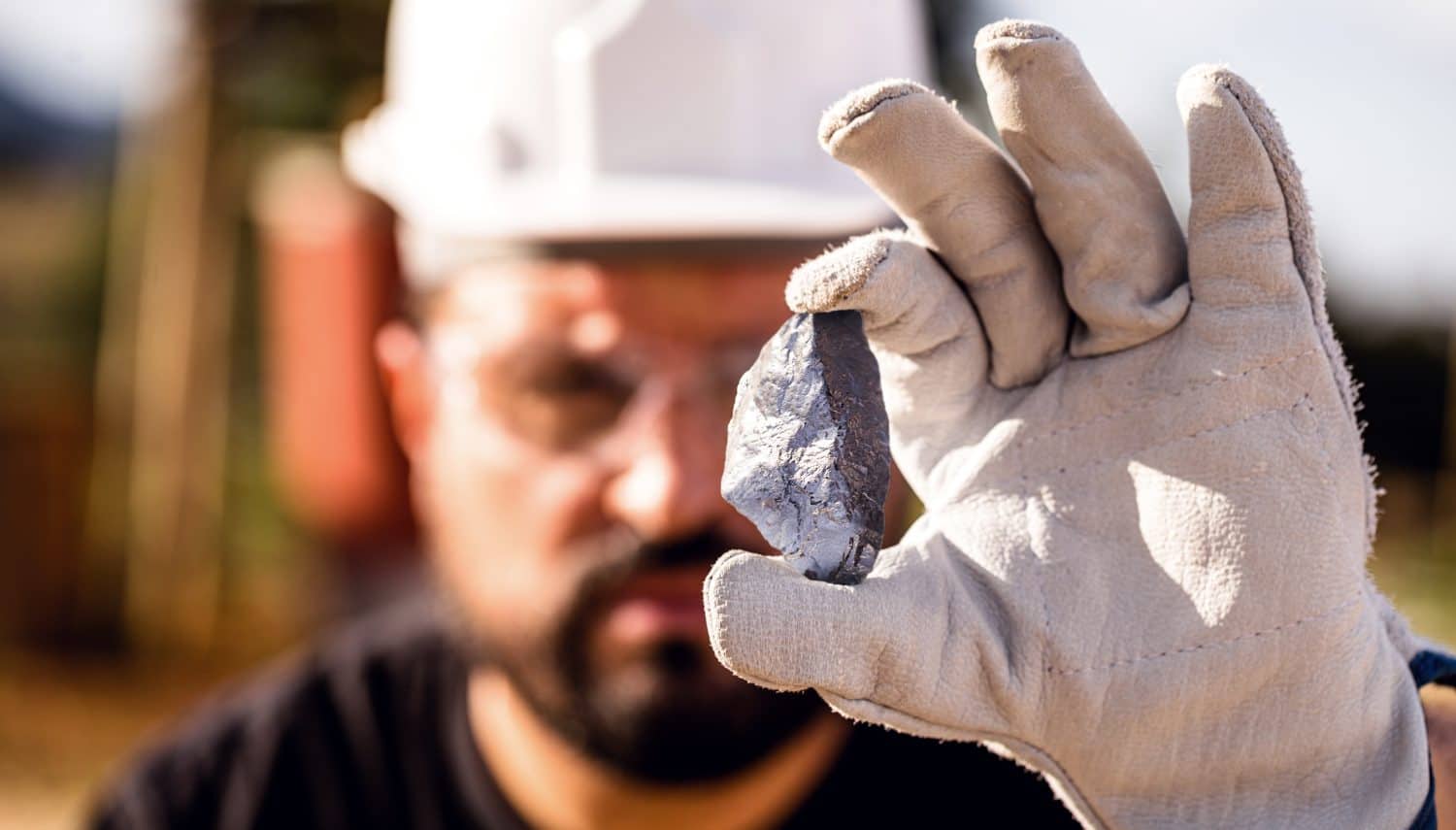
Silver’s widespread demand in technology, military, energy, medicine and other areas is making it increasingly scarce.
Unlike gold, silver is in a unique demand position within the global economy due to its wide range of industrial, electrical, financial, strategic, and medicinal properties.
Silver’s electrical conductivity, reflective qualities, chemical stability, thermal efficiency, and antimicrobial characteristics are unparalleled by any other substance. As a result, it is used in EVs, solar panels, semiconductors, flatscreen TVs, smartphone displays, AI servers, satellites, radar systems, missiles, pacemakers, water purification systems, nuclear power systems, broadband networks, and many other sectors.
However, we are nearly halfway through a 6th consecutive year of silver production shortfall vs. demand. Unlike with other metals, silver is primarily a by-product of copper, iron, or nickel mining. As a result, silver scarcity is rapidly increasing, and recovered and recycled silver barely amounts to 15% of total annual industrial use.
To add further pressure on the silver supply chain, one of the leading producers of silver, Glencore, recently reported a massive explosion at its Kazakhstan facility – Kazzinc. As the country’s largest producer of zinc, lead, copper, and gold, this is a huge blow to the Swiss commodities titan. However, Kazzinc’s explosion puts its annual 3.4 million oz. silver production into limbo – bad news for CME but good news for silver investors.
Bank of America recently forecast a silver target price of $309/oz. for 2026. With current prices in the mid $70’s, this is a roughly 400% gain projection before the end of December. With COMEX inventories drying up as ETFs, Banks, Institutional and Retail investors all jump on the physical silver delivery bandwagon, it may very well break the futures market back to the reality of genuine supply and demand market forces. This will certainly benefit PSLV, BAR, and other ETFs holding physical metal. Unlike with stocks or bonds, one can’t print silver.













Leave a comment