Investment in capital market products such as mutual funds, specifically gold-based Exchange-Traded Funds (ETFs), has seen a surge in interest over the past decade globally. This market continues to grow in the Asian region.
Asia has now officially established its position as one of the main driving forces behind the global gold ETF trend. Indonesia does not want to be left behind in this trend.
An ETF is an investment product in the form of a Collective Investment Contract that contains a collection of assets, which can include stocks, bonds, commodities, or a mixture of all. This product is designed to track the performance of a specific index. An ETF is similar to a mutual fund but is traded with the flexibility of stock trading on the exchange.
The gold ETF is a product whose underlying asset is gold. This instrument allows investors to invest and profit from fluctuations in gold prices without having to buy or store physical gold.
Based on a compilation of long-term historical data from the World Gold Council (WGC) and market analysis, gold ETFs have been traded since 2003. This product has been actively traded on North American and European exchanges since its inception.
Looking back over the last decade, from 2016 to 2026, global gold ETF trading growth has been relatively stable, peaking in 2020 when the COVID-19 pandemic hit. Investors in North America and Europe massively bought gold ETFs as a safe haven, pushing total global physical holdings to a record high at that time.
The interest in purchasing gold ETFs is correlated with the trends in global economic growth. For instance, during the period of 2021-2023, Western central banks, particularly the US Federal Reserve, aggressively raised interest rates to combat inflation. In this situation, Western investors began to engage in massive sell-offs as the appeal of bond yields increased compared to gold products.
However, at a time when Western investors are divesting their holdings, gold prices have not collapsed but are instead supported by new strength from another part of the world. Since 2024, there has been a structural change where the inflow of funds from Asia has consistently become a balancing factor for global liquidity.
This trend has led to global gold prices soaring to a new historical level. In early 2026, the price briefly surpassed 5,500 US dollars per troy ounce, before eventually stabilizing around 4,500 US dollars per troy ounce by mid-2026.
According to a report by WGC and State Street Global Advisors, from the beginning of the year until May 15, 2026, the demand for gold ETFs in Asia surged to 533.7 tons. This represents more than 10 percent of the total physical gold ETF holdings worldwide, which amount to 4,029 tons. In contrast, in 2019, gold ETF holdings in the Asia region were only 77 tons, or 2.67 percent of the total global gold ETF holdings of 2,875 tons.
Asian gold ETFs recorded the largest total assets under management in history in February 2026, amounting to 86.4 billion USD. This consistency continued with a positive total assets under management growth record for the second quarter of 2026, reaching 80.7 billion USD as of May 15.
Head of Asia Pacific (ex-China) and Global Head of Central Banks at the World Gold Council, Shaokai Fan, told Kompas on Sunday (24/5/2026) that Asian investors have become a stabilizing force in global gold ETF demand.
When some Western investors took profits or made rotations during the period of higher U.S. interest rates, investors in the Asian region continued to set record purchases over the past eight months until April 2026.
“This area remains important to monitor, with inflows since the start of the year nearly beating last year’s record total,” he said.
Retail and institutional investors in China have been the most dominant buyers in the gold ETF market over the past two years.
This regional dynamism is being driven aggressively by three major economic powers in Asia, namely China, Japan, and India. Retail and institutional investors in China have become the most dominant buyers in the gold ETF market over the past two years.
Investors in the country are massively reallocating their investment funds to gold-based instruments. This is triggered by the volatility of the domestic property market, the sluggish performance of local risk assets, and the depreciation of the Yuan currency.
Products such as the Huaan Yifu Gold ETF on the Chinese stock exchange even attracted funds of up to 1.9 billion US dollars in just one month earlier this year, setting a new management record.
In India, which is the second-largest gold consumer market in the world, the characteristics of its investors have also evolved to actively utilize ETFs. Dozens of gold ETF products have been launched to meet domestic demand for diversification and hedging against inflation.
A unique phenomenon has also occurred in Japan in recent years as the chronic weakening of the Yen against the US dollar has taken place. People there have been encouraged to invest in gold ETFs. This has been triggered by local gold prices in Yen repeatedly breaking historical all-time highs.
The visible macro trend is that in Asia there has been a cultural shift from physical gold ownership to financial gold ownership.
“The macro trend that is evident is that in Asia there has been a cultural shift from physical gold ownership to financial gold ownership,” said Shaokai.
Historically, throughout Asia, gold ownership has been dominated by jewelry, wedding purchases, gifts, and physical savings. However, gold is now beginning to be viewed as an investment allocation, not just as a store of wealth.
The significant shift towards gold ETFs, according to Shaokai, aligns with the investment mindset that is efficient and easily accessible for gaining exposure to gold, without the costs and complexities associated with storing physical gold bars.
Given the growing trend of gold investment in Indonesia, I believe that gold ETFs have bright prospects.
A new mindset in gold investment, he continued, may also occur in Indonesia. Although physical gold will undoubtedly remain the most popular product for the Indonesian public to access gold, he is confident that the development of gold ETFs in Indonesia will provide investors with a broader range of options.
“Indonesian investors are becoming increasingly intelligent and sophisticated. Considering the trend of gold investment growth in Indonesia, I believe that gold ETFs have a bright prospect,” said Shaokai.
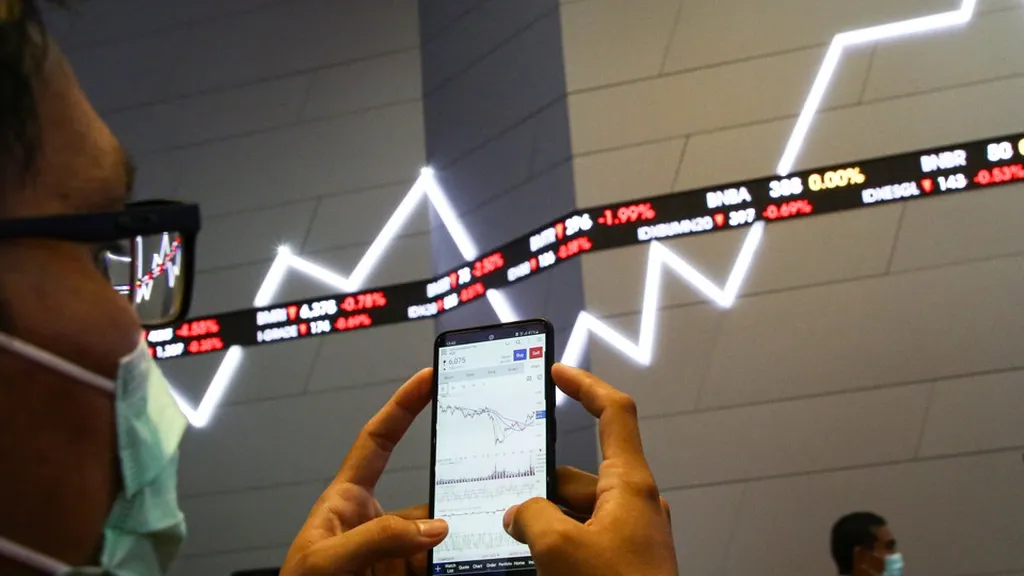
What about Indonesia? The Indonesia Stock Exchange (IDX) will soon launch a Gold ETF product. This type of ETF represents a new breakthrough in the ETF instruments that have been traded on the IDX since 2007.
The Head of the Business Development Division 2 of the Indonesia Stock Exchange, Ignatius Denny Wicaksono, during an online capital market journalist education event on Wednesday (20/5/2026), explained that the development of gold ETFs in the capital market has been studied since 2023.
With the number of capital market investors reaching approximately 26 million, gold ETFs are expected to serve as a channel that allows the Indonesian public to gain exposure to domestically produced gold while simultaneously strengthening the national economy.
This development is part of the government’s and the Financial Services Authority’s (OJK) broader strategy to build a national bullion or gold ecosystem. Business regulations for bullion have been issued, and two bullion business operators have been appointed, namely PT Pegadaian and PT Bank Syariah Indonesia Tbk (BSI).
“The main objective is to ensure that gold produced in Indonesia can be directly connected to domestic capital market investors. With the number of capital market investors reaching approximately 26 million, gold ETFs are expected to serve as a channel that allows the Indonesian public to gain exposure to domestically produced gold while simultaneously strengthening the national economy,” he stated.
Gold ETF products, Denny explained, are different from digital gold ownership. Gold ETFs are more efficient because investors can conduct transactions directly through their capital market accounts without needing to open accounts on other platforms. Prices can also be more competitively formed due to the presence of investment managers and participating dealers who provide buy and sell quotations in the market.
The gold ETF currently being developed in Indonesia is required to have physical gold support that meets SNI standards to ensure greater transparency and enable the issuance of sharia-compliant products, as it has received the DSN-MUI Fatwa in 2025.
According to him, this distinguishes it from gold ETF products in foreign capital markets, which typically only use standard LBMA (London Bullion Market Association) gold or even derivative contracts without actual physical gold.
A 2024 internal IDX survey of more than 500 retail and institutional investors regarding ETF products showed that gold ETFs were more popular than ETFs with multi-asset underlyings or other assets.
According to him, gold has very good diversification characteristics due to its very low correlation with stocks. He indicated that historically, the investment returns from the rise in gold have also been very competitive compared to other asset classes.
Gold ETFs are also considered more efficient compared to regular gold mutual funds because the mechanism for the creation and redemption of ETF units is conducted through the direct deposit of physical gold, rather than cash. This, according to him, reduces the impact of the spread or the high difference between the selling and buying prices of gold.
“Considering the potential returns of gold, which are quite favorable and also excellent for diversifying investment portfolios. Therefore, at the very least, institutional investors should invest here as a means of income diversification,” he said.
Denny hopes that the gold ETF can soon be launched by the investment managers who have now submitted the product issuance to the Indonesia Stock Exchange (BEI). He reported that these two institutions are among the nine investment managers interested in participating in the issuance of the gold ETF.
“I hope this product will be launched in the next month or two. Perhaps as early as the end of June or around July,” he said.
Investment in capital market products such as mutual funds, specifically gold-based Exchange-Traded Funds (ETFs), has seen a surge in interest over the past decade globally. This market continues to grow in the Asian region.
Asia has now officially established its position as one of the main driving forces behind the global gold ETF trend. Indonesia does not want to be left behind in this trend.
An ETF is an investment product in the form of a Collective Investment Contract that contains a collection of assets, which can include stocks, bonds, commodities, or a mixture of all. This product is designed to track the performance of a specific index. An ETF is similar to a mutual fund but is traded with the flexibility of stock trading on the exchange.
The gold ETF is a product whose underlying asset is gold. This instrument allows investors to invest and profit from fluctuations in gold prices without having to buy or store physical gold.
Based on a compilation of long-term historical data from the World Gold Council (WGC) and market analysis, gold ETFs have been traded since 2003. This product has been actively traded on North American and European exchanges since its inception.
Looking back over the last decade, from 2016 to 2026, global gold ETF trading growth has been relatively stable, peaking in 2020 when the COVID-19 pandemic hit. Investors in North America and Europe massively bought gold ETFs as a safe haven, pushing total global physical holdings to a record high at that time.
The interest in purchasing gold ETFs is correlated with the trends in global economic growth. For instance, during the period of 2021-2023, Western central banks, particularly the US Federal Reserve, aggressively raised interest rates to combat inflation. In this situation, Western investors began to engage in massive sell-offs as the appeal of bond yields increased compared to gold products.
However, at a time when Western investors are divesting their holdings, gold prices have not collapsed but are instead supported by new strength from another part of the world. Since 2024, there has been a structural change where the inflow of funds from Asia has consistently become a balancing factor for global liquidity.
This trend has led to global gold prices soaring to a new historical level. In early 2026, the price briefly surpassed 5,500 US dollars per troy ounce, before eventually stabilizing around 4,500 US dollars per troy ounce by mid-2026.
According to a report by WGC and State Street Global Advisors, from the beginning of the year until May 15, 2026, the demand for gold ETFs in Asia surged to 533.7 tons. This represents more than 10 percent of the total physical gold ETF holdings worldwide, which amount to 4,029 tons. In contrast, in 2019, gold ETF holdings in the Asia region were only 77 tons, or 2.67 percent of the total global gold ETF holdings of 2,875 tons.
Asian gold ETFs recorded the largest total assets under management in history in February 2026, amounting to 86.4 billion USD. This consistency continued with a positive total assets under management growth record for the second quarter of 2026, reaching 80.7 billion USD as of May 15.
Head of Asia Pacific (ex-China) and Global Head of Central Banks at the World Gold Council, Shaokai Fan, told Kompas on Sunday (24/5/2026) that Asian investors have become a stabilizing force in global gold ETF demand.
When some Western investors took profits or made rotations during the period of higher U.S. interest rates, investors in the Asian region continued to set record purchases over the past eight months until April 2026.
“This area remains important to monitor, with inflows since the start of the year nearly beating last year’s record total,” he said.
Retail and institutional investors in China have been the most dominant buyers in the gold ETF market over the past two years.
This regional dynamism is being driven aggressively by three major economic powers in Asia, namely China, Japan, and India. Retail and institutional investors in China have become the most dominant buyers in the gold ETF market over the past two years.
Investors in the country are massively reallocating their investment funds to gold-based instruments. This is triggered by the volatility of the domestic property market, the sluggish performance of local risk assets, and the depreciation of the Yuan currency.
Products such as the Huaan Yifu Gold ETF on the Chinese stock exchange even attracted funds of up to 1.9 billion US dollars in just one month earlier this year, setting a new management record.
In India, which is the second-largest gold consumer market in the world, the characteristics of its investors have also evolved to actively utilize ETFs. Dozens of gold ETF products have been launched to meet domestic demand for diversification and hedging against inflation.
A unique phenomenon has also occurred in Japan in recent years as the chronic weakening of the Yen against the US dollar has taken place. People there have been encouraged to invest in gold ETFs. This has been triggered by local gold prices in Yen repeatedly breaking historical all-time highs.
The visible macro trend is that in Asia there has been a cultural shift from physical gold ownership to financial gold ownership.
“The macro trend that is evident is that in Asia there has been a cultural shift from physical gold ownership to financial gold ownership,” said Shaokai.
Historically, throughout Asia, gold ownership has been dominated by jewelry, wedding purchases, gifts, and physical savings. However, gold is now beginning to be viewed as an investment allocation, not just as a store of wealth.
The significant shift towards gold ETFs, according to Shaokai, aligns with the investment mindset that is efficient and easily accessible for gaining exposure to gold, without the costs and complexities associated with storing physical gold bars.
Given the growing trend of gold investment in Indonesia, I believe that gold ETFs have bright prospects.
A new mindset in gold investment, he continued, may also occur in Indonesia. Although physical gold will undoubtedly remain the most popular product for the Indonesian public to access gold, he is confident that the development of gold ETFs in Indonesia will provide investors with a broader range of options.
“Indonesian investors are becoming increasingly intelligent and sophisticated. Considering the trend of gold investment growth in Indonesia, I believe that gold ETFs have a bright prospect,” said Shaokai.
What about Indonesia? The Indonesia Stock Exchange (IDX) will soon launch a Gold ETF product. This type of ETF represents a new breakthrough in the ETF instruments that have been traded on the IDX since 2007.
The Head of the Business Development Division 2 of the Indonesia Stock Exchange, Ignatius Denny Wicaksono, during an online capital market journalist education event on Wednesday (20/5/2026), explained that the development of gold ETFs in the capital market has been studied since 2023.
With the number of capital market investors reaching approximately 26 million, gold ETFs are expected to serve as a channel that allows the Indonesian public to gain exposure to domestically produced gold while simultaneously strengthening the national economy.
This development is part of the government’s and the Financial Services Authority’s (OJK) broader strategy to build a national bullion or gold ecosystem. Business regulations for bullion have been issued, and two bullion business operators have been appointed, namely PT Pegadaian and PT Bank Syariah Indonesia Tbk (BSI).
“The main objective is to ensure that gold produced in Indonesia can be directly connected to domestic capital market investors. With the number of capital market investors reaching approximately 26 million, gold ETFs are expected to serve as a channel that allows the Indonesian public to gain exposure to domestically produced gold while simultaneously strengthening the national economy,” he stated.
Gold ETF products, Denny explained, are different from digital gold ownership. Gold ETFs are more efficient because investors can conduct transactions directly through their capital market accounts without needing to open accounts on other platforms. Prices can also be more competitively formed due to the presence of investment managers and participating dealers who provide buy and sell quotations in the market.
The gold ETF currently being developed in Indonesia is required to have physical gold support that meets SNI standards to ensure greater transparency and enable the issuance of sharia-compliant products, as it has received the DSN-MUI Fatwa in 2025.
According to him, this distinguishes it from gold ETF products in foreign capital markets, which typically only use standard LBMA (London Bullion Market Association) gold or even derivative contracts without actual physical gold.
A 2024 internal IDX survey of more than 500 retail and institutional investors regarding ETF products showed that gold ETFs were more popular than ETFs with multi-asset underlyings or other assets.
According to him, gold has very good diversification characteristics due to its very low correlation with stocks. He indicated that historically, the investment returns from the rise in gold have also been very competitive compared to other asset classes.
Gold ETFs are also considered more efficient compared to regular gold mutual funds because the mechanism for the creation and redemption of ETF units is conducted through the direct deposit of physical gold, rather than cash. This, according to him, reduces the impact of the spread or the high difference between the selling and buying prices of gold.
“Considering the potential returns of gold, which are quite favorable and also excellent for diversifying investment portfolios. Therefore, at the very least, institutional investors should invest here as a means of income diversification,” he said.
Denny hopes that the gold ETF can soon be launched by the investment managers who have now submitted the product issuance to the Indonesia Stock Exchange (BEI). He reported that these two institutions are among the nine investment managers interested in participating in the issuance of the gold ETF.
“I hope this product will be launched in the next month or two. Perhaps as early as the end of June or around July,” he said.

:quality(80)/https://cdn-dam.kompas.id/images/2026/05/24/d90c5fd8201da7967c63b31dd96725be-Screenshot_20260524_093931_Samsung_Browser.jpg)
:quality(80):watermark(https://cdn-content.kompas.id/umum/kompas_main_logo.png,-16p,-13p,0)/https://cdn-dam.kompas.id/images/2025/10/30/963bfa68de441dd9825dae91ea10754f-20251030PRI6HR.jpg)
:quality(80):watermark(https://cdn-content.kompas.id/umum/kompas_main_logo.png,-16p,-13p,0)/https://cdn-dam.kompas.id/images/2026/02/03/c4793a9a7090835e0a0e3332db31b5f6-20260203_ANU_Permintaan_Emas2_mumed.jpg)
:quality(80)/https://cdn-dam.kompas.id/images/2026/02/01/6228fc6f47cf93d559d16b2ba4b3d788-wires_photo_2026_02_01T152320.387.jpg)
:quality(80):watermark(https://cdn-content.kompas.id/umum/kompas_main_logo.png,-16p,-13p,0)/https://cdn-dam.kompas.id/images/2026/02/03/a4870b0e369da0d1aaa08bd1fd46a8cb-20260203_ANU_Permintaan_Emas1_mumed.jpg)
:quality(80)/https://cdn-dam.kompas.id/images/2026/05/24/727e7ba75e6c50d5d4d0c6c96139c3ef-Screenshot_20260524_094237_WPS_Office_Lite.jpg)
:quality(80)/https://cdn-dam.kompas.id/images/2025/08/01/cce62c6a0ecb980e670986be51376142-1000097981.jpg)












Leave a comment