
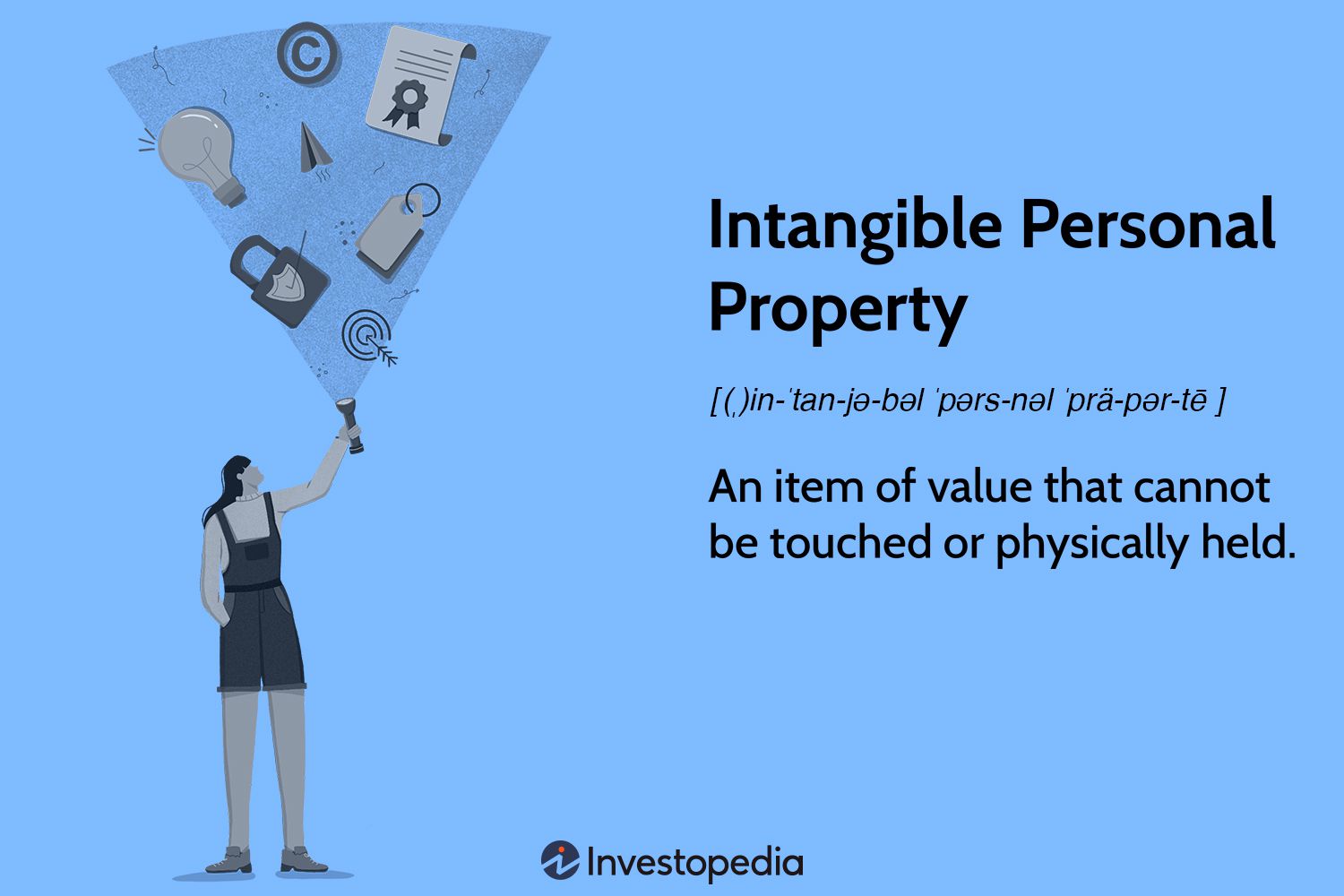
What Is Intangible Personal Property?
Intangible personal property refers to assets that hold value but cannot be touched, such as intellectual property, copyrights, patents, digital assets, and brand or reputational capital. Unlike tangible property, physical items like machinery or jewelry, these assets exist in non-physical form yet can be highly valuable for individuals and businesses.
They are often harder to measure and tax due to valuation challenges, making it important for investors and companies to understand how intangible property affects financial planning, reporting, and decision-making.
Key Takeaways
- Intangible personal property has value but no physical form, such as copyrights and digital assets.
- Companies hold intangible assets like goodwill and patents, listed on financial statements as capital assets.
- Intangible assets may be taxed when sold for capital gains, but not all are subject to taxation.
- Tangible property, unlike intangible property, includes assets like machinery and is subject to depreciation.
- Intellectual property is a common type of intangible personal property held by individuals and firms.
Get personalized, AI-powered answers built on 27+ years of trusted expertise.
Key Concepts of Intangible Personal Property
Personal property can be divided into a few different categories—notably tangible and intangible personal property. Tangible personal property is anything that can be held and has definitive value while intangible personal property is anything that doesn’t have any obvious value and can’t be touched. We discuss the differences between the two a little further down.
The value in intangible personal property lies in the associated benefits and value recognition. Intellectual property is one of the most common forms of this type of property. Other types of intangible personal property include life insurance contracts, securities investments, royalty agreements, and partnership interests. The most common forms of intangible property for companies include goodwill, research and development (R&D), and patents.
Some forms of these intangible items are known as capital assets and appear on a company’s financial statements while others are not included. For example, a company would list a trademark or patent as an asset on its balance sheet.
The company may need to do in-depth research to determine a realistic market price for intangible objects. Once a value is assigned to this property, the company may write off some of the cost of creating the object. An example may be the cost associated with compiling a customer or client mailing list or hiring a lawyer to file a patent application.
Fast Fact
Intangible personal property may often be referred to as incorporeal property.
Tax Implications for Intangible Personal Property
The Internal Revenue Service (IRS) does impose capital gains taxes on any tangible property that individuals and corporations sell. But it can be cloudy when it comes to intangible assets. Since there is no actual physical shape to this type of property, it doesn’t have an assigned or hard value, which makes it hard to account for and evaluate. As such, not all forms of intangible personal property are taxable.
Some types of intangible assets are, though, making them eligible for capital gains or losses. Capital gains are realized when they’re sold at a higher price while capital losses result from a lower price than the original purchase price. The value is determined by any intellectual or non-physical attributes. For instance, a musical composition may be taxed when it is sold to someone else at a different price than when it was originally purchased.
While tangible assets may be depreciated, the IRS requires that property owners amortize “over 15 years the capitalized costs” any intangibles that were purchased before August 1993. That’s because they are commonly given a 15-year life. These refer to any assets held for the purpose of trade or business.
Warning
Certain intangible assets may be taxed as ordinary income, though, thanks to the Tax Cuts and Jobs Act of 2017. This may include things like intellectual property, digital assets, or patents. Make sure you consult a tax professional about how to handle your intangibles.
Comparing Intangible and Tangible Personal Properties
As noted above, intangible personal property is anything without obvious value that can’t be physically manipulated. Tangible personal property, on the other hand, is anything that can be held and anything with discernable value. As such, it can be moved around.
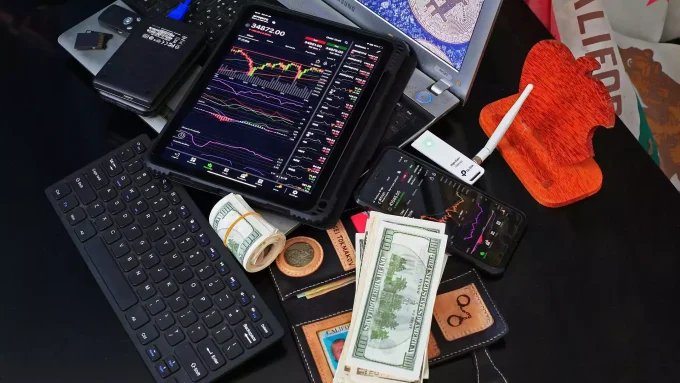
Tangible assets can be used in the day-to-day operations of a business or by individuals in their daily lives. Examples include machinery, vehicles, jewelry, art, electronics, and furniture. Things like smartphones and collectibles also fall in this category.
This kind of personal property is subject to depreciation. either on an accelerated basis or using the five- or seven-year periods. Taxation occurs on an ad valorem basis, which requires the use of an appraiser to assess the value. It can also be taxed on the actual value—the difference between the sale and the purchase price.
Important
Real estate is not considered personal property because it cannot be moved, which is a determining factor in identifying personal property.
Real-World Examples of Intangible Personal Property
Let’s say Firm XYZ invented a liquid, that when rubbed on a tattoo, causes it to blend into the surrounding skin rendering it invisible. There is also a solvent used to remove the tattoo obstructing solution. Firm XYZ issues a patent for both formulas. The patent, which keeps others from copying the formulas, gives the company sole ownership rights over this invention for the duration of the patent.
The firm enjoys the financial benefits of being the sole seller of this breakthrough tattoo obstructing concoction. Those financial benefits can be represented by the patent, which does not have any inherent value itself but is valuable because of these future benefits. The company will include the patents as a capital asset and may write off some of the expenses required to list the patent
What Types of Assets Are Considered Intangible Personal Property?
Intangible personal property is anything with no obvious and assigned value and can’t be physically held. Examples include copyrights, patents, intellectual property, investments, digital assets, along with anything that has image, social, or reputational capital.
What’s the Difference Between Intangible and Tangible Personal Property?
Intangible personal property is any type of asset that has value but isn’t physical in nature. Examples of intangible personal property are copyrights, patents, intellectual property, and investments. Assets that can be represented with social or reputational capital also qualify as intangible personal property. Tangible personal property, on the other hand, refers to assets that can be touched and have an assigned value, such as jewelry, art, machinery, and electronics.
Is Intangible Property Taxable?
Intangible personal property has no physical shape and, as such, has no assigned value. This makes it hard to account for and properly evaluate them. But there are certain forms of intangible personal property that are subject to capital gains taxes. This happens when they are sold at a higher price than when they were purchased. An asset’s value and, therefore, any capital gains that result from its sale are based on its physical attributes and intellectual content. Things like music compositions are assets that have great value and may result in capital gains when/if they are sold. Some assets may be taxed as ordinary income, such as patents or other forms of intellectual property.
The Bottom Line
Intangible personal property includes valuable non-physical assets like patents, copyrights, goodwill, and digital media. Unlike tangible items, these assets can’t be touched and are harder to value, with tax treatment varying by type.
As they increasingly shape personal wealth and business value, understanding them, and seeking guidance when needed, is important.












Leave a comment