
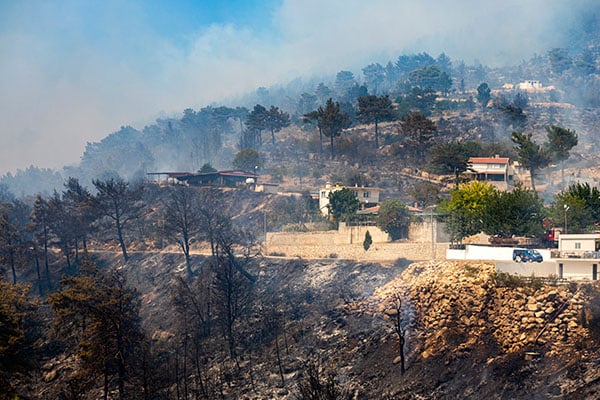
As a Royal Society paper confirms ‘Fire has been a natural disturbance in many ecosystems for millions of years. Landscape fires, including uncontrolled wildfires and managed burns, burn more than 7 million square kilometers globally each year, an area roughly equivalent to Australia.1
In the past, such risks may have attracted limited attention, but in recent years wildfire events have risen sharply as climate change drives increasingly extreme summer temperatures across Europe. Their devastating impact is now reaching closer to urban areas, bringing wildfire exposure into sharper focus when assessing the declared values used for property insurance.
While you may think this is only the concern of clients with Mediterranean portfolios, we are finding that UK-based owners, following the recent fires, are now being brought into the conversation.
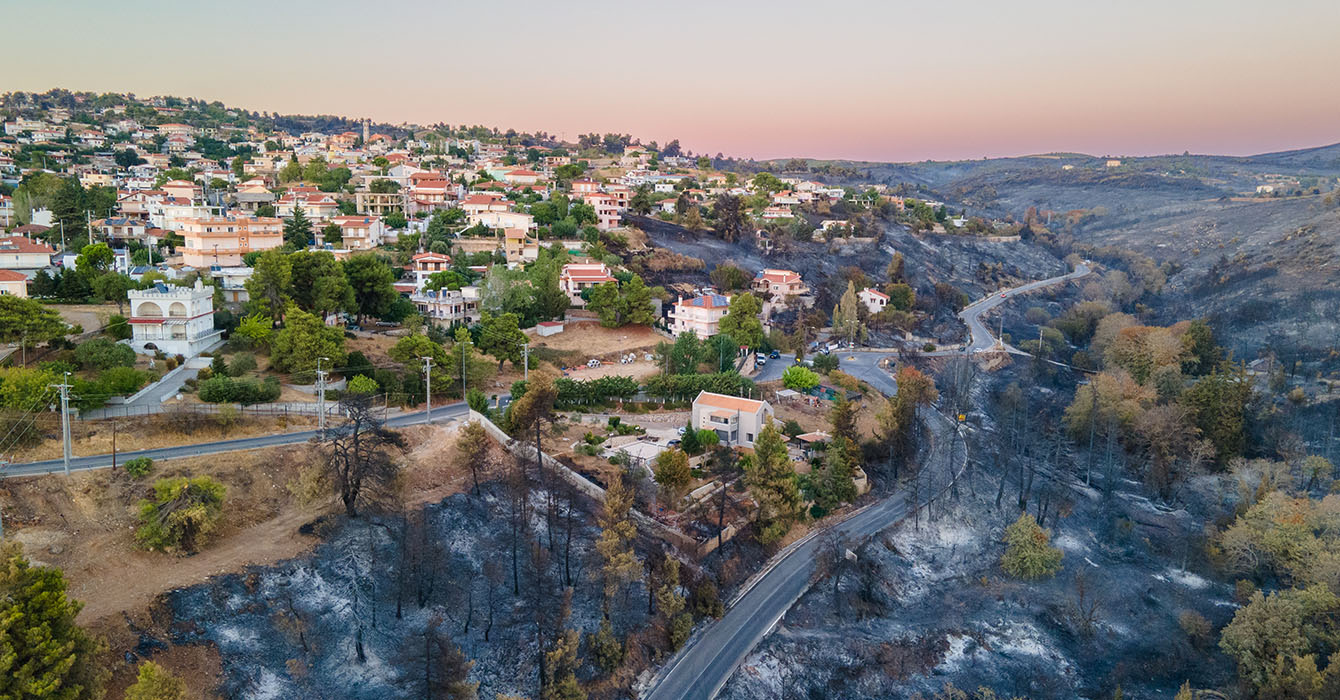
Fire devastation in Greece.
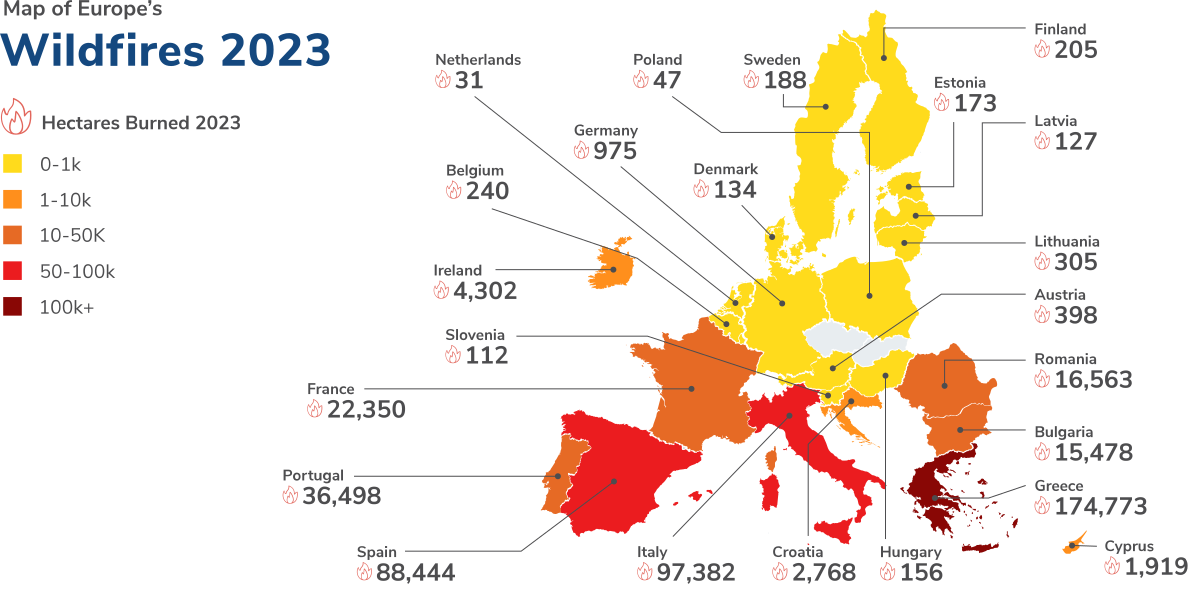
2023 Wildfires Map’s source: Distrelec and available on: https://knowhow.distrelec.com/internet-of-things/the-cost-of-european-wildfires-2023-report/ – Distrelec analyzed data from the EFFIS to determine which European countries were the most affected by wildfires in 2023.
This conversation is now expanding to owners outside previous high-risk areas e.g. the Mediterranean. The UK’s risk profile is changing. Having experienced wildfires in the summer of 2025 in Essex2, and on Arthur’s Seat in Edinburgh, what was once unthinkable — a wildfire spreading across multiple structures or entire developments — is now a plausible scenario. And yet, despite this evolving risk, many property owners continue to underestimate the total reinstatement value of their assets.
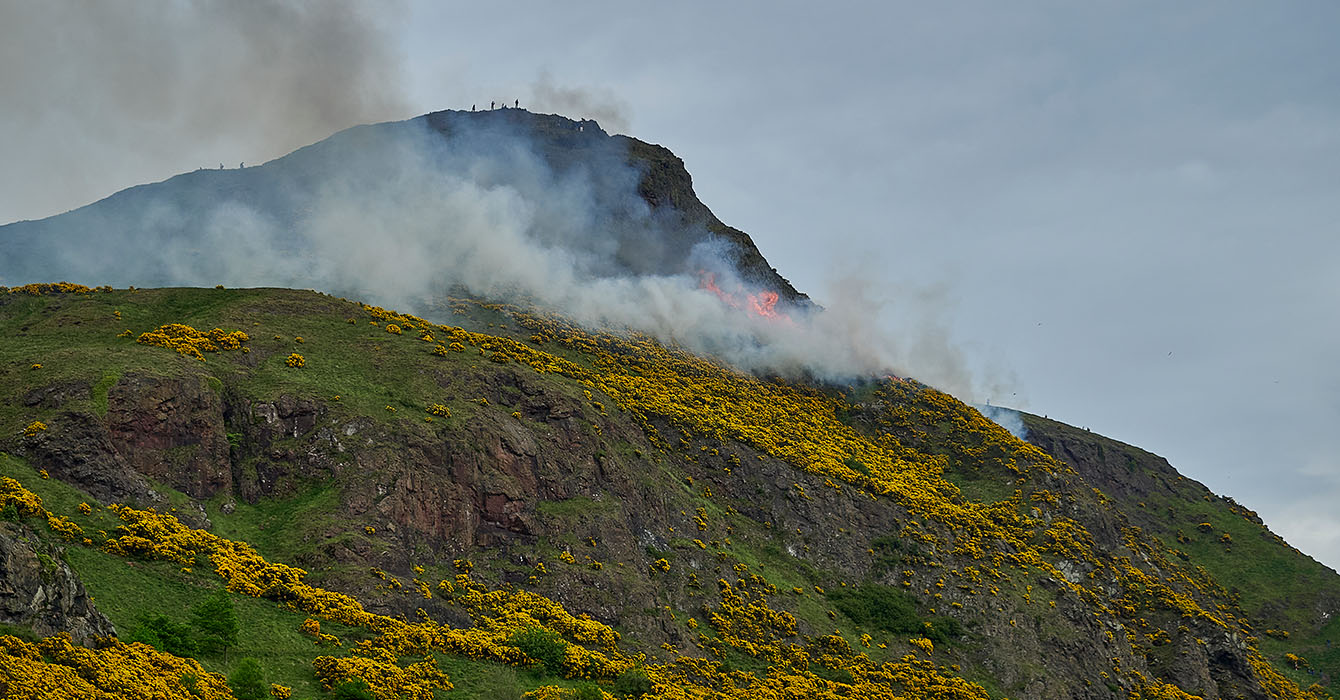
Arthur’s Seat, Edinburgh, summer 2025.
The Underinsurance Gap
The structure of most commercial property insurance policies allows some flexibility in how sums insured are established. In many cases, owners have opted to insure external items such as fences, outbuildings and site infrastructure on a “first loss” basis; in other words, selecting a partial sum insured on the assumption that a total loss is unlikely. We have also found many owners who decide not to insure these built elements at all.
This approach might have felt reasonable in a lower-risk environment. However, with the growing potential for catastrophic events such as wildfire, that assumption no longer holds.
Where once clients might have been content to carry some underinsurance, confident that the probability of a total loss was low, many are now requesting that 100% of all built structures are fully insured.
This shift in mindset is both prudent and overdue.
Property Types Most at Risk
Due to the potential rural or semi-rural setting of hotels, large resorts and holiday villages, it is the hospitality and leisure sector which has been quick to observe these potential risks. We are currently working with clients who are re-examining the insurance cover they have in place and considering, with great seriousness, the prospect of total loss.
Sometimes set within forest or wooded locations or on the edge of productive farmland it is clear to see how uncontrolled wildfire could easily spread through a village of timber-built holiday cabins. And it is such resorts that have a lot of value — potentially ‘hidden in plain site — in the form of parking, roads, terraces, footpaths, boundary treatments, bike stores, maintenance stores, tennis courts, fixed BBQ areas, outdoor kitchens, swimming pools etc.
Why Accurate Valuation Matters
Underinsurance remains one of the most common and costly issues in property risk management. If a building or portfolio is insured for less than its true reinstatement cost, the “average clause” in most property policies may apply. This means that, in the event of a loss, the claim payment will be reduced in proportion to the degree of underinsurance, even for partial claims.
For example, if a property insured for £10 million would cost £15 million in reality to rebuild, the owner is effectively underinsured by 33%. In the event of a £3 million loss, the insurer could legally reduce the payout by the same percentage, leaving the owner £1 million short.
In the event of a total loss — a scenario that wildfire makes more conceivable — the financial gap could be catastrophic.
Beyond the obvious financial implications, underinsurance can have secondary effects: delayed recovery times, difficulties in refinancing or asset sales and potential reputational damage for property managers or trustees responsible for maintaining adequate insurance cover.
What Should Be Included in the Valuation
A comprehensive insurance valuation should encompass all buildings and assets covered under the policy’s definition of “buildings” and “contents.” This typically includes:
- Main structures, including all permanent and semi-permanent buildings.
- External works and infrastructure: roads, walls, fencing, lighting and hard landscaping.
- Mechanical and electrical services, from lifts and air-conditioning systems to solar installations and generators.
- Fittings, plant and machinery, whether part of the building or separately insured.
- Tenant improvements or landlord’s fixtures – often overlooked, but significant in reinstatement cost.
Each of these components can materially affect the total reinstatement value. Ensuring that valuations are carried out by an experienced specialist — ideally one familiar with current construction cost trends, regional variations and insurance policy definitions — is key to achieving an accurate result.

Luxury hotel with swimming pool
The Changing Risk Landscape
It’s not just wildfire that warrants attention. Climate change is driving a convergence of risks: prolonged heatwaves, more intense rainfall and stronger storms. These factors can combine to create multiperil scenarios that stretch the assumptions upon which insurance programs were originally based.
Moreover, the cost of reinstatement itself has risen sharply in recent years. Labour shortages, inflation in materials and stricter building regulations (particularly around sustainability and fire safety) all contribute to higher rebuild costs. Many building owners often relying on indexation of out–of-date valuations may find that they are now significantly undervalued relative to their true replacement cost.
Regular, professional reinstatement cost assessments are therefore not a luxury; they are an essential part of sound risk management.
Taking Action
For property owners, investors, and managers, the question is no longer if a major loss event could occur, but whether your insurance arrangements would adequately respond if it did.
A comprehensive valuation ensures that:
- Your sums insured reflect today’s true replacement costs
- You avoid punitive underinsurance clauses in the event of a claim
- Your board or stakeholders can demonstrate prudent risk governance
- Your recovery, if needed, will be timely and complete
At Kroll, we’re helping clients across all sectors review and update their reinstatement values to ensure they are fully protected in this changing environment.
If you’d like to discuss how an insurance valuation could strengthen your risk position, please get in touch.
Sources
1Priority research directions for wildfire science: views from a historically fire-prone and an emerging fire-prone country | Philosophical Transactions of the Royal Society B | The Royal Society
2Huge blaze breaks out in Essex field as firefighters battle wildfires across UK | The Independent













Leave a comment