
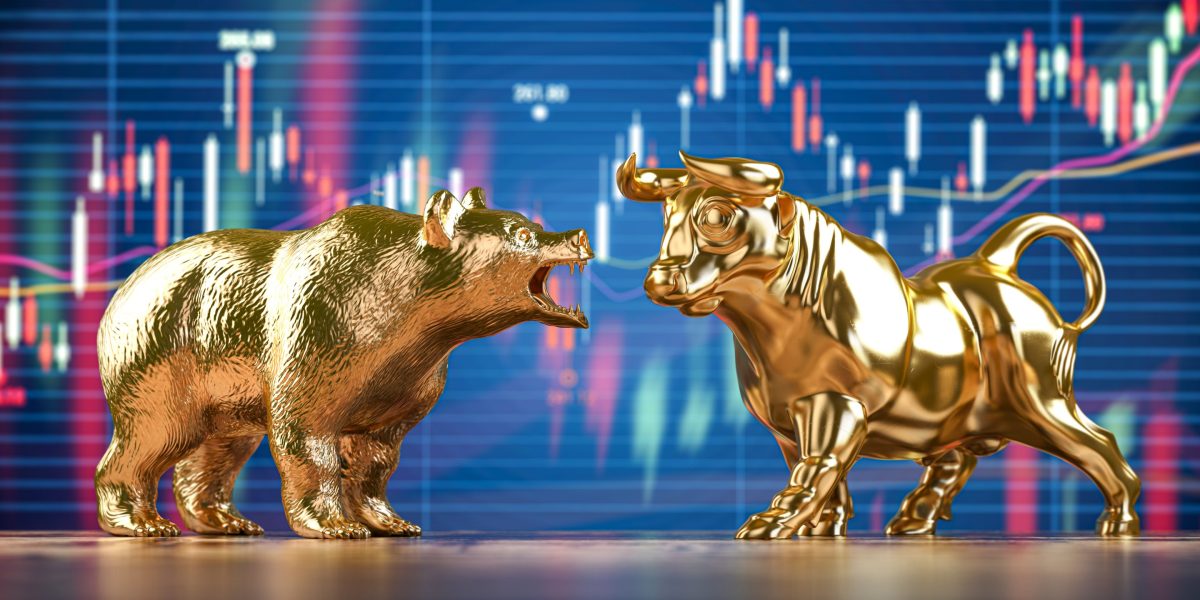
Gold is all the rage at the moment. It’s always quick to make an appearance in conversation about economic uncertainty or spooked investors. And with elevated inflation rates and the effects of energy-disrupting conflicts, these subjects are frequent water cooler discussions.
But did you know that actions by the Federal Reserve can also influence the price of gold? Here’s what you need to know about the Fed to help you decide if and when to invest in gold.
What is the Federal Reserve?
In short, the Federal Reserve is the central bank of the U.S. It manages the country’s financial system primarily by doing three things:
- Controlling the flow of money by purchasing or selling securities like Treasuries.
- Lending to large financial institutions when they need it to keep the economic gears turning.
- Tinkering with short-term interest rates, which affects the cost of borrowing.
The actions it takes is for one clear goal: to make the U.S. economy as strong as possible. It does this by aiming to keep employment high and inflation low.
How does the Fed influence gold prices?
The Fed cannot directly change the value of gold—but it can affect the U.S. dollar. And because gold is generally purchased with U.S. dollars when American investors buy the precious metal, the Fed can, by extension, affect gold prices. Let’s look at how that works.
What happens to gold when the Fed raises rates?
When the Fed raises the federal funds rate, the cost of borrowing money increases. This means that annual percentage rates (APR) will typically be higher on loans—but high-yield savings accounts and certificates of deposit tend to offer more generous yields, too.
Gold is an alternative investment that doesn’t offer any sort of dividend or interest. The only profit you make from it comes from an increase in its value. This can happen from weakening fiat currencies, expectations for inflation, global demand for gold, etc. So, when HYSAs and CDs are paying big, they tend to be favored over gold. That can cause gold’s value to dip.
Again, factors like inflation are the main driver of gold prices. Gold isn’t guaranteed to drop just because the Fed raises rates.
What happens to gold when the Fed cuts rates?
Conversely, when the Fed cuts interest rates, it gives gold a bit of a tailwind. Cash and bonds pay less, so investors are more open to swapping cash for gold instead of earning a forgettable return in a HYSA or CD.
Additionally, rate cuts can signify that the Fed is trying to prevent an economic downturn. That’s often when gold has done well, because it’s historically been an effective store of wealth. If you suspect that the U.S. dollar will get weaker, buying gold can be the play.
All to say a rate cut doesn’t promise a gold rally, but it can be a sign worth paying attention to. Investor sentiment is the main driver.
Why real interest rates matter more than the federal funds rate
The Federal Open Market Committee (FOMC) meets eight times per year to discuss its monetary policy and the current interest rates. It will then announce whether the federal funds rate will rise, fall, or remain the same.
This rate is what gets most of the headlines, but gold investors also pay attention to another number: the “real” interest rate. To calculate it, simply subtract the inflation percentage from the Fed rate. For example, if the inflation rate is 3.30% and the Fed rate is 3.50%, the real interest rate would be 0.20%.
The higher the “real” interest rate, the less advantageous it is to hold gold compared to, say, a Treasury bond or a CD. But the lower the real interest rate, the more attractive gold becomes, as you’re “forfeiting” less money by holding it.
Augusta Precious Metals
A+ BBB rating, AAA BCA rating – unmatched trust and credibility
Over 1,000 verified 5-star reviews from real customers
Highest buyback guarantee – You’re in control. Switch easily if we fall short

How to know when gold is a better investment than interest-bearing investments
Remember, physical gold doesn’t earn interest or dividends. However, gold can be effectively profitable when the real rate falls below 0%. In other words, if inflation is higher than the Fed rate, preserving your money’s value is as good (or potentially better) than earning interest.
To decide whether to put your money in an interest-bearing investment or gold bullion, subtract the inflation rate from the investment’s return rate. As an example, let’s say:
- A Treasury bill has a 3.75% interest rate
- The inflation rate is 4.00%
In this scenario, your money is losing 0.25% of its purchasing power. Because gold tends to hold value during inflation, it may be the wiser investment. Some investors may even be willing to take a modest loss to invest in gold—simply because it also comes with a hedge against further inflation.
Just remember that economic conditions can change quickly. Even if gold appears to be the right choice at the moment, it could be less advantageous a month or two from now.
The takeaway
Gold is affected by many things, from question marks surrounding the economy to higher prices at the grocery store. The Federal Reserve doesn’t touch gold directly, but the decisions it makes can affect the price of gold by raising or lowering demand—mostly through changing interest rates.
Frequently asked questions
Does gold always go up when the Fed loosens monetary policy?
Gold does not always go up when the Fed loosens monetary policy—but it can help. That’s because the Fed isn’t the main driver of gold prices; inflation and economic uncertainty are.
How does quantitative tightening (QT) by the Fed affect gold demand?
Quantitative tightening is when the Fed takes money out of the system by not putting the cash it gets from maturing bonds back in. It tends to lower gold demand because interest rates are generally higher, making holding gold (which returns no interest or dividends) less attractive.
Why are gold prices often inversely related to Fed rate hikes?
Gold prices often drop after Fed rate hikes because interest-bearing assets like Treasury bills and CDs start to pay more, so they look like a more attractive investment than gold.
Why might gold rise even when the Fed is hiking interest rates?
Again, inflation and uncertainty about the economy have more bearing on gold than the Fed’s interest rates. While increased rates can contribute to gold’s price falling, these forces can far outweigh it.
Are gold ETFs and physical gold affected differently by Fed policy changes?
Both gold ETFs and physical gold are affected similarly by Fed policy changes, as they both track the price of gold.












Leave a comment